
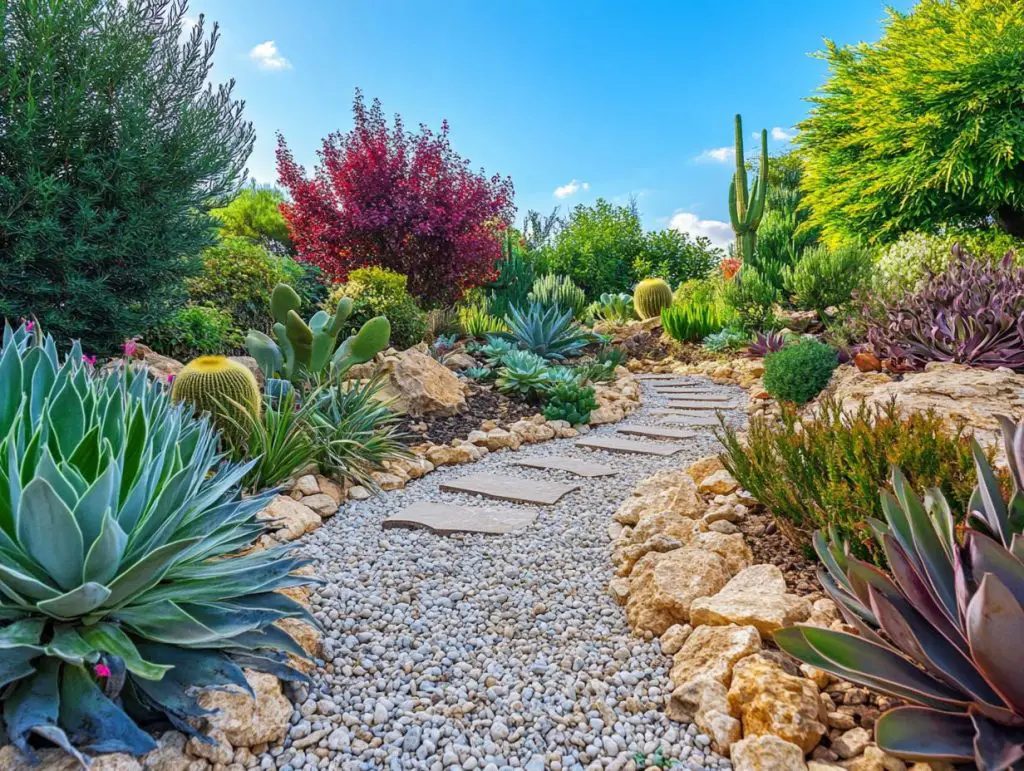
Low-maintenance plants for xeriscaping make it easier to build a good-looking yard without constant watering, trimming, or replacing plants every season. If you want a landscape that handles heat and dry soil without becoming a full-time job, plant choice matters.
The best low-maintenance xeriscape plants are drought-tolerant, adaptable, and reliable once established. Many can handle poor soil, hot sun, and long dry stretches while still adding color and texture.
This guide covers some of the easiest xeriscape plants to grow and how to use them for a low-water landscape that stays manageable.
What You’ll Learn
- Which xeriscape plants need the least maintenance
- How to choose low-water plants for your yard
- Which plants handle heat, poor soil, and drought best
- How to reduce watering and upkeep long-term
- How to build a low-maintenance xeriscape layout
Quick Answer
Low-maintenance xeriscape plants include lavender, agave, yarrow, sedum, ornamental grasses, and native shrubs. These plants use less water, need less pruning, and handle dry conditions better than traditional landscape plants.
What Makes a Plant Low-Maintenance in Xeriscaping?
Low-maintenance plants for xeriscaping are plants that can handle dry conditions, poor soil, and heat with minimal care once established. They usually need less watering, less pruning, and fewer replacements over time.
The best options are often drought-tolerant perennials, native shrubs, ornamental grasses, and succulents that naturally fit your local climate.
Choosing Low-Maintenance Plants for Xeriscaping
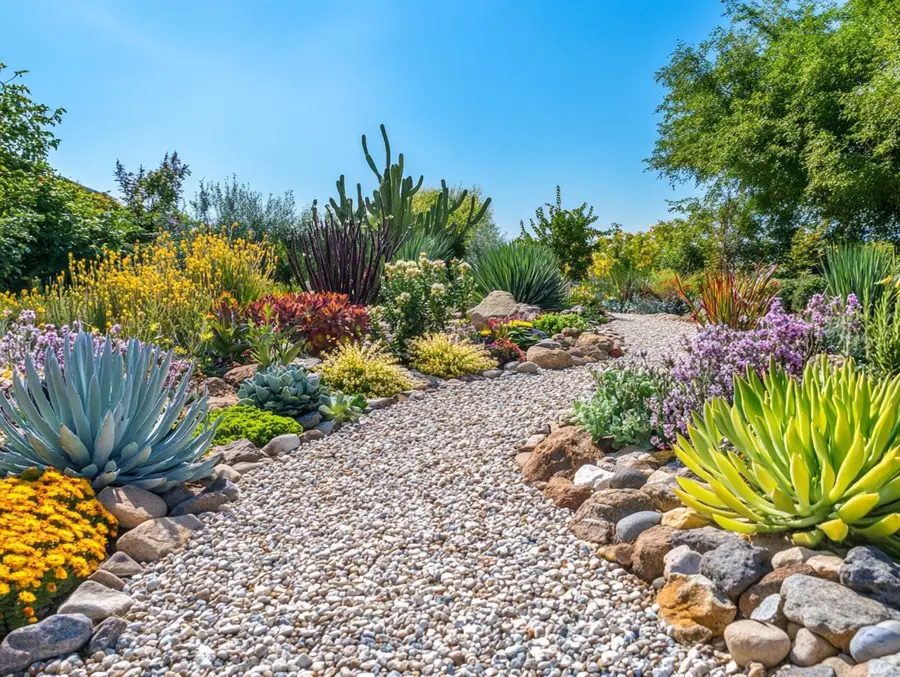
Choosing Low-Maintenance Plants for Xeriscaping
Choosing the right plants makes xeriscaping much easier long term. Plants that match your soil, sunlight, and climate usually need less watering, less pruning, and fewer adjustments over time.
Focus on drought-tolerant plants that are proven to perform well in your region, especially native plants and hardy perennials.
When you’re picking out your plants, think about things like hardiness and seasonal interest.
This way, you can create a diverse and visually appealing garden that thrives on minimal resources while showing off some stunning textures and colors.
Factors to Consider
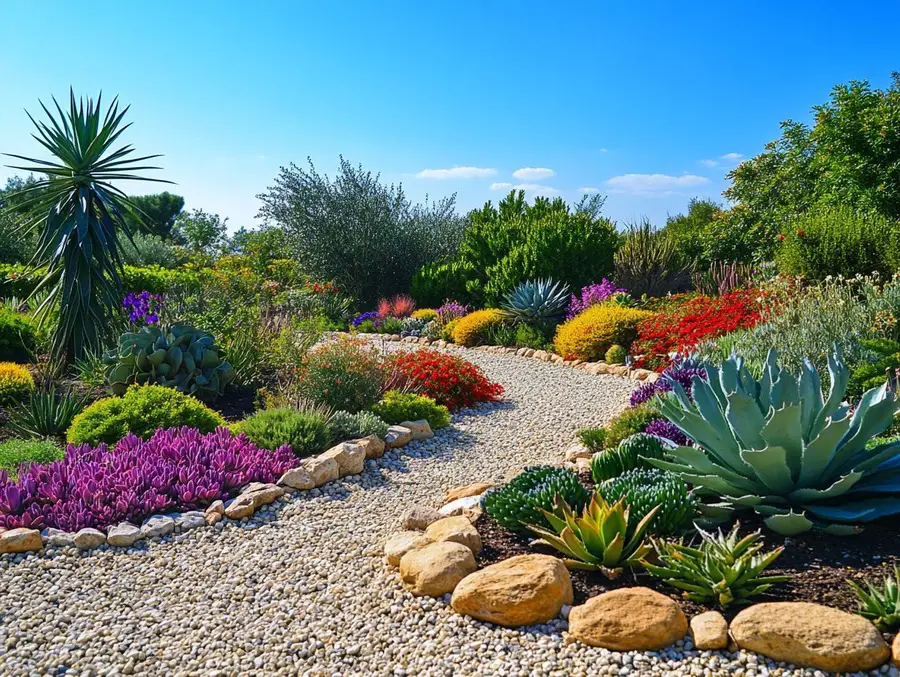
When you’re thinking about low-maintenance plants for your xeriscape design, there are a few key factors to keep in mind that can really influence your plant choices and the overall success of your garden.
By understanding your local soil types, climate zones, and the specific microclimate of your yard, you’ll be able to pick plants that are not just drought-resistant but also pest-resistant and ready to thrive with minimal effort.
Assessing the drainage characteristics of your soil will help you choose plants that flourish with little irrigation while also supporting local biodiversity.
A well-rounded approach to xeriscaping involves selecting a variety of native species that can handle local pests and diseases, boosting the resilience of your whole garden.
Each plant plays its own role in the ecosystem, promoting balance and cutting down on the need for chemical interventions.
Embracing a diverse range of plants makes your garden more visually appealing and also enhances the overall health of your xeriscape, ensuring it lasts longer and lightening your workload as a gardener.
Best Low-Maintenance Xeriscape Plants
You have plenty of low-maintenance plant options at your fingertips that are perfect for xeriscaping, allowing you to create a stunning landscape with minimal effort.
Some popular choices are those xeric plant species like succulents and cacti, which are water-efficient champions.
Then there are hardy ornamental grasses and perennials that bring texture and seasonal interest to your garden.
Using ground cover plants and aromatic herbs can boost your garden’s looks and promote biodiversity.
These plant varieties thrive in low-water conditions and adapt beautifully to various garden zones, making them ideal for landscapes in different climates.
For instance, succulents like agave and sedum aren’t just water-efficient; they also add vibrant colors and unique shapes, creating eye-catching focal points.
And let’s not forget about cacti—they’re tough enough to survive even the harshest conditions while needing very little care.
Ornamental grasses, with their flowing forms and graceful movement, can add a touch of elegance to your landscape.
Meanwhile, perennials offer long-lasting blooms without the hassle of frequent replanting.
All of these selections come together to create a harmonious ecosystem that significantly contributes to sustainable, drought-tolerant landscaping.
How to Use Low-Maintenance Plants in Your Xeriscape
Successfully xeriscaping your yard means you’ll need to put some thought into planning and design to make sure your landscape is not just beautiful but also great at conserving water.
From the moment you start planning your garden to those final touches in the landscape design, it’s important to incorporate eco-friendly gardening practices and efficient irrigation systems.
By carefully considering garden features and mixing the right plants, you can create a stunning xeriscape that thrives on minimal resources, all while boosting the aesthetics of your outdoor space.
Step-by-Step Guide
Creating a successful xeriscape is all about taking it step by step, starting with some thoughtful garden planning and wrapping up with ongoing landscape maintenance.
Begin by checking out your yard’s unique traits, like soil moisture levels and how much sunlight it gets. This will help inform your xeriscape design.
Make it a point to optimize irrigation efficiency while picking drought-tolerant plants that will thrive in your climate and boost your garden’s overall health.
This foundational assessment will help you pinpoint areas that might need a little extra care, whether that’s adding shading structures or tweaking plant placement.
Next, think about how water moves through your space. Understanding the terrain can open your eyes to natural water conservation opportunities.
Regarding selecting plants, choose ones that suit your climate and bring a variety of textures and colors to the table, ensuring your garden stays visually interesting throughout the seasons.
An efficient irrigation system, like drip irrigation, can work wonders by directing water exactly where it’s needed, helping your plants stay healthy and resilient.
And don’t overlook the importance of maintaining soil moisture with organic mulch to cut down on evaporation.
Regularly checking for weeds and pests will also go a long way in keeping your xeriscape thriving for the long haul.
Maintaining your Xeriscaped Yard
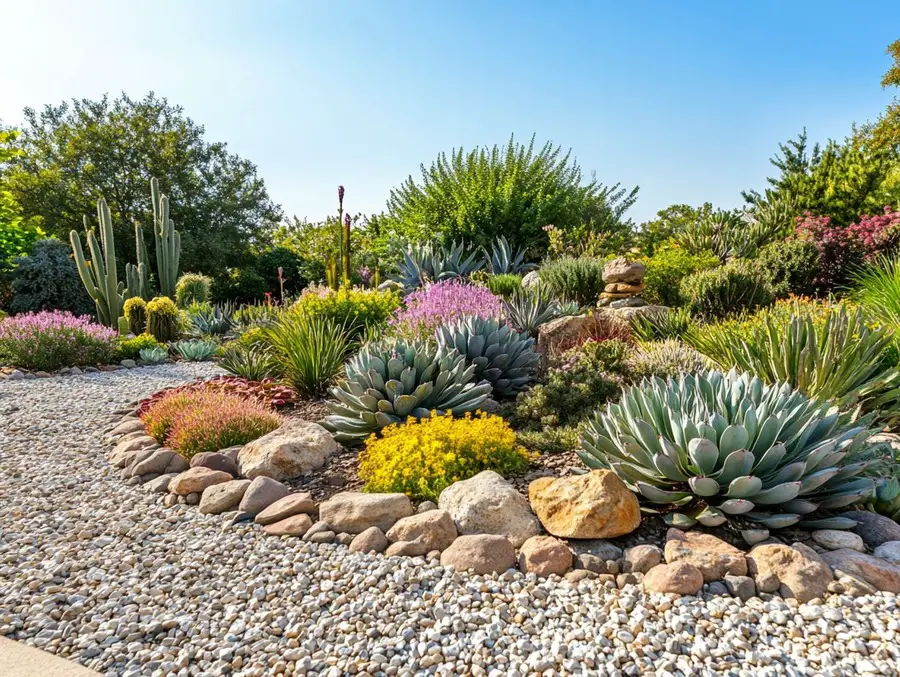
Keeping a xeriscaped yard in good shape is crucial for making sure your low-maintenance plants thrive and your landscape looks great.
Even though xeriscaping is meant to cut down on garden upkeep, there are a few key practices that can help you keep your garden healthy.
Make it a habit to regularly check your irrigation systems, apply mulch to conserve soil moisture, and manage those pesky weeds.
These steps are essential for maintaining your xeriscape and adding some seasonal flair to your outdoor space.
Tips for Long-Term Maintenance
To ensure the long-term success of your xeriscaped yard, a few maintenance tips can really boost its health and beauty.
Start by enhancing your soil health with mulch to help retain moisture and reduce temperature fluctuations.
Also, make sure your irrigation system is on point so your plants get just the right amount of water.
Keeping an eye out for pests will help keep your garden vibrant and lively.
One practical move is to regularly test your soil quality because healthy soil is the backbone of resilient plant life.
Consider adding some organic compost to enrich that soil and promote beneficial microorganisms.
Using a mix of mulch materials will retain moisture and keep those pesky weeds at bay, giving your plants a fighting chance to thrive.
Efficient irrigation systems, like drip irrigation, can really up your game by delivering water directly to the roots where it’s needed most.
And don’t forget to educate yourself about pest-resistant plants in your xeriscape.
This will help you create a balanced ecosystem that cuts down on the need for chemical interventions and lets your garden flourish naturally.
Frequently Asked Questions
What is the easiest xeriscape plant to grow?
Lavender, sedum, and yarrow are some of the easiest low-maintenance xeriscape plants for beginners.
Do low-maintenance xeriscape plants need watering?
Yes, especially while getting established. After that, most need much less water than traditional landscaping plants.
What xeriscape plants require the least pruning?
Succulents, sedum, agave, and many ornamental grasses need very little trimming once established.
Can low-maintenance xeriscape plants improve curb appeal?
Yes. With the right mix of textures, bloom times, and heights, they can create a clean, attractive landscape with less work.
Final Thoughts
Low-maintenance xeriscape plants can save you time, water, and frustration while still creating a yard that looks full and healthy. The key is choosing plants that fit your climate and grouping them by water needs.
Once established, many drought-tolerant plants need very little attention beyond occasional pruning and seasonal cleanup. That makes xeriscaping one of the easiest long-term landscaping choices for busy homeowners.
Explore More Low-Water Plant Guides
What is xeriscaping? A beginner’s guide to drought-tolerant landscaping – Colorado State University