
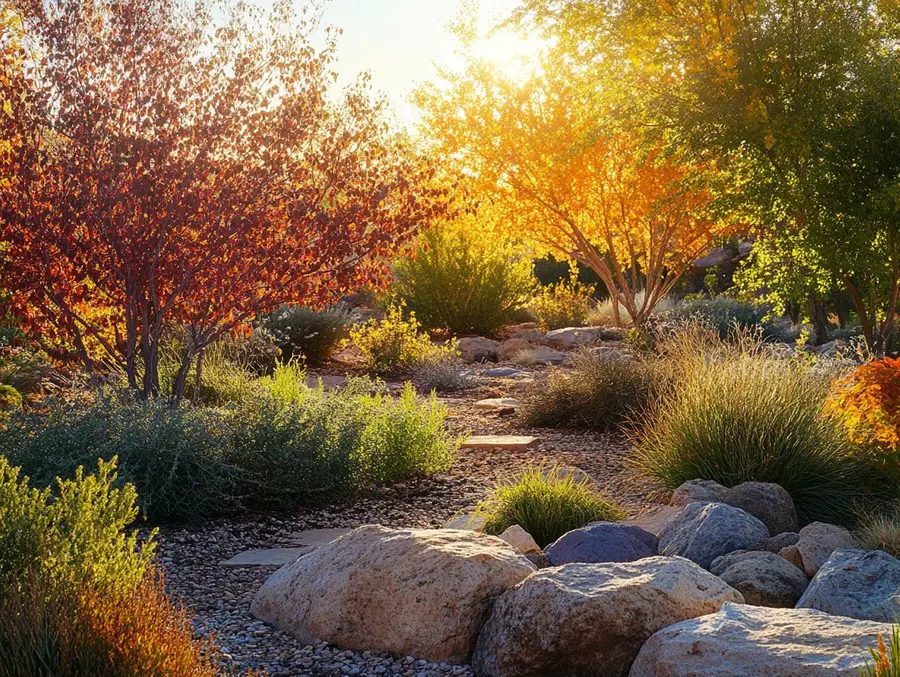
Trees for xeriscaping can add shade, structure, and long-term beauty while keeping water use lower than traditional landscaping. In dry climates, the right tree can make a huge difference in comfort and plant survival.
Drought-tolerant trees help cool the yard, protect soil, and support wildlife while needing less irrigation once established. They also create microclimates that can make it easier to grow other plants nearby.
This guide covers the best low-water trees for xeriscaping and how to use them in a water-wise yard.
What You’ll Learn
- Which trees work best in xeriscaping
- How drought-tolerant trees save water and add shade
- How trees improve soil and create cooler microclimates
- How to choose the right tree for your climate
- How to plant and care for xeriscape trees
Quick Answer
Good trees for xeriscaping include mesquite, desert willow, palo verde, olive, and certain acacias. These trees provide shade, reduce water use, and handle dry climates well once established.
Why Trees Matter in Xeriscaping
Trees play a major role in xeriscaping because they do more than just add height. They create shade, lower soil temperatures, reduce evaporation, and help build better growing conditions for surrounding plants.
A well-placed drought-tolerant tree can improve comfort, protect soil, and become one of the most valuable long-term parts of a water-wise landscape.
The Benefits of Trees in Xeriscaping
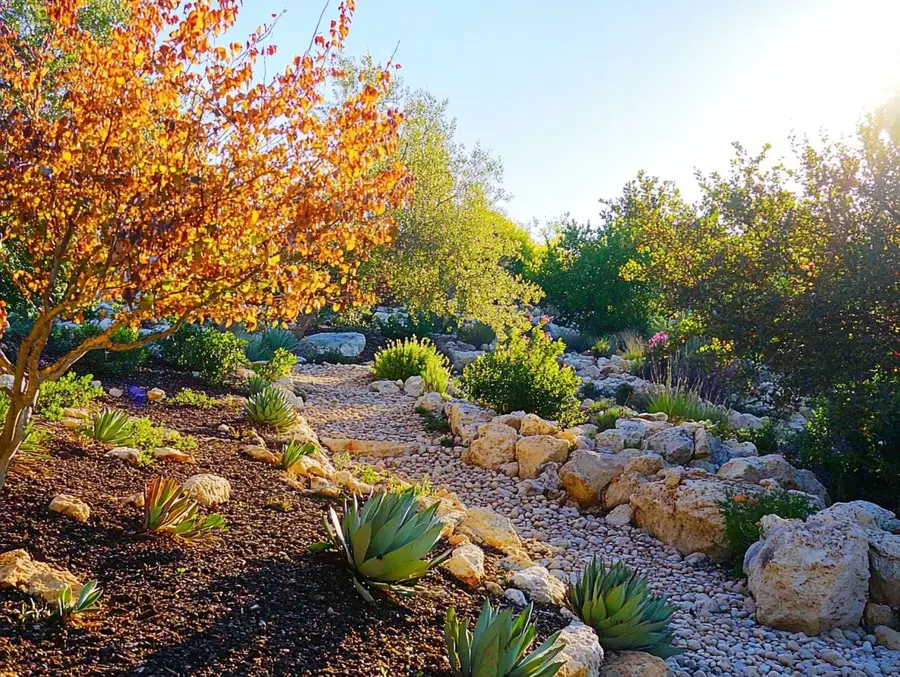
Trees can be one of the most valuable parts of a xeriscape because they do more than just add height and beauty. The right drought-tolerant trees provide shade, improve soil, support wildlife, and help make the entire landscape more efficient with water.
Well-placed trees can create cooler microclimates, reduce wind exposure, and make it easier for surrounding plants to hold moisture. Over time, they also add long-term structure that helps tie the landscape together.
Water Conservation
Water conservation is one of the biggest reasons trees work so well in xeriscaping. Their shade helps lower soil temperatures, which reduces evaporation and keeps moisture in the ground longer.
When paired with mulch, drip irrigation, and improved soil, drought-tolerant trees can significantly reduce overall watering needs. Deep roots also help stabilize the soil and improve moisture movement below the surface.
Energy Efficiency
Trees can also improve energy efficiency by shading homes, patios, and outdoor living spaces. This can lower surface temperatures and help reduce cooling costs during hot weather.
In a xeriscape, shade from trees can create better growing conditions for nearby plants, especially in areas with intense afternoon sun. That added protection often means less stress, less watering, and a more balanced landscape overall.
Choosing the Right Trees for Xeriscaping
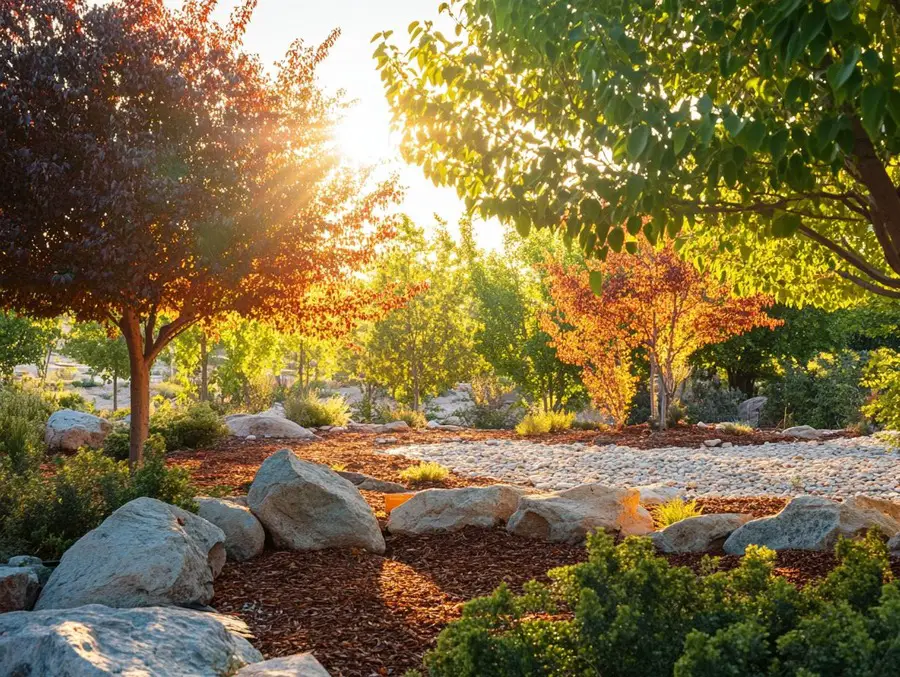
Choosing the right trees for xeriscaping starts with matching the tree to your climate, soil type, and available space. A tree that fits your local conditions will establish faster, need less water, and stay healthier long term.
By picking drought-tolerant species and native trees that fit your local climate, you can build a healthy ecosystem that demands minimal maintenance.
Incorporating ornamental trees and low-water varieties can really spice up the visual appeal of your garden while also providing those important environmental benefits.
Drought-Tolerant Species
Choosing drought-tolerant trees is one of the most important parts of successful xeriscaping. These trees are adapted to low-water conditions and usually need less irrigation once established, making them easier to maintain over time.
Species like mesquite, palo verde, desert willow, and some acacias are strong choices because they handle heat, dry soil, and long dry periods while still providing shade and structure.
Matching the right tree to your hardiness zone and soil conditions helps improve long-term growth, reduce water use, and create a stronger, more resilient xeriscape.
Adaptability to Local Climate
A tree’s ability to adapt to your local climate is just as important as drought tolerance. Factors like rainfall, temperature swings, wind exposure, and soil type all affect how well a tree will establish and perform over time.
Trees that naturally fit your region usually need less care, less watering, and fewer adjustments. Choosing trees suited to your local conditions helps build a healthier xeriscape that lasts longer and stays easier to manage.
Planting and Maintaining Trees for Xeriscaping
Proper planting and maintenance techniques are key to ensuring the long-term success of your trees in xeriscaping.
By using effective planting methods, like adding soil amendments and focusing on root system development, you can give your trees the best chance for optimal health and growth.
Regular maintenance practices, such as pruning and keeping an eye out for pests, will help your trees thrive in a low-water environment and contribute to the overall sustainability of your landscape.
Proper Planting Techniques
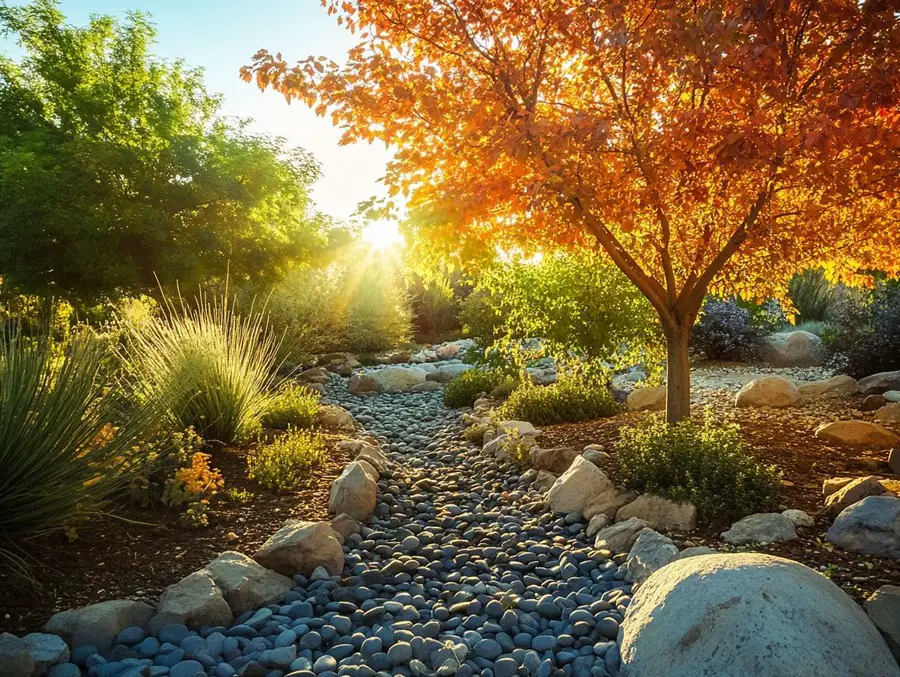
Implementing proper planting techniques is crucial for establishing healthy trees in your xeriscaping project.
Start by preparing the soil with amendments to enhance its structure and fertility, creating the best possible conditions for the roots to thrive.
Understanding how to be efficient with irrigation is key; use drip irrigation methods to deliver water directly to the roots while keeping waste to a minimum during the initial growth phase.
Before you plant, make sure to dig a hole that’s three times wider than the root ball but no deeper than its height.
This allows the roots to spread outwards instead of just going downwards.
Adding organic compost to the native soil will improve drainage and nutrient availability, which is vital for encouraging vigorous growth.
After you’ve placed the tree in the hole, backfill it with the amended soil, gently tamping it down to get rid of any air pockets.
Once your tree is planted, watering techniques become super important; it’s best to soak the area thoroughly so the roots will be encouraged to reach deeper for moisture.
These thoughtful practices boost the tree’s immediate vitality and also play a big role in its long-term health and longevity in your landscape.
Watering and Pruning Tips
Maintaining tree health through proper watering and pruning is super important in a xeriscaped environment.
In terms of watering, think about using efficient methods that help conserve soil moisture and minimize runoff. This way, your trees can establish stronger root systems.
Regular pruning is key too, make sure to remove dead or overcrowded branches to improve air circulation and promote healthy growth.
This will ensure your trees keep thriving in a low-water landscape.
On top of that, consider trying out deep watering strategies that encourage your roots to dig deeper into the soil, which can really boost drought resistance.
Drip irrigation systems can also be a game changer, delivering water right to the roots while cutting down on evaporation losses.
Mulching around the base of your trees helps retain moisture and regulate temperature, which is great for their overall vitality.
Don’t forget about seasonal pruning during dormancy!
It can really enhance tree structure and longevity, allowing for better sunlight exposure and nutrient absorption.
By adopting these tailored techniques, you can keep your xeriscaped landscape looking vibrant and resilient, no matter what challenges come your way.
Creating a Xeriscape Design with Trees
Creating a xeriscape design that incorporates trees can really transform your landscape into a sustainable and visually appealing space.
By thoughtfully choosing design elements that work well with the surrounding environment, you can boost urban greening efforts while promoting biodiversity.
Using trees adds beauty and also provides essential ecosystem services that help keep your landscape healthy.
Incorporating Trees into a Drought-Resistant Landscape
Incorporating trees into your drought-resistant landscape takes a bit of strategic planning, but it’s totally worth it to make sure they match the overall vibe and functionality of your garden.
By using companion planting techniques and picking tree species that thrive in the same conditions, you can enhance the ecological balance and create a welcoming habitat for wildlife.
This thoughtful approach elevates your landscape design and also aligns with the sustainable practices of xeriscaping.
To get started, think about planting native species like mesquite or ironwood.
They need less water and offer essential shelter and food for local critters.
Pairing these trees with drought-tolerant shrubs like sage or prickly pear will help you create a multi-layered environment that boosts moisture retention and keeps your soil healthy.
Mixing up your planting patterns reduces competition for resources and attracts beneficial insects and pollinators.
By crafting a varied ecosystem, you can integrate trees in a way that yields a resilient landscape thriving even in tough conditions.
Frequently Asked Questions
What are the best trees for xeriscaping?
Mesquite, desert willow, palo verde, olive, and acacia are some of the best low-water tree choices for xeriscaping.
Do xeriscape trees need watering?
Yes, especially while getting established. Once rooted, most need far less water than traditional landscape trees.
Can trees help lower temperatures in a xeriscape?
Yes. Shade trees can cool soil, reduce evaporation, and create better growing conditions for nearby plants.
Are native trees better for xeriscaping?
Usually yes. Native trees are often better adapted to local soil, rainfall, and temperature conditions.
Final Thoughts
Trees for xeriscaping do more than save water. They create shade, improve soil health, support wildlife, and make dry landscapes more comfortable and usable.
Choosing the right drought-tolerant tree for your climate can add long-term structure and help the rest of your xeriscape perform better. A well-placed tree often becomes one of the most valuable parts of a water-wise yard.
Explore More Xeriscape Plant Guides
What is xeriscaping? A beginner’s guide to drought-tolerant landscaping – Colorado State University