

Xeriscaping is a clever landscaping method that helps you conserve water while still creating a stunning outdoor space.
By using drought-resistant plants and smart gardening practices, xeriscaping not only benefits the environment but also saves you some serious cash as a homeowner.
You’ll want to discover the perks of xeriscaping, learn how to implement it step-by-step, and get tips on picking the right plants and maintaining your xeriscaped yard for long-term success.
Dive into the world of cultivating a sustainable, vibrant landscape that flourishes with minimal water!
What is Energy Savings through Xeriscaping?
Xeriscaping is a landscaping method that you can use to cut down or even eliminate the need for irrigation. It focuses on drought-resistant plants and sustainable gardening techniques that fit right into your local ecosystem.
Not only does this approach make your outdoor space look great, but it also promotes water conservation and keeps your soil healthy. It’s a smart choice, especially in areas where drought and water scarcity are common.
By incorporating xeriscaping principles, you can create beautiful, low-maintenance gardens that are in tune with energy-conscious landscaping practices while contributing to landscape sustainability and climate adaptability.
Originating in the 1980s as a response to severe water shortages, xeriscaping is all about key principles like improving soil, selecting the right plants, and making the most of microclimates. This method encourages you to use native and drought-tolerant species, which not only cut down on the need for extra watering but also help our biodiversity flourish in your garden.
Plus, when you apply mulch effectively, you can retain soil moisture, reduce evaporation, and steer clear of chemical fertilizers, which aligns perfectly with sustainable practices. By embracing these ecological landscaping techniques, you’ll significantly reduce your environmental impact while creating a space that thrives in harmony with nature.
Benefits of Xeriscaping
The benefits of xeriscaping go way beyond just looking good. It plays a big role in water conservation, saves energy, and reduces your environmental impact while also promoting biodiversity and soil health in your garden.
By choosing drought-resistant plants and using sustainable irrigation strategies, you can create a vibrant landscape that needs minimal maintenance and helps lower your carbon footprint.
Plus, xeriscaping can boost local ecosystems by providing habitats for wildlife and improving irrigation efficiency in urban areas. It’s a smart and responsible choice for your garden design!
Environmental Benefits
Xeriscaping offers a ton of environmental benefits, especially when it comes to effective water conservation and boosting biodiversity. By using native plants, you attract local wildlife and support essential ecosystem services.
This landscaping approach can really cut down on water usage, helping to tackle issues like soil erosion and the heat island effect in urban areas. When you include xeriscape gardens in your landscape design, you’re playing a part in promoting a healthier ecological balance and encouraging sustainable land use practices that benefit both the environment and your community.
Using ecological landscaping techniques not only helps with water retention but also creates important habitats for various species, which fosters a diverse and resilient landscape. These carefully designed spaces invite pollinators and beneficial insects, which are crucial for the overall health of local ecosystems.
Plus, climate-smart landscaping practices help reduce your carbon footprint by eliminating the need for traditional irrigation systems and cutting back on chemical fertilizers. By embracing these eco-friendly strategies, you and your community can make significant strides toward a more sustainable future, ensuring that nature’s balance is preserved for generations to come.
Cost Savings
Investing in xeriscaping can save you a ton of money over time. It cuts down on your water expenses and lessens the need for constant landscape maintenance since you’ll be using low-maintenance gardens filled with energy-efficient plants.
By setting up sustainable irrigation systems and choosing drought-tolerant landscaping options, you can enjoy lower utility bills and spend less time and money on garden upkeep. Sure, the initial costs of xeriscaping might seem a bit high, but those long-term savings in landscape restoration and maintenance make it a smart financial move for any responsible gardener.
This approach not only makes your outdoor space look great but also fits nicely with broader sustainable urban development goals. You can take advantage of gardening techniques like rain gardens to manage stormwater effectively, which further decreases your reliance on municipal water supplies.
Over time, these practices can significantly contribute to environmental conservation, boost biodiversity, and even enhance your property value.
As communities increasingly focus on eco-friendly solutions, choosing xeriscaping positions you as a sustainability champion. You can ensure your garden thrives with minimal ecological impact while reaping those financial rewards.
How to Implement Xeriscaping
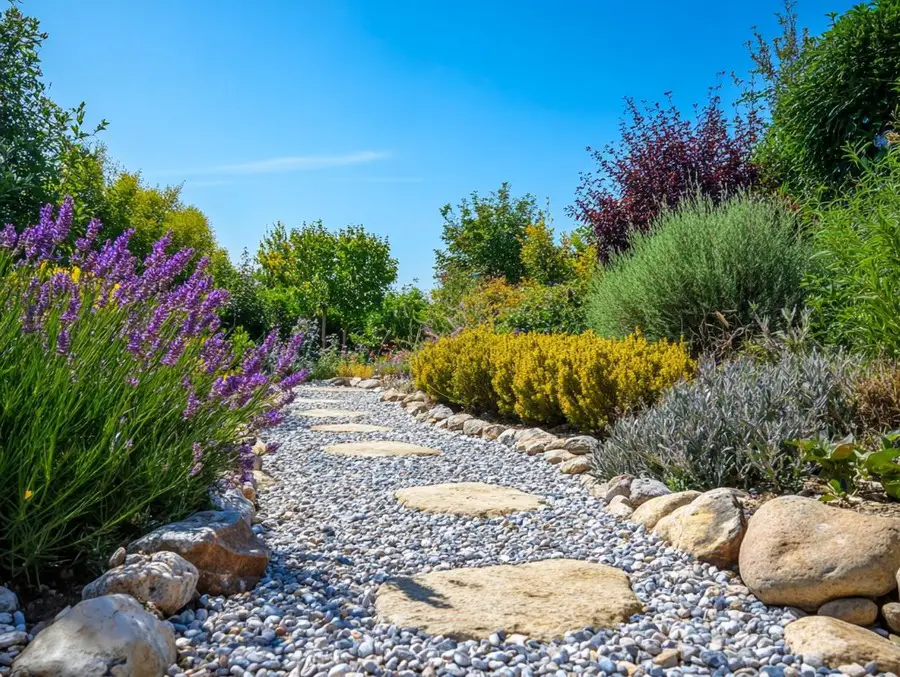
Implementing xeriscaping in your yard is a pretty straightforward process that starts with some thoughtful landscape planning and the use of effective gardening techniques.
The goal here is to maximize irrigation efficiency while embracing sustainable practices. From preparing the soil to choosing the right plants, every step you take in the xeriscape process is geared toward creating a vibrant, drought-resistant garden that can thrive with minimal resources.
By getting the hang of xeriscape principles, you’ll not only boost your outdoor aesthetics but also do your part for the local ecosystems and help with climate resilience.
Step-by-Step Guide
To successfully implement xeriscaping, just follow this step-by-step guide that lays out the essential practices for effective landscape planning and plant selection to help you create a thriving xeriscape garden.
Start by assessing your yard’s unique conditions, like sunlight exposure and soil moisture, so you can figure out the best xeric design features to support drought-resistant plants and boost your garden’s efficiency.
With a bit of thought put into local ecosystems and sustainable gardening techniques, you can create a low-maintenance landscape that’s both beautiful and functional.
Sharing your knowledge about organic gardening with your community can really enrich the experience, allowing others to benefit from your journey too.
Begin by designing the layout, making sure the plants you choose not only need minimal water but also provide a cozy habitat for local wildlife, promoting biodiversity.
As you move forward, take a good look at water management strategies, like rain gardens or drip irrigation systems, to maximize efficiency and cut down on waste.
Once you’ve established the garden, regular maintenance becomes crucial—think mulching to keep that moisture in and periodic inspections to ensure everything is growing optimally.
Engaging with your neighbors and local gardening groups can create a supportive environment that boosts the success of your xeriscaping efforts.
Choosing the Right Plants for Xeriscaping
Choosing the right plants for your xeriscaping project is key to ensuring long-term success and sustainability. You’ll want to focus on native and drought-resistant plants that not only thrive in your local climate but also boost biodiversity.
By adding xeric plants like ornamental grasses and native wildflowers to your garden design, you can create a vibrant landscape that requires less water and maintenance while also promoting soil health and ecological balance.
Understanding how to select the right plants is essential for a successful xeriscape garden because it directly affects your landscape’s resilience and its ability to adapt to seasonal changes.
Native and Drought-Resistant Plants
Native and drought-resistant plants are the real MVPs of any xeriscaping project, specially designed to thrive in your local climate and soil conditions. By picking these plants, you’re not just boosting biodiversity; you’re also creating a vibrant ecosystem that supports local wildlife while keeping your environmental impact low.
And if you throw in some xeric design features like rain gardens and well-placed shrubs, you’ll take your xeriscape garden to the next level, making sure it stays lush and resilient all year round.
Take plants like lavender, succulents such as agave, and native grasses, for instance. They not only handle dry spells like champs but also add some serious visual flair over time. These energy-efficient plants are perfect for creating seasonal changes in your landscape, with gorgeous blooms in the spring and sturdy structures that hold up through winter.
By incorporating these native species, you’re not just planting; you’re creating habitats that invite pollinators and other beneficial insects to thrive in your garden. Plus, their low water needs mean you can save a pretty penny on irrigation costs, making them a smart choice for eco-conscious gardeners who want to shrink their environmental footprint.
Maintaining a Xeriscaped Yard
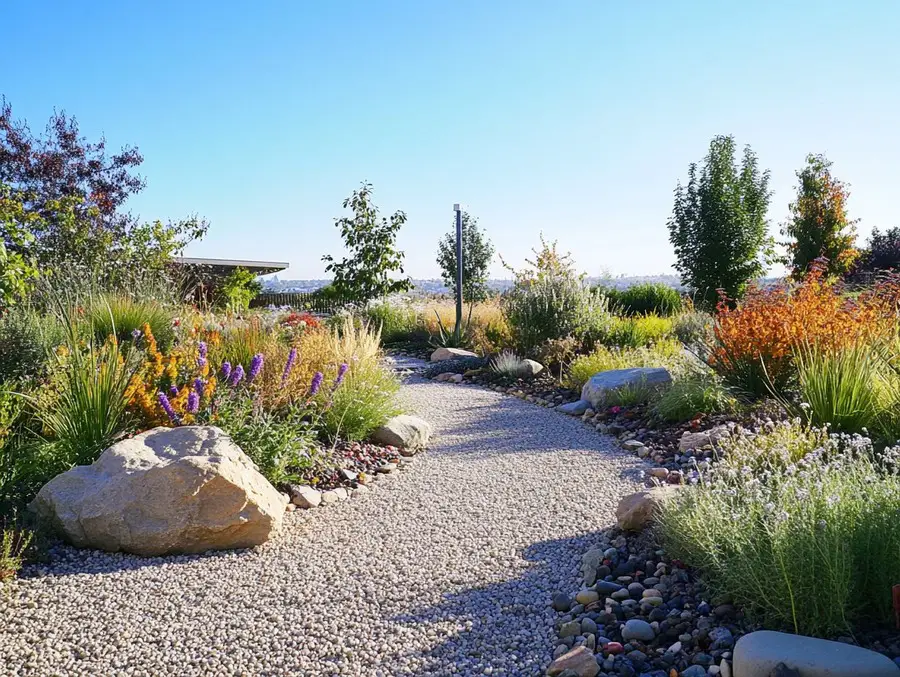
Maintaining a xeriscaped yard means you’ll want to get familiar with some key principles and techniques that help you succeed in the long run while keeping water use and maintenance efforts to a minimum.
By adopting sustainable practices like efficient irrigation systems, regularly checking your soil health, and using mulch to keep moisture in, you can make sure your garden stays lush and thriving, all while giving a nod to your local environment.
Ultimately, the aim of landscape maintenance in a xeriscaped yard is to find that sweet spot between ecological health and outdoor beauty, all while promoting energy savings and reducing your ecological footprint.
Tips for Long-Term Success
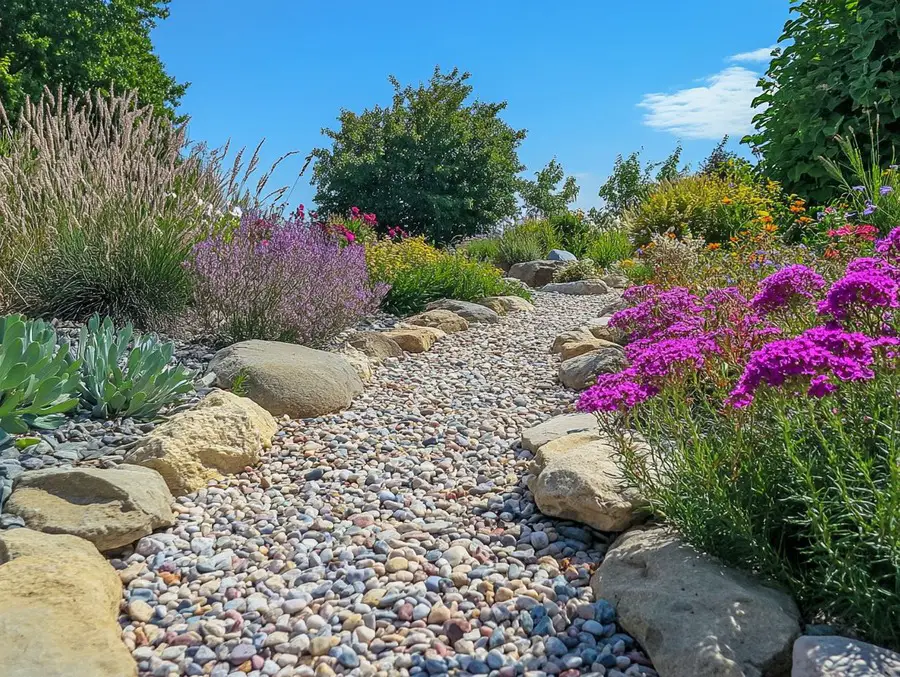
For long-term success in maintaining your xeriscaped yard, it’s crucial for you to adopt effective watering strategies and focus on sustainable land use practices that help retain soil moisture and promote plant health.
By using rainwater harvesting techniques and setting up regular maintenance schedules, you can keep your xeriscape garden thriving with minimal effort while also supporting local biodiversity and ecosystems. Understanding how to manage seasonal landscape changes will enable you to make informed decisions that contribute to the overall health of your xeriscaped yard.
Regularly checking on your plants and soil condition is key in this journey. By frequently assessing your ecosystem, you can figure out if you need to adjust your irrigation or make different plant choices to boost growth while minimizing your garden’s ecological footprint.
Getting involved with community gardening initiatives can offer you valuable insights and support. You can share experiences and pick up tips on maintaining sustainable aesthetics with others who are in the same boat.
Keep in mind that a successful xeriscaped environment isn’t a set-it-and-forget-it deal; it’s a dynamic space that needs your attention and a commitment to being environmentally responsible.
Frequently Asked Questions
What is xeriscaping and how does it save energy?
Xeriscaping is a landscaping technique that uses drought-resistant plants and methods to conserve water. By reducing the need for irrigation, xeriscaping can save energy by decreasing the use of pumps and other equipment.
Does xeriscaping only benefit areas with dry climates?
No, xeriscaping can be beneficial in any climate. Even in wetter regions, xeriscaping can reduce the need for watering and help conserve energy and resources.
Can xeriscaping also save money on energy bills?
Yes, xeriscaping can save money on energy bills by reducing the amount of water and energy needed to maintain a traditional lawn or landscape. It can also reduce the need for mowing and other lawn maintenance tasks, further reducing energy consumption.
Are there any specific plants or techniques that are recommended for xeriscaping?
Yes, there are many drought-resistant plants and landscaping techniques that are ideal for xeriscaping. Some popular choices include native plants, succulents, and rocks or mulch for ground cover. It is best to consult with a professional or do research to determine the best options for your specific climate and landscape.
Can xeriscaping help with other environmental concerns?
Yes, xeriscaping can help with other environmental concerns such as reducing water waste, promoting biodiversity, and reducing the use of chemical fertilizers and pesticides. This can have a positive impact on the overall health of the ecosystem.
Is xeriscaping difficult to maintain compared to traditional landscaping?
No, xeriscaping can actually be easier to maintain compared to traditional landscaping. Once established, drought-resistant plants require less watering and maintenance, making it a more sustainable and low-maintenance option for landscaping.
Benefits of Xeriscaping: Save Water, Time, and Money
What is xeriscaping? A beginner’s guide to drought-tolerant landscaping