
Many homeowners start asking what xeriscaping is when lawns become harder to maintain, water bills climb, or dry weather keeps pushing traditional landscaping to its limits.
Xeriscaping offers a smarter way to build a yard that uses less water while still looking attractive and functional.
Instead of relying on thirsty lawns and constant irrigation, xeriscaping works with your local climate by using drought-tolerant plants, efficient watering methods, and smarter soil preparation.
This approach is especially helpful in dry or drought-prone areas, but it can benefit homeowners almost anywhere who want lower water bills, less maintenance, and a yard that works better with local conditions.
If you’ve ever struggled to keep a lawn alive through a hot, dry stretch, you already understand why this approach makes so much sense.
New to xeriscaping? If you’re just getting started, this beginner-friendly guide walks through the basics step by step:
Xeriscaping for Beginners: Easy Water-Saving Yard Tips
📘 What You’ll Learn
- 🌱 What xeriscaping actually is (and what it’s not)
- 💧 How xeriscaping helps reduce water use
- 🏡 Why this approach works in many climates
- 🌎 How xeriscaping supports sustainable landscaping
- 🧭 What to expect if you start converting your yard
Quick Answer 🌱
Xeriscaping is a water-wise landscaping method that reduces irrigation needs by using drought-tolerant plants, better soil preparation, mulch, and efficient watering systems. It helps create lower-maintenance yards that work with your local climate instead of fighting it.
🌵 What Is Xeriscaping?
Xeriscaping is a landscaping method designed to reduce water use by choosing climate-appropriate plants, improving soil, using mulch, and watering more efficiently.
It does not mean a yard full of rocks or eliminating water completely. It means using water wisely and designing your landscape to work with your environment instead of constantly fighting it.
While often associated with dry climates, xeriscaping can be used almost anywhere to create a yard that is easier to maintain and more resilient over time.
🌵 Xeriscaping at a Glance
- 💧 Uses less water than traditional landscaping
- 🌱 Focuses on drought-tolerant and native plants
- 🧱 Uses mulch, gravel, or hardscape to retain moisture
- 📐 Designed around local climate conditions
- 🧰 Lower maintenance once established
If you’re comparing xeriscaping to a traditional lawn setup, the differences become clear:
⚖️ Xeriscaping vs Traditional Landscaping
| Feature | Xeriscaping | Traditional Lawn |
|---|---|---|
| Water Use | Low | High |
| Maintenance | Low to Moderate | High |
| Plant Type | Drought-tolerant plants | Water-dependent turf |
| Long-Term Cost | Lower | Higher |
🌎 Why Xeriscaping Matters More Than Ever
Water conservation is becoming more important in many regions, not just deserts. Rising costs and changing weather patterns are making traditional lawns harder to maintain.
- 💧 Outdoor watering uses a large portion of household water
- 📈 Water costs continue to rise
- ☀️ Longer dry periods stress traditional landscapes
- 🌱 Climate-adapted yards are more resilient
🌟 Benefits of Xeriscaping
- 💧 Reduced water use
- 💰 Lower maintenance costs
- 🐝 Supports pollinators
- 🧰 Less mowing and upkeep
📐 The Core Principles of Xeriscaping
- 🧭 Planning and design
- 🌱 Soil improvement
- 🌸 Proper plant selection
- 💧 Efficient irrigation
- 🍂 Mulching
- 🔧 Maintenance
Each of these xeriscaping principles plays a different role in building a water-wise yard. If you want to go deeper into any part of the process, these guides can help you break it down step by step:
🌿 Build Your Xeriscape Step by Step
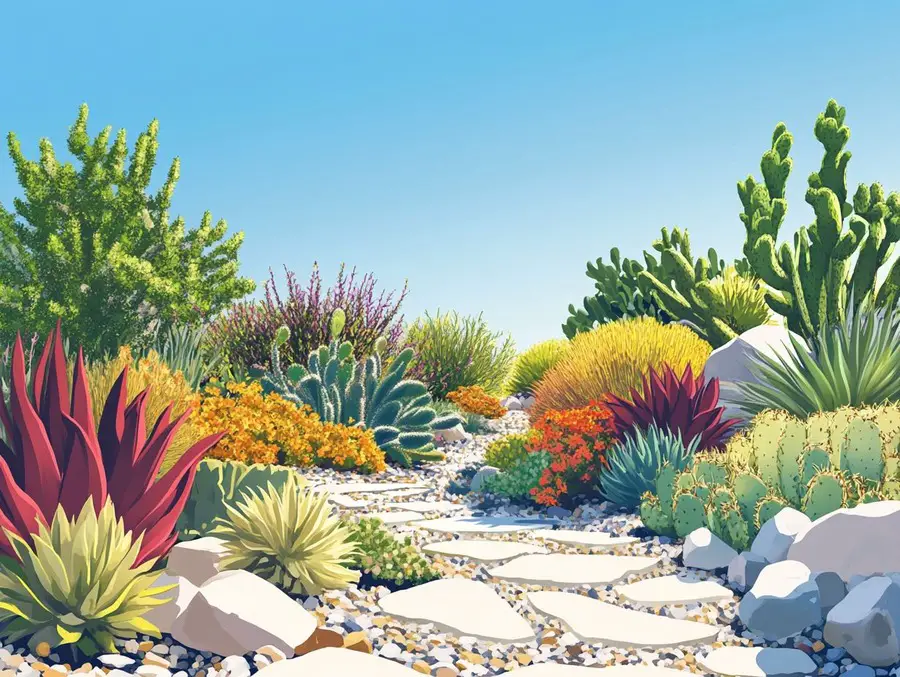
🏡 What Xeriscaping Looks Like in a Real Yard
Every xeriscape looks a little different, but the common goal is the same: less water waste, better plant survival, and a yard built for the local climate.
- 🌾 Reduced or removed lawn areas
- 🌿 Native plants and perennials
- 🪨 Gravel pathways or mulch beds
- 🌸 Seasonal blooms
🏡 Can You Xeriscape Just Part of Your Yard?
Yes. Many homeowners start small and convert one section at a time.
- 🌾 Replace small lawn sections
- 🌿 Convert problem areas
- 🚿 Upgrade irrigation gradually
⚠️ Common Xeriscaping Mistakes to Avoid
- 🚫 Overwatering drought-tolerant plants after they’re established
- 🚫 Skipping soil preparation before planting
- 🚫 Choosing plants that don’t fit your climate or sun exposure
- 🚫 Using too much gravel and not enough living plants
- 🚫 Expecting a full xeriscape to mature instantly
❓ Xeriscaping FAQs
What is xeriscaping?
Xeriscaping is a landscaping method that reduces water use by combining drought-tolerant plants, better soil preparation, mulch, and efficient irrigation. The goal is to create a yard that works with local climate conditions instead of needing constant watering.
Does xeriscaping mean no water?
No. Xeriscaping does not eliminate water completely. It focuses on using water more efficiently by choosing plants and materials that need less irrigation once established.
Can xeriscaping look colorful?
Yes. Xeriscaping can include flowering perennials, ornamental grasses, shrubs, and colorful ground covers. A water-wise yard does not have to look dry or empty.
Is xeriscaping only for desert climates?
No. Xeriscaping works in many climates, not just deserts. The plant choices change depending on the region, but the principles of saving water and matching plants to local conditions stay the same.
Is xeriscaping expensive to start?
It can cost more upfront if you remove lawn, improve soil, or install irrigation, but xeriscaping often lowers long-term costs through reduced water use, less mowing, and fewer plant replacements.
Can I xeriscape part of my yard first?
Yes. Many homeowners start by converting one problem area, a side yard, or a section of lawn before expanding. This makes xeriscaping easier and more affordable to manage.
What plants are best for xeriscaping?
The best xeriscaping plants depend on your climate, soil, and sun exposure. Native plants, drought-tolerant perennials, ornamental grasses, succulents, and low-water ground covers are common choices.
Does xeriscaping reduce maintenance?
In most cases, yes. Xeriscaping usually reduces mowing, watering, fertilizing, and general upkeep compared to a traditional lawn, especially after the landscape is fully established.
🌱 What Is Xeriscaping? Final Thoughts
Xeriscaping is not about giving up on a beautiful yard or filling everything with rock. At its core, xeriscaping is about building a landscape that makes better use of water, works with your climate, and requires less constant upkeep over time.
That might mean replacing part of a lawn with drought-tolerant ground cover, planting native shrubs that handle your weather naturally, or improving soil so your plants hold moisture longer.
The exact design can look different from one yard to the next, but the goal stays the same: less waste, less maintenance, and a more resilient outdoor space.
One of the best things about xeriscaping is that you do not have to do everything at once. Many homeowners start with one dry patch, one problem slope, or one section of lawn and build from there. Small changes add up quickly.
If you are ready to start, focus on the basics first: understand your space, improve your soil, choose the right plants, and build around efficient watering. Once those pieces are in place, xeriscaping becomes much easier to manage and much more rewarding long term.
Whether you start with one bed, one slope, or a full yard redesign, xeriscaping gives you a practical way to build a landscape that saves water and keeps looking better over time.