
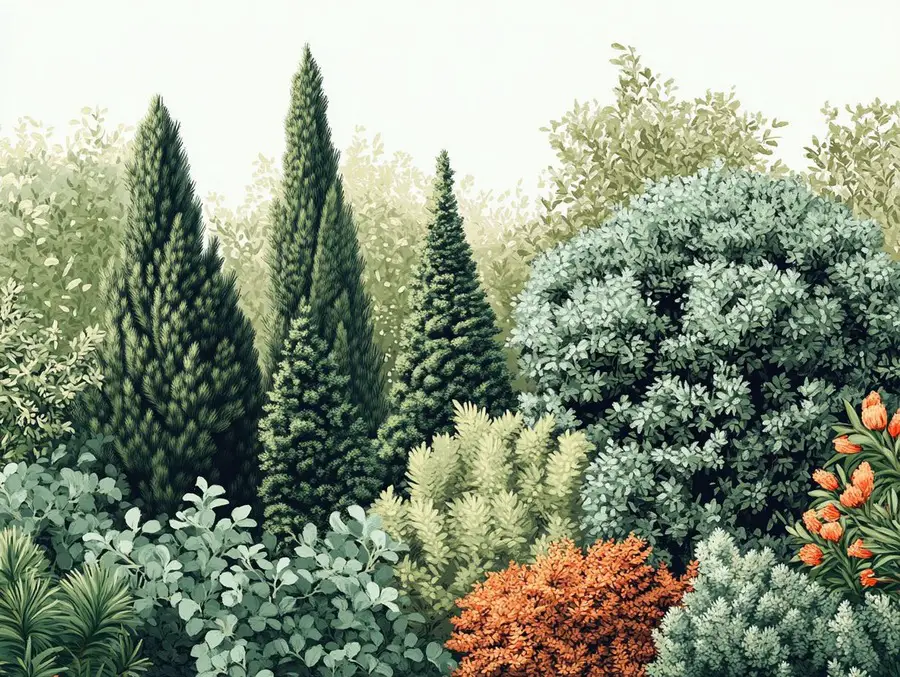
Evergreen Plants for Year-Round Interest keep your landscape vibrant in every season! Discover low-maintenance, drought-tolerant options for lasting beauty.
Evergreen plants really bring your garden and landscape to life all year round, adding a touch of beauty and a bunch of practical perks too.
With their ability to keep their foliage throughout every season and the wide range of varieties that fit different climates, evergreens are a must-have for any gardener like you.
This article dives into the benefits of evergreen plants, offers some design tips, and shares key care techniques, including pest management strategies you won’t want to miss.
Get ready to discover how to create stunning, lasting landscapes that thrive no matter the season!
What are Evergreen Plants?
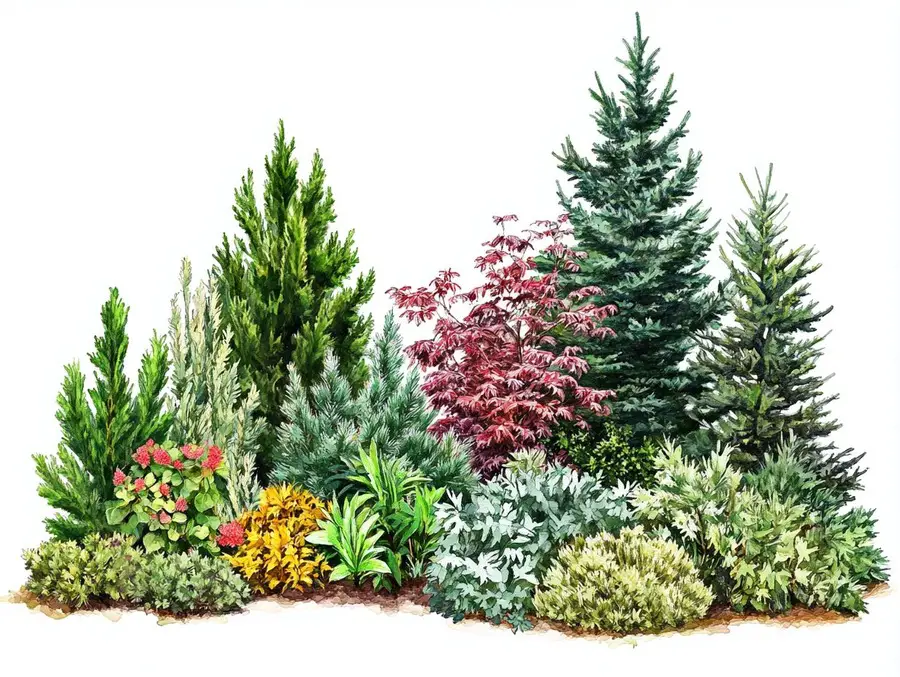
Evergreen plants are a fantastic group of flora that keep their leaves all year long, giving you that lush greenery and interest no matter the season. These tough species include all sorts of trees, shrubs, and ground cover, making them must-haves in any garden design.
Their knack for keeping their color and visual appeal even in the winter not only brightens up your garden but also helps create habitats for wildlife, ensuring your outdoor space stays vibrant and lively, regardless of the weather.
Plus, evergreen plants are low maintenance champs. They’re resilient and can thrive in various climates and soil types, which means you can enjoy a beautiful landscape without constantly replanting or spending hours on upkeep.
They also boost biodiversity by providing shelter and food for birds and insects. Popular choices like holly, juniper, and spruce not only serve practical purposes but also add layers of depth and texture to your garden, enhancing your overall gardening experience.
Benefits of Evergreen Plants
Evergreen plants bring a ton of benefits that make them a go-to choice for your garden planning. They provide year-round interest and really amp up the aesthetics with their lush foliage and unique textures.
Not only do they look great, but they also offer environmental perks, like supporting biodiversity and providing habitats for wildlife. Plus, a lot of evergreen species are low maintenance, so you can enjoy a beautiful landscape with minimal effort, even as the seasons change.
Year-Round Interest and Other Advantages
One of the best things about evergreen plants is how they keep your garden looking lively all year round. Even in winter, these beauties provide vibrant structures and bold foliage patterns that really stand out.
This visual appeal can be a game-changer for landscape design; just imagine mixing evergreen trees, shrubs, and ground cover to create a stunning contrast with seasonal plants. Plus, these plants are pretty impressive when it comes to adapting to different climates. They’re tough cookies that can handle all sorts of weather, which means they’ll stick around in your garden for the long haul.
But the charm of evergreen plants goes beyond their sturdy looks; they really add texture and depth to your outdoor space. Their resilience means you don’t have to stress too much about watering them, since many of these species can thrive in various moisture levels.
This adaptability opens up a world of planting possibilities across different zones, making evergreens a fantastic choice for anyone wanting to create a sustainable landscape that looks great with minimal maintenance, all while keeping that gorgeous visual continuity throughout the year.
Types of Evergreen Plants
There are so many types of evergreen plants out there, each bringing its own unique flair and benefits that can really elevate your garden’s design and layout.
You’ve got flowering evergreens that add a splash of color and a lovely fragrance, plus ornamental shrubs and conifers that bring structure and texture to your landscape.
Don’t forget about native species—they can boost biodiversity and support local wildlife. So, choosing the right plants is super important to help you reach your landscape goals.
Popular Varieties for Different Climates
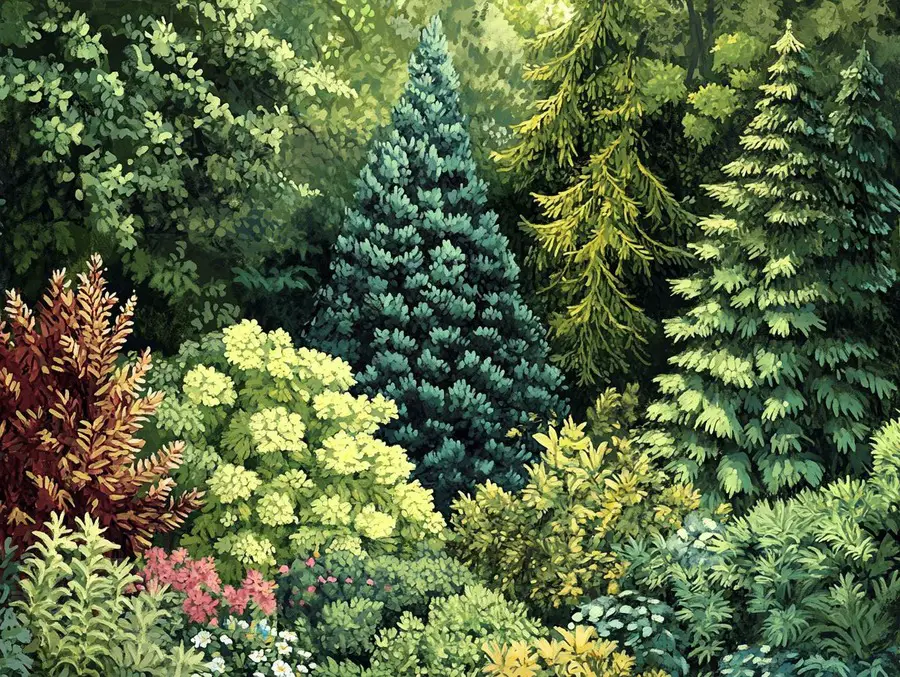
When you’re picking evergreen plants for your garden, it’s crucial to think about the popular varieties that thrive in different climates, making sure they’ll adapt well to your specific conditions. For instance, some species are drought-resistant, making them perfect for arid regions, while others can handle the cold, which is great for harsher climates.
By understanding how different soil types interact with plant varieties, you can create a stunning landscape that showcases the beauty and resilience of evergreen plants.
Many evergreens come with their own unique growth habits. Dwarf varieties are compact and ideal for smaller spaces, while groundcovers can spread out and help reduce soil erosion. If you have shady spots in your garden, shade-tolerant evergreens like the Eastern Hemlock or Yew will thrive in less sunlight, adding lush greenery even in dimmer areas.
As you plan your planting schedules, keep seasonal changes and maintenance tips in mind to ensure each plant gets the care it needs. This will help enhance their longevity and overall health, making your garden a thriving paradise.
Designing with Evergreen Plants
Incorporating evergreen plants into your garden design can really transform your outdoor spaces. They add year-round structure, texture, and visual appeal to your landscape.
With the right design principles, you can create a balanced composition that showcases the beauty of these hardy plants while ensuring your garden remains functional and lovely throughout the seasons.
Plus, using plant layering techniques can take the overall look up a notch, giving you a dynamic visual experience that changes with the seasons and weather.
Tips for Incorporating into Landscapes
Incorporating evergreen plants into your landscape can really boost your garden’s aesthetics while keeping things interesting all year round with minimal effort. When you’re planning your garden, think about mixing different plant combinations to create both contrast and harmony.
For example, pairing hardy species with flowering evergreens can make your space visually appealing no matter the season. Whether you’re container gardening on a patio or tackling small-space gardening in an urban area, the thoughtful placement of these plants can truly transform the overall design.
To get the most out of your evergreen plants, it’s important to check the sun exposure in your garden. Some varieties love soaking up full sun, while others prefer a shady retreat. Understanding each plant’s water needs is also key, so you can make sure they’re getting just the right amount without stressing them out or causing rot.
Plus, think about companion planting strategies; pairing evergreens with perennials or ground covers that have similar moisture needs can really help them thrive.
Don’t forget about mulch! It’s not just a pretty finish; it helps retain soil moisture and keeps weeds at bay, creating a cozy environment for your evergreens and their companions while keeping pesky pests away.
Caring for Evergreen Plants
Taking care of your evergreen plants is key to keeping them healthy and beautiful all year round. When you understand their specific needs, you’ll enjoy lush greenery and thriving landscapes.
Regular maintenance tips, like knowing how much water they need and using effective pruning techniques, will help ensure that these hardy plants stay vibrant and structurally sound.
Plus, being aware of pest resistance and focusing on soil health can help you steer clear of common issues, allowing your garden to really flourish.
Maintenance and Pruning Techniques
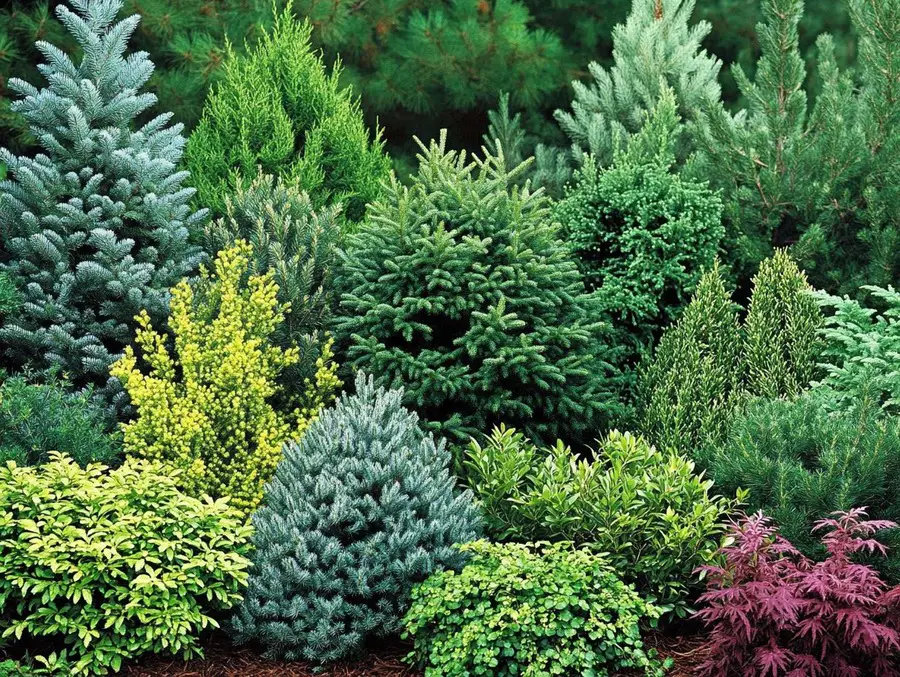
Effective maintenance and pruning techniques are key for your evergreen plants to thrive. These practices help you manage their growth habits and promote healthy foliage all year round.
By regularly assessing your plants’ structure and making timely pruning decisions, you can improve air circulation and encourage new growth, keeping your garden vibrant even through the changing seasons. Plus, if you implement eco-friendly gardening practices while pruning, you’ll minimize your environmental impact and support sustainability in your landscape.
Different evergreen species might require specific approaches to maximize their health and aesthetic appeal. For example, conifers like pines and spruces do well with selective thinning, which is best done in late winter or early spring before new growth kicks in. On the other hand, broadleaf evergreens might respond better to light trimming in early summer when they’re actively growing.
Don’t hesitate to tap into gardening resources like local extension services or specialized books on landscape maintenance. They can offer valuable insights into the best timing and techniques for your specific plants. By customizing your pruning strategy to meet the needs of each type, you can help ensure your garden stays lush and resilient year-round.
Common Pests and Diseases
Common pests and diseases can really mess with your evergreen plants, so it’s important to have effective prevention and treatment methods in place to protect your landscape.
If you can spot potential issues early, you’ll boost your plants’ resilience and help your garden thrive for the long haul.
By using proactive strategies and eco-friendly solutions, you can keep your evergreen beauties healthy while also enhancing your garden’s overall look and supporting biodiversity.
Prevention and Treatment Methods
To keep your evergreen plants safe from pesky pests and diseases, understanding effective prevention and treatment methods is crucial for maintaining their health and appearance. By implementing pest resistance strategies—like choosing disease-resistant varieties and making sure your soil is in tip-top shape—you can significantly cut down on outbreaks.
Staying updated on the latest gardening trends can also help you discover innovative ways to tackle potential threats, ensuring your garden thrives all year long.
Regularly checking your plants for early signs of distress or infestation can be a total game changer in preventative care. Seasonal practices like proper mulching, pruning, and watering will boost their resilience against environmental stressors.
Plus, organic treatments such as neem oil or insecticidal soap can help you manage any existing issues without harming those friendly bugs we all love.
And don’t forget about companion planting! It can naturally deter pests and create a balanced ecosystem in your landscape.
By focusing on these maintenance strategies, you not only protect your evergreen plants but also create a vibrant and healthy outdoor space throughout the year.
Frequently Asked Questions
What are some popular evergreen plants for year-round interest?
Some popular choices include hollies, boxwoods, yews, junipers, and arborvitae.
Do evergreen plants require a lot of maintenance?
It depends on the specific plant, but most evergreens are relatively low maintenance and only require occasional pruning and fertilizing.
Can evergreen plants provide color in addition to greenery?
Yes, there are many evergreens that offer beautiful flowers, berries, and even colorful foliage throughout the year.
What are some benefits of incorporating evergreen plants into a landscape?
Along with providing year-round interest, evergreens can also provide privacy, serve as windbreaks, and offer shelter for wildlife.
Are there any evergreen plants that are drought tolerant?
Yes, some evergreens, such as lavender and rosemary, are known for their ability to thrive in dry and hot conditions.
Can evergreen plants be used in containers and how do I care for them?
Yes, many evergreens can be grown in containers. Make sure to choose a pot with good drainage and use a well-draining potting mix. Water regularly and fertilize according to the plant’s needs.
Benefits of Xeriscaping: Save Water, Time, and Money
What is xeriscaping? A beginner’s guide to drought-tolerant landscaping