
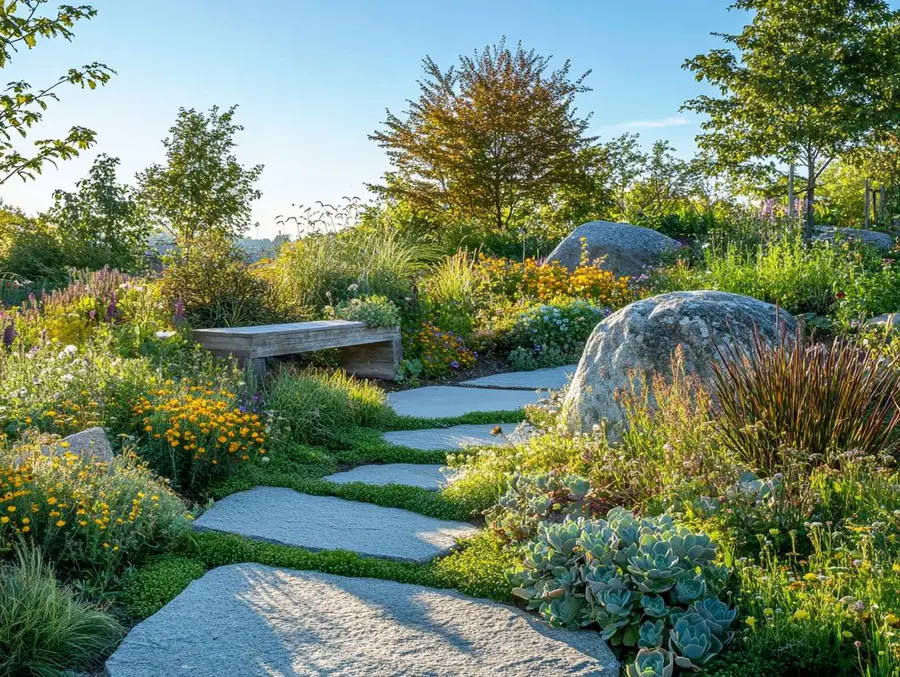
Lower maintenance landscaping is perfect for anyone who loves a beautiful yard but hates the constant upkeep.
Tired of endless weeding and watering?
With xeriscaped gardens using smart plant choices, efficient watering systems, and a few design tweaks, you can create a stunning outdoor space that saves you time, money, and effort.
- Lower Maintenance Landscaping simplifies yard care by using native plants, efficient irrigation systems, and low-maintenance materials like mulch or hardscaping.
- This approach reduces water usage, lowers costs, and keeps your outdoor spaces beautiful with minimal effort.
- Xeriscaping is perfect for anyone looking to enjoy their yard without constant upkeep.
Lower Maintenance Landscaping Made Easy
In today’s fast-paced world, you might be looking for ways to enjoy beautiful outdoor spaces without all the constant upkeep.
Lower maintenance landscaping could be just the solution you need, letting you spend more time relaxing in your garden while cutting down on both time and costs.
This article dives into the many benefits of adopting a low-maintenance approach, from choosing the right plants to setting up efficient watering systems and hardscaping options.
You’ll also find practical tips on how to keep your landscape looking great with minimal effort.
Get ready to discover how to create a stunning, stress-free garden that enhances your home and lifestyle.
Benefits of Lower Maintenance Landscaping
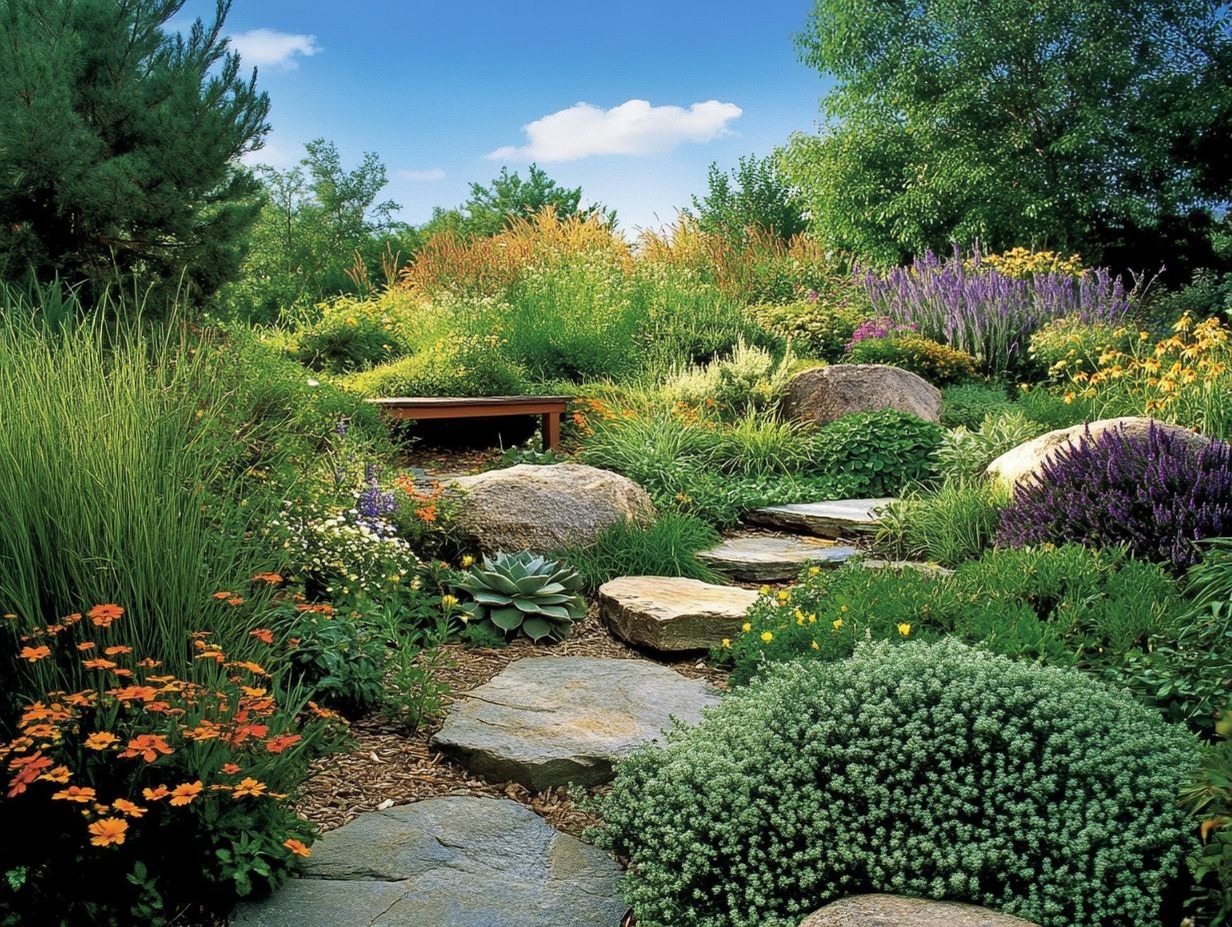
When you choose low-maintenance landscaping, you’re not just saving time and effort; you’re also making a smart choice for sustainability and cost-effectiveness in your outdoor space.
In today’s world, where sustainable practices really matter, going for a landscape design that needs minimal upkeep can offer big benefits for both your wallet and the environment.
By incorporating drought-resistant and native plants, along with efficient irrigation systems, you can significantly cut down on water usage and maintenance costs, all while creating a stunning area that enhances your outdoor living experience.
Reduced Time and Effort
One of the best things about low-maintenance landscaping is how it cuts down on the time and effort you need to spend on garden upkeep.
This means you can kick back and enjoy your outdoor space instead of slogging away at it.
By choosing the right plants and using smart landscaping techniques, you can create a garden that thrives with minimal fuss.
When you opt for pest-resistant plants, you reduce the need for chemical treatments and contribute to a more sustainable garden ecosystem.
Installing efficient irrigation systems, like drip lines or soaker hoses, helps ensure your plants get just the right amount of water, reducing waste and promoting healthy growth.
Focusing on native species in your plant selections can boost resilience even more since these plants are naturally suited to your local conditions.
All these strategies together lead to a vibrant landscape that flourishes effortlessly, letting you soak in the beauty of your surroundings without the constant hassle of maintenance.
Cost Savings
Investing in low-maintenance landscaping can really lead to some serious savings, especially in the long run.
You’ll find that it usually requires less water and fewer materials and cuts down on those pesky labor costs tied to maintaining your outdoor space.
By choosing sustainable materials and setting up efficient irrigation systems, you can significantly lower your gardening expenses while still creating a beautiful outdoor vibe.
This approach lets you allocate your resources more wisely, focusing on quality rather than just quantity.
Using drought-resistant plants cuts down on the need for watering and boosts your garden’s resilience against unpredictable climate changes.
Plus, going for native species can save you even more money since they typically need less care and are better suited to the local soil and climate.
In the end, embracing these cost-effective landscaping strategies helps the environment and gives you a stunning garden that keeps looking great while saving you money on maintenance. It’s a win-win!
Designing a Low Maintenance Landscape
Designing a low maintenance landscape is all about making smart choices when it comes to your plants.
You want to select species that are resilient and need minimal care but still look fantastic and serve a purpose in your outdoor space.
Think about incorporating elements like ornamental grasses, rock gardens, and seasonal colors into your garden beds.
This way, you can create a beautiful environment that pleases the eye, supports biodiversity, and enhances your outdoor aesthetics.
Choosing the Right Plants
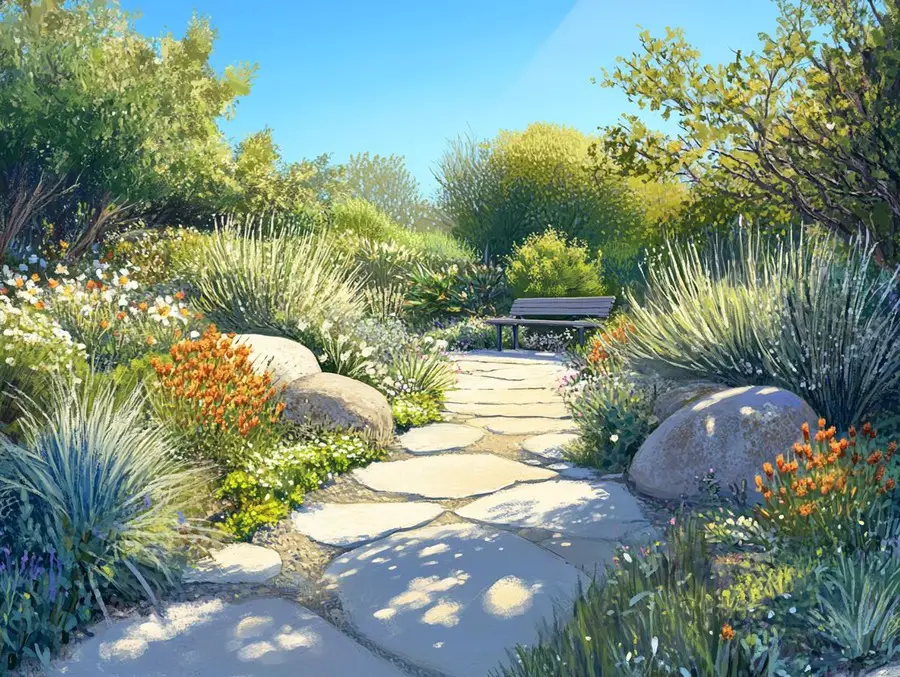
Choosing the right plants is key when you’re designing a low-maintenance landscape.
By selecting native plants, drought-resistant varieties, and pest-resistant options, you can create a thriving garden that needs minimal intervention.
These plants use less water, boost local biodiversity, and support the natural ecosystem in your area.
Incorporating these species can really cut down on your need for fertilizers and pesticides, leading to a healthier environment overall.
Native plants are perfectly suited to your local climate and soil, making them tougher against local pests and diseases.
Drought-resistant varieties are especially handy during those dry spells, saving you both water and the hassle of constant irrigation.
When you include pest-resistant plants in your landscape, you get to enjoy vibrant gardens that flourish naturally, which means a lot less maintenance for you.
By making smart choices, you can create an eco-friendly haven that’s not just beautiful but sustainable too.
Creating Efficient Watering Systems
To keep your landscape low-maintenance, creating efficient watering systems is key.
Think automated irrigation systems and automatic watering setups that ensure your plants get just the right amount of water without you having to micromanage everything.
This helps conserve water and keeps your garden beds and plant selection in tip-top shape.
Implementing techniques like drip irrigation or soaker hoses lets you deliver water directly to the roots of your plants, cutting down on waste and reducing the chances of fungal diseases that can come from overhead watering.
You might also want to consider adding a rainwater harvesting system.
It’s a great way to promote sustainability and gives you a cost-effective water source during dry spells.
Using smart irrigation controllers that adjust based on weather conditions and soil moisture means your plants can thrive without you having to constantly check on them.
With these methods in your toolkit, you’ll have a sustainable approach to garden care that results in lush landscapes requiring minimal labor and resources.
Implementing Low Maintenance Features
You can really boost the longevity and looks of your landscape by implementing low-maintenance features that cut down on the upkeep.
By adding hardscaping elements, using mulch effectively, and selecting the right ground cover plants, you can create areas that prevent soil erosion and require less maintenance as time goes on.
It’s a win-win for your outdoor space!
Hardscaping Options
Hardscaping options are key when it comes to low-maintenance landscaping.
They introduce durable materials and structures that help you create functional outdoor living spaces while cutting down on the need for constant garden upkeep.
Features like patios, pathways, and walls can really enhance your landscape and add lasting beauty.
These elements provide solid solutions for your outdoor designs, but they also help minimize wear and tear, ensuring your spaces stay appealing with minimal effort.
You’ll find that materials like stone, concrete, and brick are popular choices because they’re tough and can handle various weather conditions.
Hardscaping can really boost usability, turning your backyard into an entertainment hub or a peaceful retreat.
By integrating features like fire pits and seating walls, you promote social interaction, while decorative walkways can guide your guests through beautifully landscaped areas.
When you incorporate these hardscaping options, you can achieve a lovely balance between aesthetics and functionality, leaving a lasting impression of elegance.
Using Mulch and Groundcovers
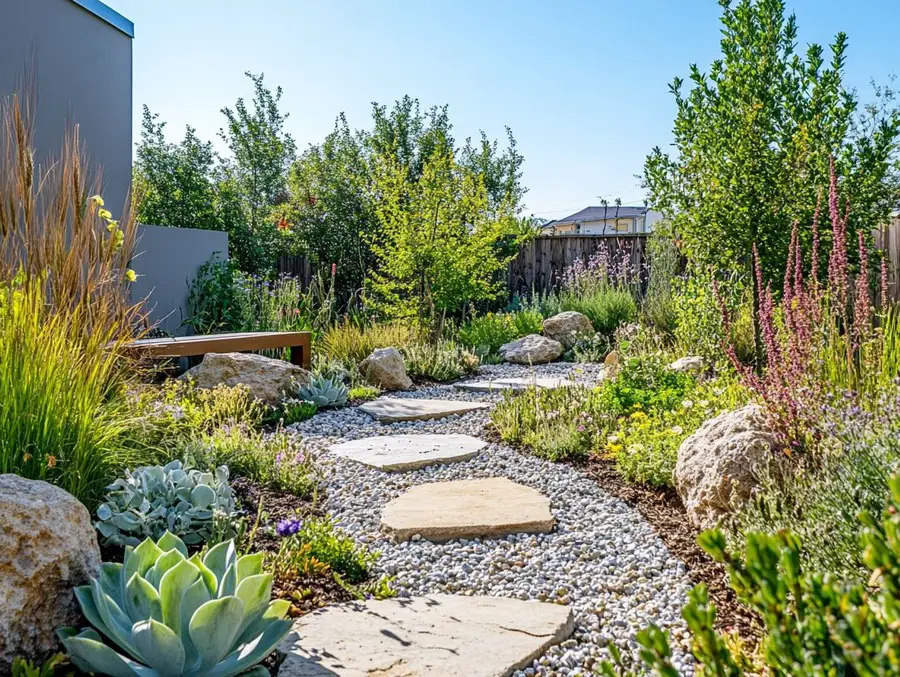
Using mulch and ground covers is a smart move for keeping your landscape low maintenance.
These elements can really boost your soil health and help you tackle those pesky weeds.
By applying a layer of organic mulch and choosing the right ground cover plants, you can cut down on how often you need to weed and water.
Mulch acts like a protective blanket that helps regulate soil temperature and reduces erosion, creating a more stable environment for moisture retention.
Ground covers, on the other hand, form a dense mat that keeps weeds at bay and enhances biodiversity by providing homes for beneficial insects and microorganisms.
This winning combo of mulching and ground coverage promotes robust plant growth while enriching the soil as organic materials break down.
In the end, it creates a self-sustaining ecosystem that requires less intervention from you as the gardener.
Maintaining a Low Maintenance Landscape
Keeping a low-maintenance landscape doesn’t mean you’re neglecting it.
It’s all about smart garden care that lets your outdoor space flourish with minimal effort.
By using seasonal maintenance tips and putting a spotlight on plant health, you can make sure your landscape stays beautiful and functional all year round.
Proper Pruning and Weeding Techniques
Proper pruning and weeding techniques are key to keeping your landscape low-maintenance, helping your plants thrive while keeping those pesky weeds at bay.
By using effective pest management and making sure your plants are pruned correctly, you can create a beautiful outdoor space with minimal effort.
Timing and methods of pruning matter a lot; for example, cutting back perennials in early spring will have them blooming beautifully later on.
Mulch is your friend. It suppresses weed growth and helps retain moisture in the soil, which is a big win for your plants.
Make it a habit to regularly check for invasive weeds and remove them quickly to avoid bigger problems down the line.
Incorporating native plants is another great move since they usually require less upkeep and can really boost your landscape’s resilience and beauty.
With these strategies in place, the time you spend on maintenance turns into quality time spent enjoying the great outdoors.
Seasonal Maintenance Tips
Incorporating seasonal maintenance tips into your garden planning is essential for keeping your low-maintenance landscape vibrant and healthy.
Simple tasks like checking your plants’ health and adjusting mulch levels for the season can really boost your outdoor aesthetics with minimal effort.
Don’t forget to regularly inspect for weeds and pests; doing so will help maintain your landscape’s integrity without demanding a ton of labor.
Autumn is a perfect time to trim back any overgrown perennials and clear away fallen leaves, which can help prevent diseases and improve airflow.
When winter rolls around, think about adding a layer of insulation around your perennial plants to shield them from those harsh temperatures.
As spring arrives, you can save time on maintenance by focusing on efficient watering techniques like drip irrigation, which ensures your plants thrive without all the fuss.
By following these straightforward tips, you can enjoy the beauty of your garden all year long without the weight of intensive upkeep.
Frequently Asked Questions
What is lower maintenance landscaping?
Lower maintenance landscaping refers to the use of design techniques, materials, and plants that require less time, effort, and resources to maintain compared to traditional landscaping methods.
It aims to create a beautiful and functional outdoor space with minimal maintenance requirements.
What are some benefits of lower maintenance landscaping?
Lower maintenance landscaping offers several benefits, such as reducing the time and cost of upkeep, conserving water and resources, and promoting a more sustainable and eco-friendly outdoor space.
It also requires less physical labor, making it suitable for those with limited mobility or busy schedules.
What are some key elements of lower maintenance landscaping?
The key elements of lower maintenance landscaping include using native plants, drought-tolerant plants, and perennials that require less watering and fertilizing.
Incorporating hardscaping, such as gravel or mulch, can also help reduce the need for mowing and weeding.
Additionally, incorporating efficient irrigation systems and choosing low-maintenance materials for outdoor structures can contribute to a lower maintenance landscape.
How do you choose the right plants for lower maintenance landscaping?
When selecting plants for a lower maintenance landscape, consider factors such as their water and sunlight requirements, growth habits, and resistance to pests and diseases.
Choose plants that are well-suited for your climate and soil type, and opt for native or drought-tolerant plants that are naturally adapted to the local environment.
It’s also helpful to group plants with similar needs together to make watering and maintenance easier.
Can lower maintenance landscaping be stylish and attractive?
Yes, lower maintenance landscaping can be both stylish and attractive.
With the right design and plant choices, a lower maintenance landscape can have a unique and visually appealing look.
Incorporating elements such as colorful flowers, interesting shapes and textures, and attractive outdoor structures can add visual interest and aesthetic appeal to your low-maintenance outdoor space.
How can I implement lower maintenance landscaping in my yard?
To implement lower maintenance landscaping in your yard, start by assessing your current landscape and identifying areas that require the most time and effort to maintain.
Consider making changes such as replacing high-maintenance plants with low-maintenance options, incorporating hardscaping, and installing efficient irrigation systems.
It’s also helpful to regularly weed, mulch, and prune your landscape to keep it looking neat and tidy with minimal effort.
Benefits of Xeriscaping: Save Water, Time, and Money
What is xeriscaping? A beginner’s guide to drought-tolerant landscaping