
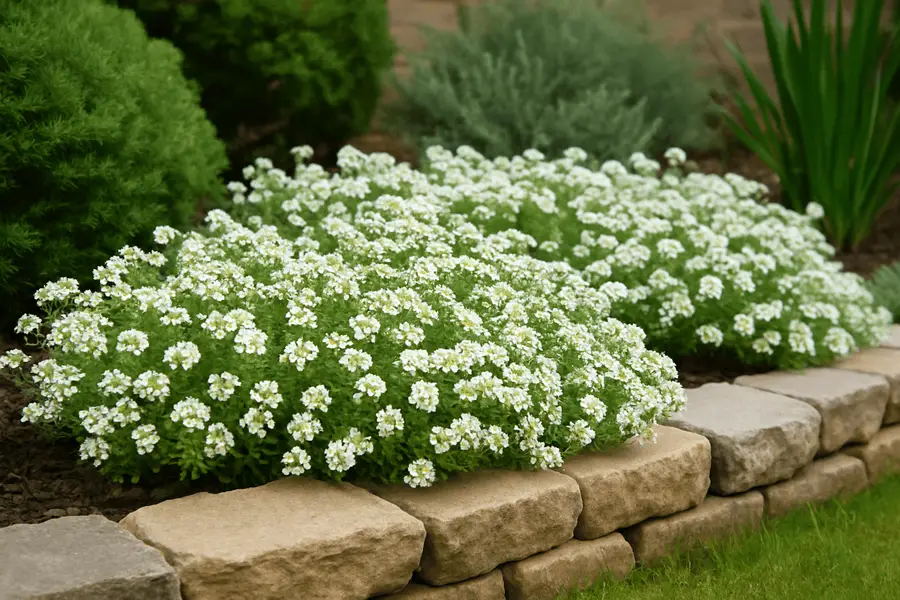
Alyssum Ground Cover Plants are perfect when you want something sweet, simple, and low-maintenance to brighten up your space.
If bare soil or dry patches are ruining your curb appeal, these tiny blooms will fix it fast.
They’re tough, fragrant, and full of charm. Just plant them and let them do their thing.
Alyssum Ground Cover Plants Key Takeaways
- Alyssum Ground Cover Plants are low-growing annuals known for their sweet fragrance and dense mats of white, pink, or purple flowers.
- They thrive in sunny, dry areas and require minimal care once established.
- Perfect for borders, rock gardens, and walkways.
- Alyssum helps suppress weeds and brings pollinators into your garden.
🌼 Alyssum Ground Cover Plants: A Fragrant Xeriscaping Favorite
Tired of empty patches in your xeriscape that look dry and dull? Alyssum might be the low-growing solution you’ve been waiting for.
These tiny flowering plants don’t just bring color and charm. They also fit beautifully into water-wise gardens.
Let’s explore why Alyssum makes such a great ground cover for xeriscaping and how you can use it to your advantage.
🌱 What Is Alyssum?
Alyssum, also called Lobularia maritima or sweet alyssum, is a fast-growing annual or short-lived perennial known for its:
- Low-growing, spreading habit
- Sweet fragrance (especially the white varieties)
- Tiny blooms in shades of white, purple, and pink
- Attractiveness to pollinators like bees and butterflies
It grows just 3–9 inches tall and spreads wide like a soft floral carpet—perfect for sunny spaces.
Alyssum Plant Care Reference Guide
| Characteristic | Details |
|---|---|
| Common Name | Sweet Alyssum |
| Botanical Name | Lobularia maritima |
| Native Habitat | Mediterranean region |
| Plant Type | Annual (perennial in warm climates) |
| Growth Pattern | Spreading, mat-forming |
| Mature Size | 3–9 inches tall, 12 inches wide |
| Watering | Water during prolonged dry spells once established |
| Light/Sun Exposure | Full sun to light shade |
| Soil Type | Well-drained; sandy or rocky preferred |
| Soil pH | Neutral to slightly alkaline |
| Temperature | Prefers mild to warm climates (60–80°F) |
| Humidity | Tolerates dry air; good airflow is ideal |
| Bloom Time & Flower Color | Spring to frost; white, pink, lavender, or purple |
| Potential Problems | Root rot in poorly drained soil; may fade in extreme heat |
| Repotting | Not typically needed; often direct-seeded |
| Hardiness Zones (USDA) | Annual in zones 2–8; perennial in 9–11 |
💧 Why Alyssum Works for Xeriscaping
Here’s why this little plant punches above its weight in a water-wise landscape:
- Drought-tolerant once established: After a few good soakings, it can handle hot, dry weather surprisingly well.
- Shallow roots help with erosion control: Plant it on slopes or edges to hold soil in place.
- Acts as a living mulch: Keeps the soil cool and reduces evaporation underneath.
- Low maintenance: It blooms nonstop with minimal care.
- Quick ground cover: It spreads rapidly and helps fill in bare patches between rocks or pavers.
🌼 How to Use Alyssum in Xeriscaping
Alyssum Ground Cover Plants are the secret weapon in any low-water garden.
They’re small but mighty, bringing beauty, fragrance, and pollinator power without hogging space or resources.
Here are some easy and creative ways to put them to work in your xeriscape:
🧱 Plant it between stepping stones
Alyssum tucks perfectly between pavers and stones, softening the look of hardscape paths. Plus, that sweet scent? You’ll notice it every time you walk by.
🌿 Use it at the front of garden beds
Because it stays low and spreads out gently, Alyssum is ideal for creating a natural, blooming edge that blends into borders.
🏔️ Add it to rock gardens
It thrives in gravel and poor soil, making it a perfect match for boulders, crushed rock, and other sun-loving companions like sedum or creeping thyme.
🌸 Pair it with taller drought-tolerant plants
Alyssum looks amazing at the feet of lavender, rosemary, Russian sage, or ornamental grasses—filling in the gaps with color and charm.
✂️ Simple Care Tips for Alyssum
Even though Alyssum is an easy grower, a few quick tips will keep it looking fresh all season:
- ☀️ Light: Full sun brings out the best blooms, but it can handle part shade too
- 🌱 Soil: Loves well-drained soil—add compost or sand to loosen heavy clay
- 💧 Watering: Give it a deep drink at planting, then let it dry between waterings. Only water during long dry spells
- ✂️ Pruning: If it starts to look stretched out or tired mid-summer, give it a quick trim to encourage fresh growth and even a second bloom
💡 Bonus tip: Alyssum often reseeds itself, so if you let it flower and fade, you might get a surprise round of blooms next season—no extra work required.
⚖️ Pros and Cons of Alyssum as Ground Cover
Like any plant, Alyssum Ground Cover Plants have their strengths and quirks. Here’s a quick breakdown to help you decide if they’re the right fit for your space.
✅ Pros
- 🌿 Fast-spreading and low-growing
Alyssum forms a soft, flowering carpet in no time, making it great for filling gaps and smoothing out bare soil. - 🐝 Great for pollinators
Bees and butterflies love it. The sweet flowers draw in beneficial insects and bring your garden to life. - 🚫 Helps prevent weed growth
Once established, its dense habit shades out weeds naturally—no herbicides needed. - 🌸 Gorgeous in bloom
It produces masses of tiny blooms in soft pastels or crisp white that keep your landscape looking fresh and full. - 🌼 Sweet scent
That honey-like fragrance is a bonus. It adds charm to paths, borders, and patios where you can enjoy it up close.
⚠️ Cons
- ☀️ May decline in extreme summer heat
In really hot zones, alyssum can get leggy or fade unless it gets a bit of afternoon shade or a midseason trim. - 🌧️ Needs good drainage
Heavy or compacted soil can lead to root rot. It’s happiest in sandy or amended soil with great drainage. - ❄️ Annual in colder zones
It won’t survive hard frosts, but it’s quick to grow from seed and often reseeds itself for a second round next year.
🐝 Xeriscaping Bonus: Pollinator Paradise
Alyssum Ground Cover Plants aren’t just a treat for your eyes—they’re a magnet for pollinators.
The tiny, fragrant flowers are irresistible to bees, butterflies, and even hoverflies.
These helpful visitors don’t just add movement and life to your garden and they play a big role in supporting healthy ecosystems.
By planting Alyssum, you’re not only saving water, you’re helping nature do its thing.
More pollinators mean better fruit and veggie harvests, stronger surrounding plants, and a more balanced, biodiverse yard overall.
It’s a small flower with a big impact.
🌿 Great Companion Plants for Alyssum
Alyssum plays well with others, especially in a xeriscape garden. Pair it with taller, drought-tolerant plants that enjoy full sun and well-drained soil. Here are a few standout companions:
- Lavender – Adds height and structure, plus it shares Alyssum’s love for dry soil and full sun
- Creeping Thyme – Another low-growing spreader with fragrance and toughness to match
- Russian Sage – Tall and airy, it creates contrast while thriving in the same dry conditions
- Sedum – Especially ground-hugging varieties like Oreganum Sedum or Sedum Acre
- Rosemary – Woody, drought-tolerant, and great for edging garden beds
These combinations bring out the best in Alyssum—mixing texture, scent, and color while keeping your garden water-wise.
🌼 Final Thoughts: Add Alyssum to Your Xeriscape
Looking to fill in those dry, bare spots without adding more work to your garden routine? Alyssum Ground Cover Plants check all the boxes—and then some.
🌿 Why It’s a Standout in Xeriscaping
Alyssum brings beauty, function, and fragrance to your landscape with almost no fuss.
It’s quick to grow, easy to care for, and works well with other drought-tolerant plants.
Whether you’re edging a path, dressing up a rock garden, or filling in between flagstones, this little bloom pulls more than its weight.
🌸 Small Plant, Big Impact
Don’t let its delicate looks fool you, Alyssum is a garden workhorse. It crowds out weeds, attracts beneficial pollinators, and fills in spaces with soft color and texture.
Plus, its low-growing habit means it won’t compete with taller plants, making it a perfect team player.
✅ Give It a Try
If you’ve got a sunny patch of soil and want something low-maintenance, go ahead and plant a few alyssum starts or scatter some seeds.
You’ll be surprised how fast it fills in and how quickly it wins you over.
Xeriscape Ground Covers: Best Smart Choices for Dry Zones
❓ FAQ: Alyssum Ground Cover in Xeriscaping
Got questions about growing Alyssum Ground Cover Plants in your xeriscape? You’re not alone! Here are some quick and helpful answers to the things most gardeners want to know before planting this charming bloomer.
🌿 Is Alyssum a perennial or annual?
A: Alyssum is considered a short-lived perennial in warm zones (USDA zones 9–11), but most folks grow it as an annual in cooler climates. The good news? It reseeds easily, so you might get fresh growth the following season without replanting.
🪨 Can I plant Alyssum in gravel or rocky soil?
A: Absolutely. Alyssum loves well-drained spots, including gravel beds, rocky edges, and between pavers. Just make sure the soil doesn’t stay soggy, and it’ll settle in beautifully—even in poor or sandy soil.
🌱 Does Alyssum need fertilizer?
A: Not really. It’s a light feeder. A bit of compost or a slow-release balanced fertilizer at planting is usually enough. Overfeeding can actually reduce blooming, so keep it simple.
💧 How often should I water it?
A: After a few deep waterings during the first couple of weeks, Alyssum becomes very drought-tolerant. You’ll only need to water it during extended dry spells. It prefers to dry out between waterings, which makes it perfect for xeriscaping.
References
What is Xeriscaping? (Including Best Plants for Your Zone) – Nevada NID
Designing Landscapes for Northern Nevada’s Arid Climate – Nevada Extension
South Texas Wildscape and Xeriscape-plants/ Texas A&M Extension
New Mexico Xeric Guide – NM.Gov
Low Water Use/Drought Tolerant Plant List – Arizona Department of Water Resources
The Beginners Guide to Xeriscape in Denver – 5280 Magazine Denver’s Mile High Magazine
What is xeriscaping? A beginner’s guide to drought-tolerant landscaping – Colorado State University
What is xeriscaping? A beginner’s guide to drought-tolerant landscaping – Colorado State University
UCCE Master Gardeners of San Joaquin County – Low Water Use Landscapes