
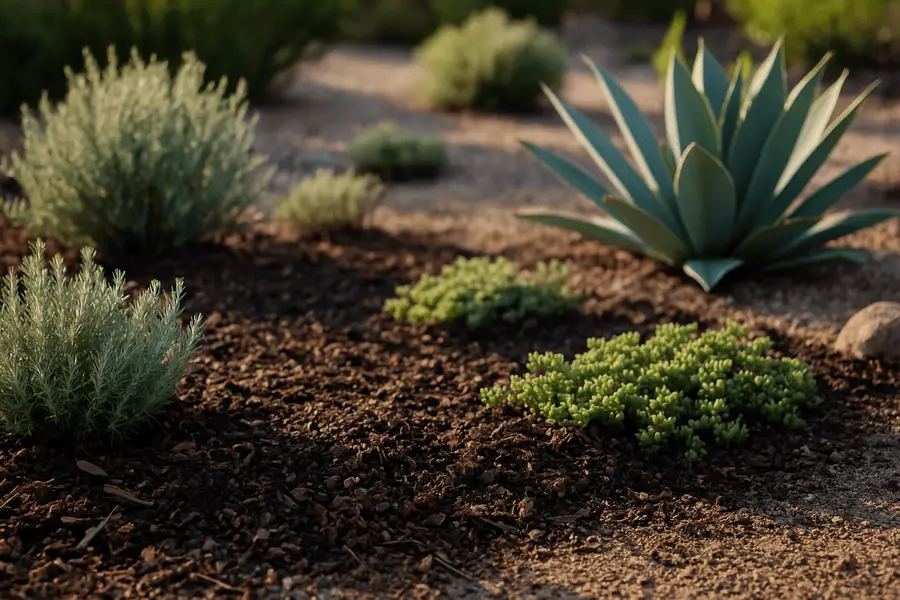
Tired of watching your xeriscape struggle in dry, tired soil? It’s a common issue.
Poor soil can choke out even the toughest drought-tolerant plants. The good news? You don’t need fancy tools or a landscape crew.
With a few simple soil health tips, you can transform your yard into a thriving, low-water paradise.
Easy Soil Health Tips Key Takeaways
- Easy soil health tips for xeriscaping include adding compost, using organic mulch, and improving microbial life with natural amendments.
- These practices boost water retention, reduce erosion, and help plants thrive in dry climates.
- This makes your low-water landscape more sustainable and vibrant.
🌵Boost Your Xeriscape: Easy Soil Health Tips
Xeriscaping isn’t just about planting cactus and calling it a day. It’s a smart, water-wise way to design your landscape so it thrives with less irrigation.
And the secret ingredient? Healthy soil. Without good soil, even drought-tolerant plants will struggle to put down roots and grow strong.
💧 What Is Xeriscaping and Why Does It Matter?
Xeriscaping is a landscaping method that reduces or eliminates the need for supplemental watering.
Instead of thirsty lawns, you use drought-tolerant plants, native species, and clever design to create a beautiful space that saves water, time, and money.
It’s especially great in dry climates, but anyone can benefit from it.
🌱 Why Soil Health Is Key in a Xeriscape
Here’s the deal—most folks focus on the plants, but it’s what’s happening under the surface that really matters.
Healthy soil holds moisture longer, supports root development, and feeds your plants naturally.
If you improve your soil first, the rest of your xeriscape becomes easier to manage and way more resilient.
1. Understanding Soil in Xeriscaping
Before you can improve your soil, it helps to know what you’re working with.
Xeriscaping success starts with understanding the type of soil you have and how it affects water retention, drainage, and plant health.
It’s not about perfection—it’s about building a solid foundation for your plants.
🧱 Common Soil Types and What They Mean for Xeriscaping
- 🏜️ Sandy soil drains fast and needs organic matter to hold moisture.
- 🧱 Clay soil holds water too long and can suffocate roots without added drainage.
- 🌾 Loamy soil is the sweet spot—a mix of sand, silt, and clay with good structure.
Each soil type needs different tweaks, but none are a dealbreaker.
🚫 The Challenges of Poor Soil in Dry Landscapes
Unhealthy soil doesn’t just look dry—it acts dry. Without structure or organic matter, water runs off instead of soaking in.
Roots can’t spread, microbes die off, and plants get stressed. In xeriscaping, that’s a recipe for failure.
The goal is to turn lifeless dirt into living soil that supports your entire garden.
2. Enhancing Soil Structure and Fertility
Healthy soil is more than just dirt—it’s alive. When you improve the structure and feed it right, your xeriscape plants can grow deeper roots, soak up more moisture, and stay strong through dry spells.
This section breaks down how to build better soil without needing to be a soil scientist.
🌾 Add Organic Matter to Improve Texture and Water Retention
The easiest way to boost your soil’s structure? Mix in organic matter like:
- 🌱 Compost – adds nutrients and improves moisture-holding ability
- 🪱 Worm castings – packed with beneficial microbes
- 🐄 Aged manure – excellent for fertility, just make sure it’s fully composted
- 🍂 Shredded leaves – a free, slow-release mulch that breaks down over time
Organic matter fluffs up dense soil, helps sandy soil hold moisture, and keeps roots happy.
🦠 Feed the Soil, Not Just the Plants
Instead of dumping fertilizer every few weeks, focus on feeding the soil so it can feed your plants naturally.
That’s how you build long-term fertility. A few tips:
- Use compost tea or worm tea to boost microbes
- Avoid synthetic fertilizers that kill off good biology
- Add a layer of compost each season to keep the system going
Think of it like building a buffet for your soil life—more microbes means healthier plants with less effort.
3. Mulching Techniques for Moisture Retention

Mulch is a xeriscaper’s best friend. It holds moisture in, keeps roots cool, blocks weeds, and even improves your soil over time.
With the right mulch and a simple routine, you’ll spend less time watering and weeding—and more time enjoying your garden.
🪵 Best Mulch Options for Xeriscaping
Skip the dyed wood chips from big box stores. Instead, go for natural, organic options that work with the soil:
- 🌳 Shredded bark – long-lasting and natural-looking
- 🪵 Wood chips – break down slowly and add organic matter
- 🌱 Compost – doubles as mulch and fertilizer
- 🌲 Pine needles – great for acidic soil areas
- 🪨 Gravel or stone – non-organic, but useful in desert zones
For most gardens, a 2–4 inch layer of mulch works best. Just keep it a few inches away from the base of plants to avoid rot.
🧂 How to Apply Mulch the Right Way
Applying mulch isn’t complicated, but doing it right makes a big difference:
- Clear weeds and water the soil first
- Spread mulch evenly—don’t pile it up like a volcano
- Refresh mulch yearly, or sooner if it breaks down quickly
- Use finer mulch for veggie beds and coarse mulch around shrubs and trees
It’s a small step that makes a huge impact on water savings and plant health.
🦠 4. Promoting Soil Microbial Activity
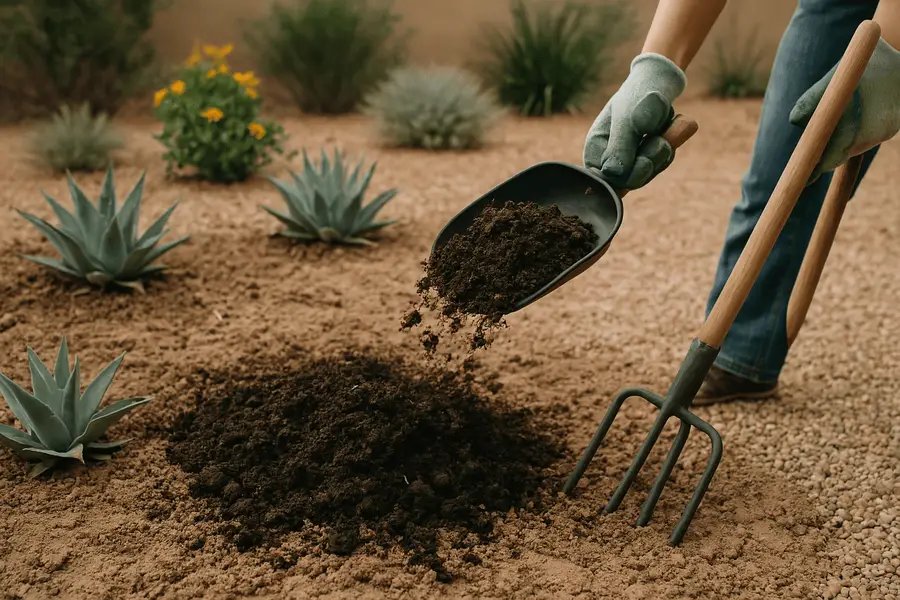
Your soil is alive—or at least it should be. Microbes break down organic matter, release nutrients, and even help plants fight off disease.
If your xeriscape soil is dry and lifeless, it’s time to wake it up and bring those tiny workers back to life.
🧬 Why Microbes Matter in a Xeriscape
Healthy soil teems with life—bacteria, fungi, and other microorganisms all working behind the scenes. Here’s what they do for your plants:
- 🔬 Break down compost into usable nutrients
- 🏗️ Improve soil structure so roots grow deeper
- 💧 Help plants absorb water more efficiently
- 🛡️ Boost immunity against pests and diseases
The more active your soil life, the stronger your xeriscape becomes—especially during drought.
🧑🔬 Simple Ways to Support Microbial Life
You don’t need a microscope—just a few good habits:
- Add compost or worm castings regularly
- Avoid synthetic fertilizers and pesticides
- Water deeply but not too often
- Topdress with organic mulch to protect microbes from sun and heat
- Brew a batch of compost tea now and then for a microbial boost
Healthy microbes lead to healthy plants. It’s that simple.
📦 5. Implementing Sheet Mulching
If your soil is compacted, dry, or full of weeds, sheet mulching is your shortcut to a fresh start—without digging.
This no-till method mimics nature by layering materials to smother weeds, hold moisture, and create rich, living soil right where you need it.
🌿 What Is Sheet Mulching?
Sheet mulching (a.k.a. lasagna gardening) is a simple way to improve soil health using layers of organic material. It:
- 🚫 Blocks weeds without herbicides
- 🚿 Keeps moisture in the ground
- ➕ Adds organic matter as it breaks down
- 🐛 Builds a habitat for worms and microbes
It’s perfect for transforming tired turf or empty patches into plant-ready beds.
🛠️ How To Sheet Mulch Step-by-Step
Here’s how to do it:
- Water the area well – especially if the soil is bone dry
- Cut down existing grass or weeds – but don’t pull them out
- Add a weed barrier layer – use plain cardboard or newspaper (no shiny print)
- Soak the barrier – this helps it break down faster and stay in place
- Add compost or aged manure – 2–3 inches thick for a nutrient-rich layer
- Top it off with mulch – 3–4 inches of bark, straw, or wood chips
- Let it settle – wait a few weeks, or plant directly into it if you’re eager
This method is low effort, high reward, and works wonders in xeriscaping.
📊 6. Monitoring and Maintaining Soil Health
Soil health isn’t a one-and-done task—it’s an ongoing relationship. Just like you check on your plants, it pays to check in on your soil now and then.
A few simple habits can keep your xeriscape thriving year-round with minimal guesswork.
🧪 Test Your Soil (It’s Easier Than You Think)
You don’t need a lab coat—just a basic soil test kit or a send-out service. Testing helps you:
- 📏 Check pH levels (most xeriscape plants like 6.0–7.0)
- 🧪 See what nutrients are missing (like nitrogen, phosphorus, or potassium)
- 🧠 Know whether your soil needs amending or if it’s just fine
Test in early spring or fall, and repeat every 1–2 years to stay ahead of issues.
🔁 Adjust and Refresh Seasonally
Once you know what your soil needs, here’s how to keep it healthy:
- Top off mulch each season to protect and enrich the soil
- Add compost or worm castings a couple of times a year
- Watch water behavior—if it pools or runs off, your soil may need structure help
- Pay attention to plant health—yellowing, slow growth, or pests may mean poor soil
Healthy soil means fewer problems and better results, even in tough conditions.
🌵 Conclusion: Build Soil, Grow Success
Improving soil health might not be the flashiest part of xeriscaping—but it’s the most powerful.
With compost, mulch, microbes, and a few smart habits, you’ll turn tired ground into a living, thriving base for your drought-tolerant garden.
And once your soil is thriving? Everything else falls into place.
🔁 Recap: Key Soil Improvement Strategies
Let’s quickly run through what we covered:
- 🧪 Understand your soil type so you know what you’re working with
- 🌿 Add organic matter like compost or worm castings
- 🍂 Use mulch to retain moisture, suppress weeds, and protect roots
Each step builds a stronger foundation for your xeriscape—and makes your plants more resilient over time.
🌿 Go Make Your Dirt Better!
Here’s the truth: healthy soil makes gardening easier. You’ll water less, weed less, and enjoy more growth with less fuss.
So grab some compost, lay down that mulch, and let nature do the heavy lifting.
A low-maintenance, sustainable xeriscape starts from the ground up—and now you’ve got the tools to make it happen.
Xeriscaping for Beginners: Easy Water-Saving Yard Tips
❓ FAQs: Easy Soil Health Tips for Xeriscaping
Got questions about improving soil in your xeriscape? You’re not alone. Here are some quick answers to help you get started and stay on track.
Q: What’s the best soil for xeriscaping?
A: The best soil for xeriscaping drains well but still holds some moisture. Loamy soil is ideal, but you can improve clay or sandy soil with compost and mulch to create a balanced, plant-friendly mix.
Q: How can I improve poor soil without digging?
A: Try sheet mulching! It’s a no-dig method using cardboard, compost, and mulch to smother weeds and build healthy soil over time—perfect for low-maintenance landscaping.
Q: Do I need to fertilize a xeriscape garden?
A: Not usually. Healthy soil rich in compost and organic matter provides all the nutrients most xeriscape plants need. If growth is slow, use a gentle organic fertilizer like fish emulsion or worm tea.
Q: How often should I test my soil?
A: Test your soil every 1–2 years, especially if you’re seeing issues with plant growth or water retention. A simple home test kit can give you info on pH and basic nutrient levels.
Q: Can mulch really improve my soil?
A: Absolutely. Organic mulch breaks down over time, feeding the soil and helping it retain moisture. It also keeps soil temperatures stable and supports beneficial microbes.
Helpful Resources
What is xeriscaping? A beginner’s guide to drought-tolerant landscaping – Colorado State University