
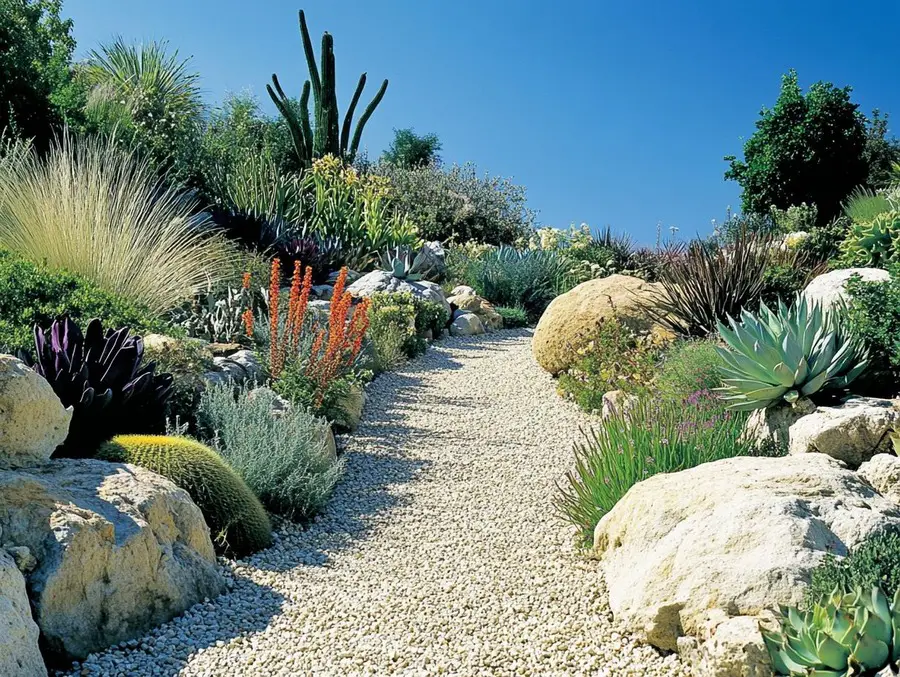
Is Xeriscaping a Sustainable Gardening Solution? What is xeriscaping, and how can it transform your garden?
It’s a sustainable landscaping approach that focuses on water conservation and low-maintenance beauty.
By using drought-tolerant plants and efficient irrigation, you can create an eco-friendly outdoor space that’s vibrant, cost-effective, and perfect for thriving in dry conditions.
Xeriscaping a Sustainable Gardening Solution Key Takeaways
- Xeriscaping is a water-wise landscaping method that uses drought-tolerant plants, efficient irrigation, and eco-friendly design to conserve water.
- It’s a sustainable way to create low-maintenance, visually appealing gardens that thrive in dry climates while supporting biodiversity and reducing costs.
Xeriscaping A Sustainable Gardening Solution It’s Drought-Tolerant Garden Designs
Xeriscaping isn’t just another gardening fad. It’s a sustainable way to save water while crafting beautiful landscapes that catch the eye.
In this guide, you’ll dive into what xeriscaping is all about and take a stroll through its history.
You’ll also discover the impressive environmental perks and cost benefits it brings.
Plus, you’ll get the lowdown on how to design your own xeriscape garden.
From picking the right drought-tolerant plants to clearing up common misconceptions, you’ll learn how to create a stunning, resilient outdoor space that flourishes even when the weather gets dry.
Understanding Xeriscaping
Xeriscaping is all about designing your landscape with water conservation in mind.
It focuses on using drought-resistant plants, sustainable gardening practices, and eco-friendly techniques, especially in dry areas.
By incorporating xeriscape principles into your landscaping, you can create a garden that not only looks great but also helps the environment and supports local ecosystems.
This approach was born out of the need to adapt to dryer climates, providing a smart solution for anyone wanting to maintain a beautiful, low-maintenance garden while efficiently managing water resources.
Definition and History
The term xeriscaping was first thrown around in the 1980s to describe a landscape design approach that aims to cut down on the need for irrigation by using drought-tolerant native plants and clever gardening techniques.
This idea popped up as people started realizing there were serious water shortages, especially in dry areas where traditional landscaping often wasted a ton of water.
Key players like the Denver Water Department really helped put xeriscaping on the map, emphasizing efficiency and sustainability.
As climate change cranked up the heat, leading to unpredictable weather and longer droughts, xeriscaping evolved, incorporating smart techniques like soil amendments and mulching to keep that precious moisture in the ground.
Nowadays, xeriscaping is not just about tackling water scarcity; it also taps into the growing trend of eco-friendly gardening options, making it a must-have in modern landscape design.
Xeriscaping is the process of landscaping, or gardening, that reduces or eliminates the need for irrigation. It is promoted in regions that do not have accessible, plentiful, or reliable supplies of fresh water and has gained acceptance in other regions as access to irrigation water has become limited, though it is not limited to such climates. Xeriscaping may be an alternative to various types of traditional gardening. Wikipedia
Benefits of Xeriscaping
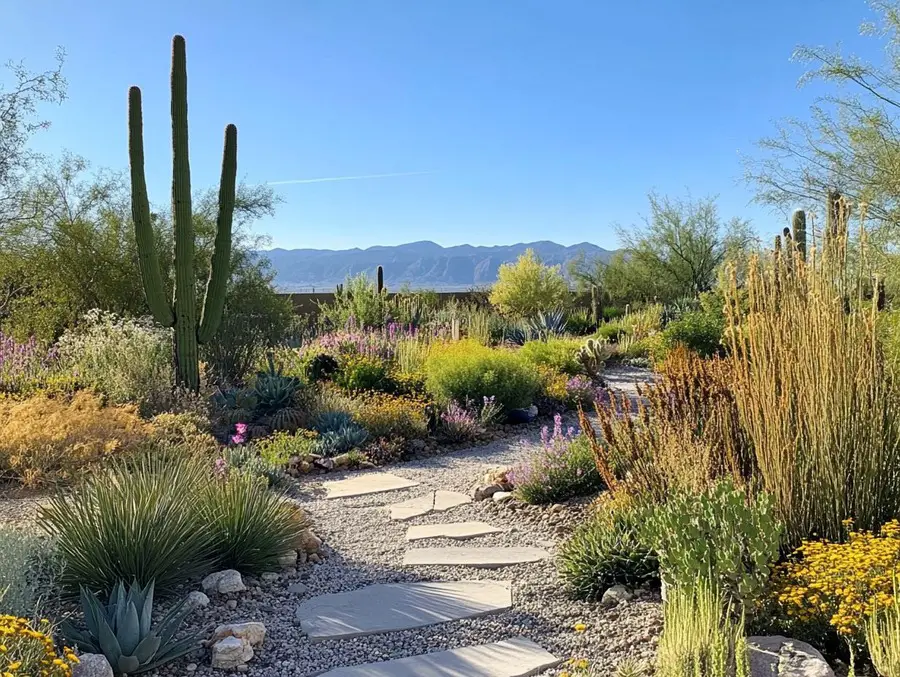
The benefits of xeriscaping go way beyond just looking good. You’ll enjoy significant environmental sustainability.
You’ll save some money on your water bills and boost biodiversity by incorporating native and drought-tolerant plants into your landscaping design.
It’s a win-win all around!
Environmental and Cost Benefits
Xeriscaping offers you a ton of environmental perks, starting with some serious water conservation.
When you use efficient irrigation techniques and choose low-water plants, you’ll not only save water but also cut down on your expenses over time.
For example, once you make the switch to xeriscaping, you could see your water bills drop by anywhere from 30-50%, depending on what you had going on before.
Plus, you’ll find that the reduced need for regular upkeep, like mowing and fertilizing, saves you money and lessens your impact on the environment.
This sustainable approach doesn’t just help your wallet; it also boosts soil health by promoting natural processes and keeping chemical runoff to a minimum.
On top of that, it creates habitats that attract local wildlife, such as pollinators and birds.
Studies even show that having diverse ecosystems in your garden can help boost the local insect population, supporting healthier, vibrant communities right in your urban backyard.
Designing a Xeriscape Garden
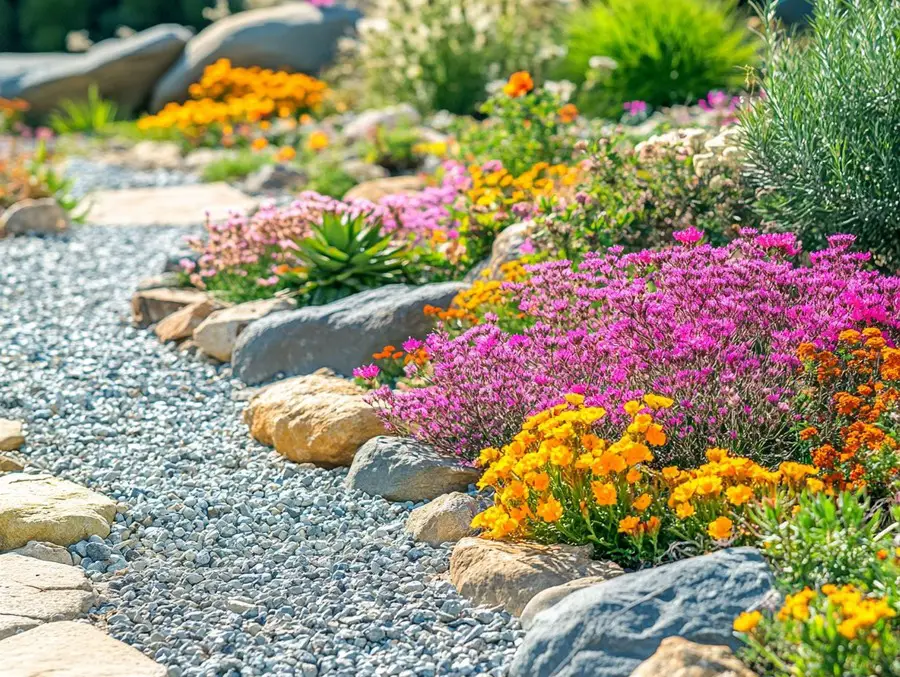
Designing a xeriscape garden requires you to take a thoughtful approach to the layout.
You’ll want to consider key elements like plant selection, irrigation efficiency, and the smart use of hardscaping.
This way, you can create a sustainable and visually appealing landscape that thrives in your environment.
Key Elements and Techniques
The key elements of designing an effective xeriscape garden involve understanding soil types, implementing strategies to improve the soil, and using mulch to keep that moisture in and support drought-tolerant plants.
By recognizing the unique characteristics of different soil types, you can customize your amendments to enhance drainage and nutrient levels.
For example, you might add compost or organic matter to sandy soils or use gypsum to break up clay.
This solid foundation helps you choose the right mulch, like shredded bark or gravel, which not only keeps those pesky weeds at bay but also insulates the soil, keeping it cooler during the hot months.
Don’t forget about smart irrigation techniques, like drip irrigation systems, that deliver water directly to the plant roots, cutting down on waste.
Using timers or moisture sensors can help ensure you’re watering your garden only when it’s needed, promoting a healthier ecosystem while conserving those precious water resources.
Plants for Xeriscaping
Choosing the right plants for xeriscaping is super important. You want to pick drought-tolerant species and native plants that not only thrive in dry conditions but also promote biodiversity and help cut down on water usage.
It’s all about making smart choices that work with your environment!
Drought-Tolerant and Native Species
When you’re picking drought-tolerant and native species for your xeriscape garden, think about plants that are well-suited to your local ecosystem.
You want options that show hardiness and resilience in tough conditions.
Take the vibrant agave and the striking red yucca, for instance. Not only do they look fantastic, but they also thrive on minimal water and create essential habitats for pollinators like bees and butterflies.
Incorporating these plants can really boost the ecological balance of your garden.
And don’t forget about species like lavender and sage; they add a lovely aroma and are low maintenance, making them perfect for those of you with busy schedules.
As these drought-resistant plants thrive, they help improve soil health, reduce erosion, and even cut down on outdoor water usage. This just goes to show their long-term environmental benefits.
By thoughtfully choosing these types of plants, you can create a stunning garden that supports wildlife while conserving precious resources.
Maintaining a Xeriscape Garden
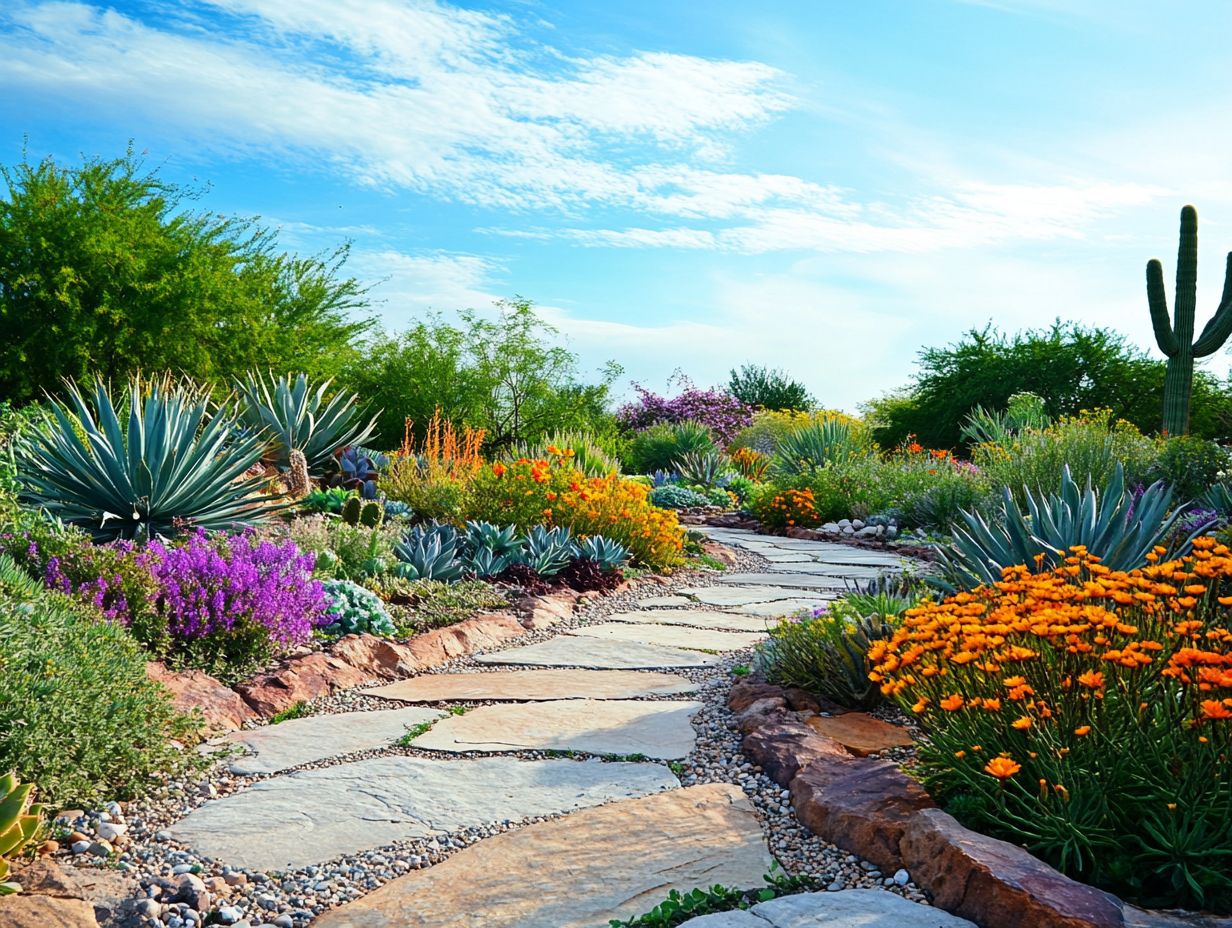
Maintaining a xeriscape garden is a whole different ballgame compared to traditional gardens.
You’ll want to focus on efficient watering techniques, seasonal planting practices, and overall garden care that really supports the health and longevity of your drought-tolerant plants.
It’s all about adapting your approach to keep those plants thriving while using less water.
Efficient Watering and Care Tips
To make sure your xeriscape garden thrives, focus on efficient watering and care techniques that keep the soil moist while minimizing water use.
This way, your gardening efforts will be both sustainable and effective.
Using tools like soaker hoses can really help you deliver water straight to the roots, cutting down on evaporation and runoff.
Setting up rain barrels is a smart move. They capture precious rainwater that you can use to keep your plants happy during dry spells.
Timing your watering is key—aim for the early morning or late evening to maximize absorption and reduce loss from the heat.
Regularly checking the soil moisture with a simple gauge or just feeling the soil can guide you on when to water, helping you avoid the pitfalls of over or under-watering.
If you notice wilting or discolored leaves, it usually points to a moisture imbalance that you can fix with these thoughtful strategies.
Common Misconceptions About Xeriscaping
You might have heard some misconceptions about xeriscaping, like the idea that it results in barren landscapes.
But the truth is, it actually encourages a variety of colorful plants that thrive in low-water environments and promotes sustainable practices.
It’s all about creating a vibrant and eco-friendly space!
Debunking Myths and Misunderstandings
There are a lot of myths floating around about xeriscaping, like the idea that it leads to low biodiversity and dull spaces.
But here’s the scoop: with the right design and plant selection, you can create vibrant, diverse ecosystems that are super easy to maintain.
By carefully picking native plants and mixing in a variety of species, xeriscaping can actually support pollinators and other wildlife, giving a nice boost to local ecosystems.
Take lavender and sage, for example—they thrive in dry conditions and are total bee and butterfly magnets, which is great for promoting biodiversity.
Plus, if you arrange your plants strategically, you can create gorgeous landscapes that change with the seasons.
Think about it: different textures and colors can make your outdoor spaces lively and engaging.
Research even shows that xeriscaped gardens can use 50-75% less water than traditional lawns.
So, not only is this approach eco-friendly, but it also lets you enjoy lush, inviting environments without a ton of upkeep.
Xeriscaping a Sustainable Gardening Solution FAQs
What is Xeriscaping?
Xeriscaping is a landscaping method that uses drought-resistant plants and efficient irrigation techniques to conserve water.
Why is Xeriscaping beneficial?
Xeriscaping is beneficial because it reduces water usage, saves money on maintenance costs, and promotes sustainable landscaping practices.
What types of plants are used in Xeriscaping?
Xeriscaping typically uses native plants that are well adapted to the local climate and require less water to thrive.
How much water can be saved through Xeriscaping?
Xeriscaping can save up to 80% of the water typically used for traditional landscaping methods.
Is Xeriscaping only for dry climates?
No, Xeriscaping can be implemented in any climate. It can be adapted to fit the needs of different regions while still conserving water.
Do I need to completely remove my existing lawn for Xeriscaping?
No, you can keep some of your existing lawn and incorporate drought-resistant plants and efficient irrigation techniques to create a Xeriscape.
An Introduction to Xeriscaping: Water-Saving Garden Ideas
Benefits of Xeriscaping: Save Water, Time, and Money
What is xeriscaping? A beginner’s guide to drought-tolerant landscaping