
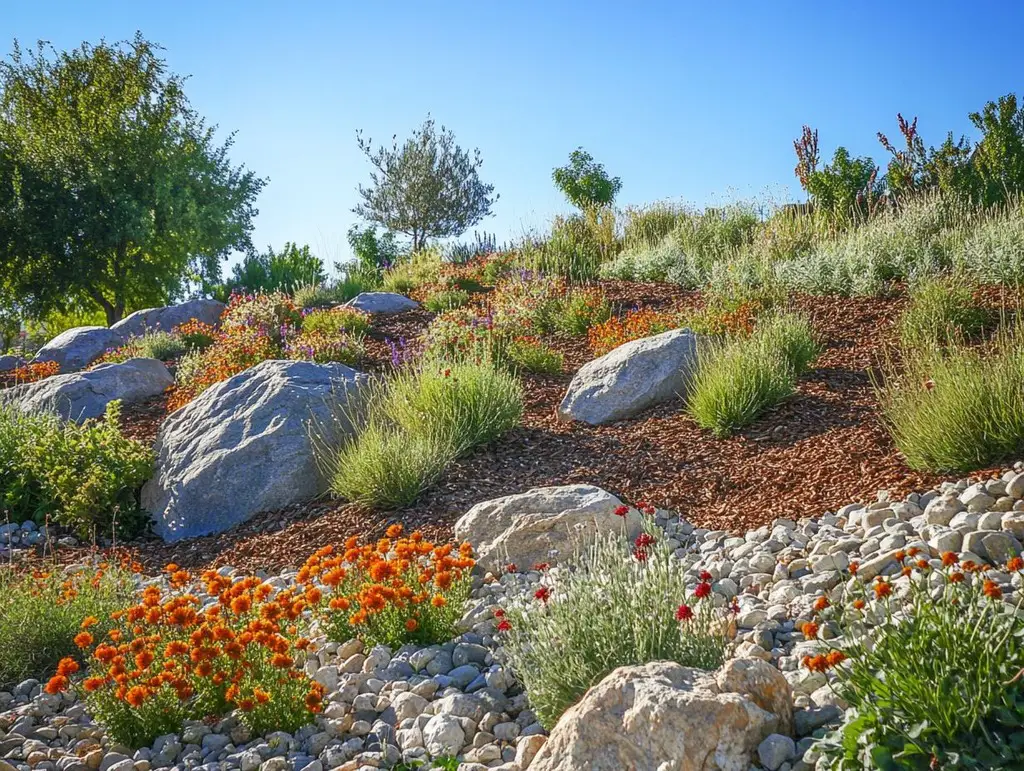
Finding the best drought tolerant plants for California can make the difference between a yard that struggles every summer and one that stays colorful with far less water. With California drought cycles, water restrictions, and rising utility costs, choosing plants that fit your climate is one of the smartest xeriscaping moves you can make.
This guide covers 22 drought-hardy plants that thrive across California, from coastal gardens to inland heat and dry desert landscapes.
What You’ll Learn
- Which drought tolerant plants grow best in California
- How to match plants to different California climate zones
- Ways to build a low-water landscape that still looks full and colorful
- Simple maintenance tips to keep your xeriscape healthy long-term
Quick Answer
The best drought tolerant plants for California include California lilac, manzanita, white sage, California poppy, agave, lavender, yarrow, and California buckwheat. These plants handle dry summers, poor soil, and water restrictions while supporting pollinators and reducing maintenance.
Best Drought Tolerant Plants for California Xeriscaping
Tired of struggling with thirsty lawns in California’s hot, dry climate? You’re not alone.
Rising water costs and summer droughts make traditional landscaping tough.
But xeriscaping with drought-tolerant plants gives you a vibrant, low-maintenance yard that saves water and looks stunning all year.
🌞 Why Xeriscaping Works in California
California’s landscape may be beautiful, but it’s no secret that gardening here comes with a few extra challenges, especially when it comes to water.
That’s exactly why xeriscaping is such a smart choice. This landscaping style fits the state’s natural rhythm and helps you grow more with less.
☀️ Climate Zones and Dry Summers
California has a mix of climate zones, but one thing most areas share is long, dry summers.
- Central and Southern California often go months without rain
- Inland valleys and desert areas face extreme heat and low humidity
- Even coastal zones deal with seasonal drought and water limits
Xeriscaping uses drought-tolerant plants that are built to handle these conditions—plants that don’t just survive the heat, they thrive in it.
💧 Water Restrictions and Rising Costs
Water bills in California aren’t getting cheaper—and restrictions are becoming more common.
- Cities often limit outdoor watering during summer
- Many counties offer rebates for replacing lawns with low-water plants
- Using less water means more money in your pocket and less stress over keeping things green
📌 By xeriscaping, you work with the system, not against it, and stay ahead of the next round of water rules.
🌿 Environmental Benefits and Lower Maintenance
Xeriscaping isn’t just good for your yard—it’s good for the planet too.
- Reduces runoff and erosion by improving soil stability
- Supports local wildlife with native plants and pollinator habitats
- Cuts down on yard work with fewer weeds, less mowing, and less fuss
📌 Once established, a xeriscape practically takes care of itself, leaving you more time to relax and enjoy your outdoor space.
🌿 What Makes a Plant Ideal for Xeriscaping?
Not every plant can handle California’s hot, dry climate, but the ones that can all have a few smart survival tricks up their sleeves.
Xeriscaping isn’t just about choosing “drought-tolerant” plants—it’s about picking plants that are naturally built to thrive with less.
🌱 Deep Roots and Water Storage
The best xeriscape plants know how to find and hold onto water.
- Deep root systems reach down to find moisture far below the surface
- Succulents and cacti store water in their leaves, stems, or roots
- These adaptations help plants survive long dry spells without constant watering
👍 Once established, these plants are incredibly self-sufficient.
🍃 Reflective or Small Foliage
Leaf shape and color matter more than you think.
- Small or narrow leaves lose less moisture to evaporation
- Silvery or light-colored foliage reflects sunlight to stay cooler
- Waxy coatings or fuzzy textures help retain moisture
👍 These features give plants a built-in defense against heat and sun.
🪨 Thrives in Poor, Well-Draining Soil
Many drought-tolerant plants evolved in rough conditions—and they love it that way.
- Well-draining soil keeps roots from rotting
- Low-nutrient conditions are ideal for many California natives
- Adding compost or mulch on top can help, but over-enriching isn’t necessary
👍 This means less fertilizing, less fuss, and fewer issues with pests and disease.
🐝 Attracts Pollinators and Native Wildlife
Xeriscaping doesn’t just save water—it supports the whole ecosystem.
- Many native plants feed bees, butterflies, and hummingbirds
- Some provide shelter or seed for local birds and small animals
- Supporting biodiversity helps strengthen your garden’s natural balance
👍The result? A yard that’s not just water-wise—it’s alive with color and movement.
🌵 Designing a Xeriscape in California
Creating a xeriscape that’s both beautiful and low-maintenance starts with smart planning.
Design Tips for a California Xeriscape
California’s sun, soil, and seasonal dry spells can actually work in your favor—if you group your plants right and give them the environment they need to shine.
☀️ Group Plants by Sun and Water Needs
Not all drought-tolerant plants have the same preferences.
- Place full-sun lovers like lavender, agave, and blanket flower in the brightest spots
- Use partial shade plants like California fuchsia or hummingbird sage in areas with dappled light
- Group plants with similar watering needs to avoid over- or underwatering
📌 This makes your irrigation more efficient and your garden easier to manage.
🌾 Use Mulch to Retain Moisture and Block Weeds
Mulch is a xeriscape essential—and not just for looks.
- Shields the soil from sun and wind
- Reduces evaporation so water stays where plants need it
- Suppresses weeds that compete for moisture
📌 Organic mulch like bark or shredded leaves works well, or go with gravel for a modern look.
🌿 Mix Shrubs, Perennials, and Succulents for Variety
Xeriscapes don’t have to look sparse. Mix it up with plants that add texture, color, and form.
- Shrubs like manzanita or California lilac add structure and year-round greenery
- Perennials like yarrow and penstemon bring seasonal color
- Succulents like sedum and agave offer bold shapes and water storage
📌 Combining these elements gives your garden layers, depth, and lasting appeal.
📅 Plan for Year-Round Interest with Staggered Bloom Times
A xeriscape can look amazing every season—if you plan it right.
- Use early bloomers like California poppy for spring
- Add summer stunners like blanket flower and coneflower
- Mix in fall and winter interest with evergreens, seed heads, or colorful bark
This keeps your garden lively and ever-changing, without needing constant replanting.
📌 With a little thoughtful design, you’ll have a xeriscape that not only saves water but also turns heads.
👀 Want to explore the top plants that make California xeriscaping both beautiful and practical?
Let’s dig into the top drought-tolerant plants that bring all of these traits together in one California-ready package.
🌿 22 Drought-Tolerant Plants for California
These water-wise plants are perfect for California’s dry climate.
Whether you’re designing a xeriscape or just looking to cut back on watering, this list covers all the bases from bold shrubs to colorful perennials and easy-care succulents.
🌳 Shrubs & Small Trees
These plants provide structure, year-round greenery, and reliable performance in the heat.
-
🌸 California Lilac (Ceanothus spp.)
- Vibrant blue or purple spring flowers
- Evergreen foliage
- Great for slopes and pollinators
-
🌿 Manzanita (Arctostaphylos spp.)
- Red bark and twisted form
- Pink or white flowers for pollinators
- Excellent erosion control
-
🤍 White Sage (Salvia apiana)
- Silvery-white leaves
- Tall flower spikes attract bees
- Iconic California native
-
🌺 Cleveland Sage (Salvia clevelandii)
- Aromatic foliage and purple flowers
- Loved by hummingbirds
- Thrives on dry slopes
-
🌷 California Wild Rose (Rosa californica)
- Pink blooms in summer
- Great for hedges and wildlife
- Spreads naturally
-
🌿 Rosemary (Rosmarinus officinalis)
- Evergreen herb with blue flowers
- Edible and deer-resistant
- Great for edging or containers
-
💜 Bougainvillea
- Bright papery flowers
- Fast-growing and bold
- Ideal for fences and trellises
🌸 Flowering Perennials
Add color, movement, and seasonal blooms with these drought-hardy perennials.
-
🌼 Yarrow (Achillea millefolium)
- Flat flower heads in many colors
- Attracts pollinators
- Great for meadows or mixed beds
-
🔥 Blanket Flower (Gaillardia spp.)
- Red-orange daisy-like blooms
- Long bloom season
- Heat- and drought-tolerant
-
🌸 Coneflower (Echinacea spp.)
- Purple petals and cone center
- Pollinator magnet
- Great in dry borders
-
☀️ Rudbeckia (Black-Eyed Susan)
- Bright yellow blooms
- Low maintenance
- Pairs well with grasses
-
🌞 California Poppy (Eschscholzia californica)
- Bright orange flowers
- Self-seeding and sun-loving
- California’s state flower
-
🍳 Matilija Poppy (Romneya coulteri)
- Giant white “fried egg” flowers
- Very drought-tolerant
- Showstopper in any garden
-
🎨 Penstemon (Various species)
- Tubular blooms in bold colors
- Loved by hummingbirds
- Ideal for sunny slopes
-
🔴 California Fuchsia (Epilobium canum)
- Fiery red-orange flowers
- Blooms late into fall
- Great for dry banks
-
🧡 Butterfly Weed (Asclepias tuberosa)
- Native milkweed
- Bright orange flowers
- Supports monarch butterflies
🌱 Groundcovers & Low-Growers
These spreaders fill space, retain moisture, and add visual interest close to the ground.
-
🌺 Lantana
- Multicolored flower clusters
- Spreads fast and blooms long
- Perfect for sunny containers
-
🌿 Stonecrop (Sedum spp.)
- Thick succulent leaves
- Low and spreading
- Excellent for borders or pots
-
💜 Catmint (Nepeta spp.)
- Soft purple blooms
- Aromatic foliage
- Long blooming with low care
-
🌾 California Buckwheat (Eriogonum fasciculatum)
- White-pink flowers fading to rust
- Attracts native insects
- Great for erosion control
🌵 Succulents & Structural Plants
Add bold structure and low-maintenance drama to your xeriscape with these standout picks.
-
🌀 Agave (Various species)
- Striking rosette form
- Requires little water
- Perfect as a focal point
-
💐 Lavender (Lavandula spp.)
- Aromatic silver foliage
- Blooms attract bees and butterflies
- Ideal for containers or pathways
🧰 Maintenance Tips for Low-Water Landscapes
One of the best things about a drought-tolerant garden? Once it’s established, it practically takes care of itself.
But to keep everything looking great year after year, a few easy maintenance steps go a long way.
💧 Water Deeply During Establishment
Even tough plants need a little help settling in.
- Water deeply once or twice a week during the first growing season
- Focus on soaking the root zone—not just surface spraying
- After year one, most drought-tolerant plants need little to no irrigation
✅This encourages deeper roots and stronger, more self-sufficient plants.
✂️ Light Pruning and Shaping in Early Spring
A little cleanup helps keep your landscape neat and healthy.
- Trim back dead or woody stems to encourage new growth
- Shape shrubs like manzanita or rosemary to keep them tidy
- Remove faded flower stalks on perennials like yarrow or lavender
✅ Aim for light, thoughtful pruning—no need to go overboard.
🌿 Weed Control Through Mulch and Spacing
Weeds compete for water, so keeping them in check is key.
- Apply 2–3 inches of mulch around plants to block sunlight
- Leave space between plants for air circulation and easier weeding
- Replenish mulch once a year to keep things tidy and effective
✅ Less watering means fewer weeds—but mulching keeps them from sneaking in altogether.
🐛 Monitor for Pests During Transition
While drought-tolerant plants are hardy, the first year is their most vulnerable.
- Watch for aphids, spider mites, or whiteflies on soft new growth
- Use natural solutions like neem oil or strong water sprays if needed
- Encourage beneficial insects like ladybugs and lacewings
Once established, xeriscape plants are usually tough enough to handle pests without help.
✅ Your low-water garden doesn’t need constant care—just a little seasonal attention and a good start.
Frequently Asked Questions
What are the best native drought tolerant plants for California?
Some of the best California natives include manzanita, California lilac, California poppy, white sage, and California buckwheat. These plants are naturally adapted to the state’s dry climate.
Can I xeriscape in coastal California?
Yes. Coastal California can still benefit from xeriscaping. Choose drought-tolerant plants that also handle salt air, fog, and mild winters.
How often should I water drought tolerant plants in California?
During the first year, water deeply once or twice a week. After establishment, many drought-tolerant plants can survive with little supplemental irrigation.
Do drought tolerant plants need fertilizer?
Most do not need much fertilizer. Many California natives perform better in lean, well-draining soils without heavy feeding.
Final Thoughts
California’s climate can be challenging, but it’s also perfect for building a beautiful low-water landscape when you choose the right plants. From flowering perennials to native shrubs and bold succulents, drought tolerant plants can give you year-round color while cutting water use and maintenance.
Start with a few strong performers, group them by water needs, and build from there. Over time, your xeriscape will become easier to manage, more resilient, and better suited to California’s changing weather patterns.
Want help getting started? Check out our plant list above or explore our step-by-step xeriscaping guide made just for California gardeners.
More Regional Xeriscape Plant Guides
More Xeriscaping References
What is xeriscaping? A beginner’s guide to drought-tolerant landscaping – Colorado State University
UCCE Master Gardeners of San Joaquin County Low Water Use Landscapes