
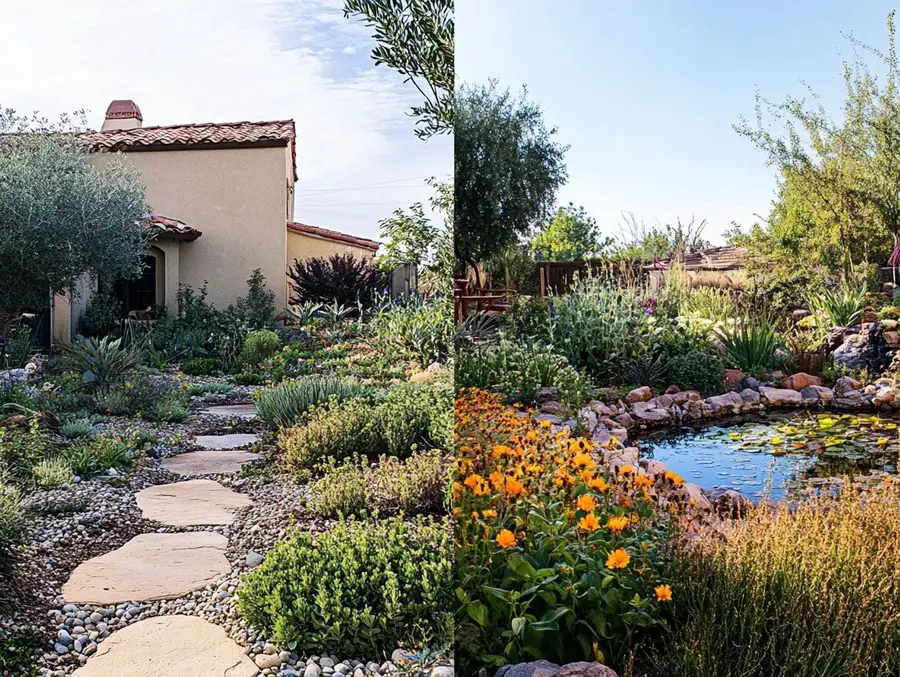
When comparing xeriscaping and permaculture, it’s clear that both offer incredible ways to design sustainable landscapes.
While xeriscaping saves water with drought-resistant plants, permaculture creates self-sustaining ecosystems that mimic nature.
This guide will help you decide which method aligns with your goals and inspire you to craft a thriving, eco-friendly outdoor space.
Xeriscaping and Permaculture Key Takeaways
- Xeriscaping and Permaculture both highlight sustainable landscaping strategies.
- Xeriscaping focuses on reducing water use with drought-tolerant plants, while permaculture creates self-sustaining ecosystems.
- Both methods promote biodiversity and resource conservation, but xeriscaping emphasizes water savings, and permaculture integrates holistic design for long-term sustainability.
Xeriscaping and Permaculture: Sustainable Gardening Simplified
In a world where environmental sustainability is more important than ever, getting to know concepts like xeriscaping and permaculture can really change the way you think about gardening and landscaping.
Both of these methods focus on resource conservation, but they come with their own unique perks and techniques.
This article dives into the definitions, advantages, and design principles of xeriscaping and permaculture, giving you a roadmap for how to implement and maintain them.
Whether you’re aiming to save water or boost biodiversity, you’ll discover valuable insights to help you create a thriving, eco-friendly landscape.
Understanding Xeriscaping and Permaculture
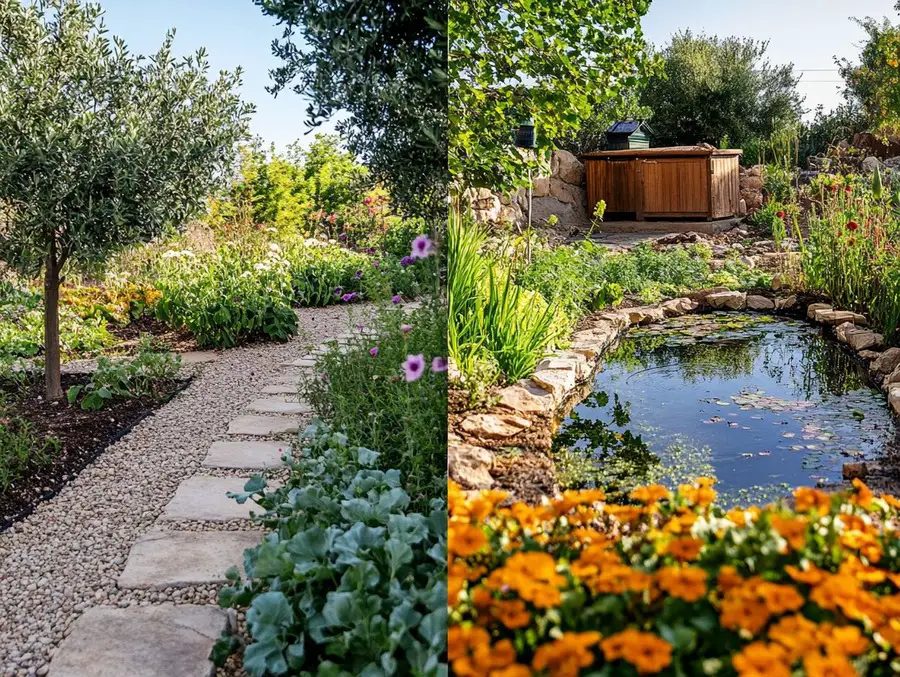
Understanding Xeriscaping and Permaculture is key if you’re into sustainable gardening and landscaping.
These two approaches help you conserve water, but they also boost biodiversity and improve soil health, making a big difference in creating an eco-friendly outdoor space.
Xeriscaping is all about designing drought-tolerant landscapes that need minimal watering, while Permaculture focuses on sustainable agriculture by fostering harmonious relationships between plants, animals, and the environment.
Definitions and Differences
Xeriscaping is a landscaping method that helps reduce or even eliminate the need for irrigation, mainly by using drought-tolerant plants.
On the other hand, Permaculture takes a more holistic approach to agriculture and land management, aiming to create sustainable ecosystems.
Both methods offer unique advantages for sustainable practices. With Xeriscaping, you get to choose native plants like succulents and ornamental grasses that thrive in dry conditions.
This conserves water and also cuts down on maintenance efforts.
Meanwhile, Permaculture is all about designing agricultural systems that reflect natural ecosystems.
This could mean integrating crops like legumes, which help enrich the soil or using companion planting, where certain plants work together to boost each other’s growth.
By grasping the differences between these approaches, you can choose the method that best suits your environmental goals, whether you want to save water with Xeriscaping or develop a resilient food system through Permaculture.
Benefits of Xeriscaping
Embracing Xeriscaping can bring you a ton of benefits, especially when it comes to water conservation.
It really cuts down on your water usage, which can translate into some nice savings on your water bill.
By designing your landscape with drought-tolerant plants, you’re not just making your outdoor space look stunning; you’re also doing your part for the environment and promoting sustainability.
Water Conservation and Cost Savings
One of the biggest perks of Xeriscaping is how it helps you conserve water, which is super important in places dealing with drought. Plus, it can lead to some nice savings on your water bills.
In terms of maximizing the water-saving benefits of Xeriscaping, effective irrigation management techniques are key.
By using strategies like drip irrigation and rainwater harvesting, you can make sure your plants get the moisture they need without wasting a drop.
For instance, drip irrigation systems deliver water straight to the roots of your plants, cutting down on evaporation and runoff.
And don’t forget about mulch! Using it keeps those pesky weeds at bay and helps retain moisture in the soil, which is a lifesaver in hot climates.
These methods encourage healthier growth in drought-resistant landscapes and reduce the overall cost of keeping your garden lush and green, making them a fantastic choice for anyone who cares about the environment.
Benefits of Permaculture
Permaculture offers you a ton of benefits that go way beyond just gardening.
It’s all about promoting sustainable living and boosting biodiversity in your garden ecosystem.
By putting Permaculture principles into action, you can create habitats that support wildlife, help you produce food, and improve soil health through organic gardening practices.
Sustainable Living and Biodiversity
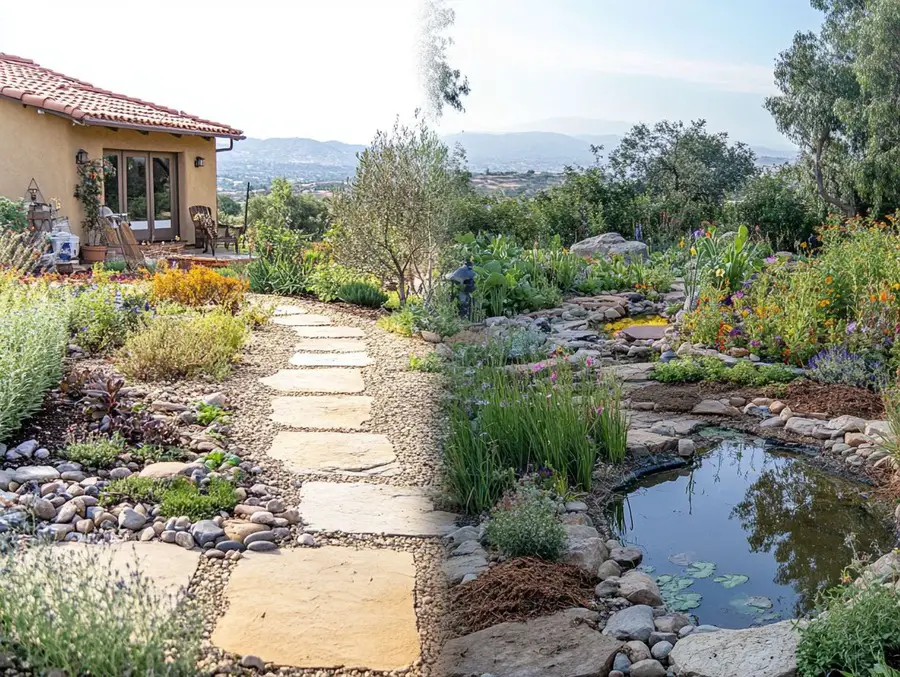
Sustainable living through Permaculture isn’t just about shrinking your ecological footprint.
It’s a way to boost biodiversity by creating a vibrant ecosystem right in your backyard.
When you start using techniques like companion planting, you can grow a diverse range of crops that help each other thrive while naturally keeping pests at bay.
This interplanting approach makes your garden more resilient, meaning you’ll rely less on chemical pesticides and fertilizers.
Incorporating native plants is a game-changer in Permaculture. They provide a cozy habitat for local wildlife and help maintain a balanced ecosystem.
Plus, these plants are already adapted to your regional climate and soil types, so they need less water and care compared to non-native species.
By blending these practices into your gardening routine, you’re not just creating a sustainable environment.
You’re also building a flourishing habitat for various species, making a meaningful contribution to the health of our planet.
Designing a Xeriscape
When you’re designing a Xeriscape, you’re really focusing on strategic landscape design that puts water-efficient landscaping front and center.
You get to use native and drought-tolerant plants to create a beautiful outdoor space that looks great and conserves water.
It’s a win-win for your garden and the environment!
Principles and Techniques
The 7 principles of Xeriscaping focus on picking the right plants and using smart design techniques that boost soil fertility while cutting down on maintenance.
By prioritizing native drought-resistant species, your landscape will bounce back better during dry spells.
For example, when you choose plants like agave or lavender, you’re saving water but also fostering biodiversity, which creates a home for local wildlife.
Soil health is key here. When you incorporate organic matter, you improve water retention and nutrient availability.
Adding mulch around your plants helps keep moisture in and keeps those pesky weeds at bay, meaning you won’t have to rely on chemical herbicides.
By grasping these essential principles, like the importance of soil amendments, choosing the right plants, and using mulch, you can create sustainable gardens that thrive with minimal effort and resources.
Designing a Permaculture System
When you’re designing a permaculture system, it’s all about putting permaculture principles into action.
These principles help you create an ecological design that promotes sustainable agriculture practices.
By doing this, you can cultivate thriving ecosystems and embrace regenerative agricultural methods that really make a difference.
Principles and Elements
The principles of permaculture can really help you create a diverse system that promotes sustainable land management and reduces your ecological footprint.
By using techniques like zoning and stacking systems, you can design spaces that maximize productivity and also enhance ecological balance.
Zoning is all about organizing your garden or farm into different areas based on how often you use them, which means your most frequently accessed plants and resources are right at your fingertips.
On the other hand, stacking lets you integrate multiple layers, think vertical gardens or companion planting, that make the most of available light and space.
Community gardens are a great example of these concepts in action, as they promote local food production while also providing habitats for wildlife.
When you make effective design choices based on these principles, you can create resilient ecosystems that support both you and nature.
Implementing Xeriscaping and Permaculture
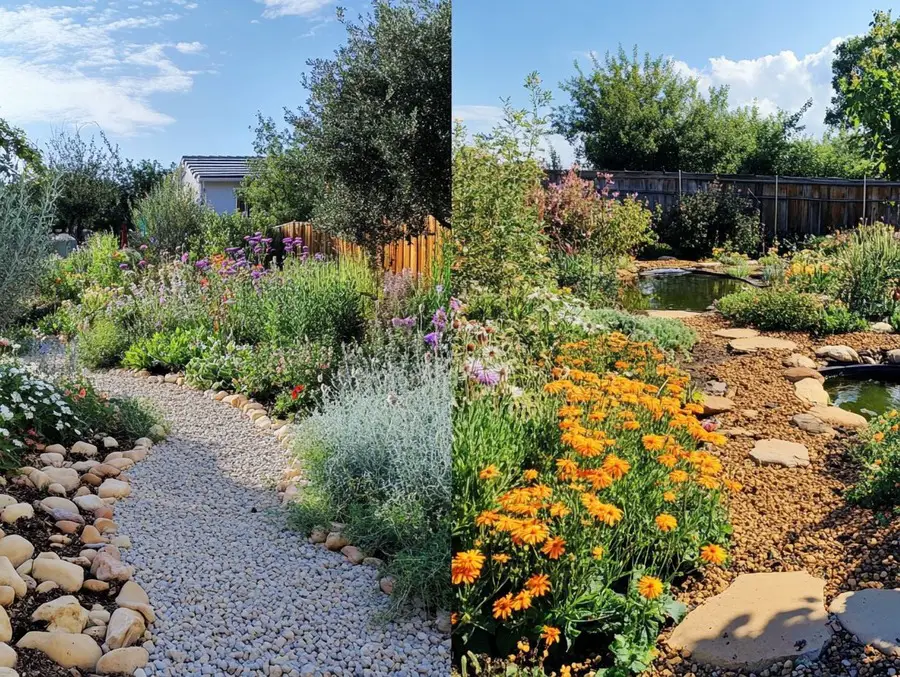
Implementing Xeriscaping and Permaculture might feel a bit overwhelming at first, but don’t worry!
By following a simple step-by-step process, you can create a garden that benefits the environment and makes your outdoor space more enjoyable.
Step-by-Step Process
The step-by-step process for implementing Xeriscaping and Permaculture starts with a solid garden plan that takes a good look at your landscape’s unique conditions and needs.
You’ll want to kick things off by assessing factors like soil quality, sunlight exposure, and the existing plants to figure out the best strategies for weaving sustainable practices into your space.
Don’t forget to think about local climate patterns and water availability, as these will really influence your plant choices and overall design.
Once you’ve got a handle on these conditions, the next step is to create a comprehensive plan that follows the principles of ecosystem services, which help boost natural processes like pollination, soil fertility, and water conservation.
As you work on your plan, make sure to focus on selecting native plants.
They’re key to supporting local wildlife and promoting biodiversity in your garden.
Maintaining a Xeriscape and Permaculture System
Maintaining your Xeriscape and Permaculture system is key to ensuring its long-term sustainability and health.
It’s all about implementing a few simple tips and best practices that will help you promote organic gardening and composting.
Tips and Best Practices
Successfully maintaining your Xeriscape and Permaculture systems comes down to a few key tips and best practices that can make your garden maintenance easier and boost sustainability.
When you focus on soil health, you’re promoting a thriving ecosystem that supports both native and beneficial plants.
Adding organic matter, like compost, can really improve soil structure and increase water retention, which is super important for those xeriscaped areas.
Implementing natural pest control methods, such as introducing beneficial insects or using organic repellents, helps you cut down on harmful pesticides, creating a healthier environment for your garden.
And don’t forget about efficient watering techniques like drip irrigation or rainwater harvesting.
These methods ensure you’re using your resources wisely while keeping your garden healthy.
All of these practices simplify upkeep and help you create a vibrant, sustainable landscape.
Frequently Asked Questions
What is the difference between Xeriscaping and Permaculture?
Xeriscaping and Permaculture are both methods for sustainable gardening, but they differ in their overall approach and goals.
Xeriscaping focuses on conserving water through drought-resistant plants and efficient irrigation techniques, while Permaculture aims for a self-sustaining ecosystem using a variety of plants and design techniques.
Which is more environmentally friendly, Xeriscaping or Permaculture?
Both Xeriscaping and Permaculture have elements that promote environmental sustainability.
Xeriscaping reduces water usage and conserves natural resources, while Permaculture promotes biodiversity and mimics natural ecosystems.
Ultimately, both can be considered environmentally friendly, but it depends on the specific practices and techniques used.
Can Xeriscaping and Permaculture be combined?
Yes, Xeriscaping and Permaculture can be combined to create a more sustainable and efficient garden.
By using drought-resistant plants and permaculture design principles, you can create a self-sustaining ecosystem that conserves water and promotes biodiversity.
Which method is better for beginners, Xeriscaping or Permaculture?
Xeriscaping may be a better choice for beginners as it involves a simpler approach and requires less maintenance.
Permaculture, on the other hand, involves more complex design and implementation techniques. However, both methods can be adapted to suit any skill level.
What are the benefits of Xeriscaping and Permaculture?
Xeriscaping and Permaculture have numerous benefits, including water conservation, reduced maintenance, and increased biodiversity.
Both methods also promote sustainability and can help create a more resilient and self-sustaining ecosystem.
Can Xeriscaping and Permaculture be used in any climate?
Yes, Xeriscaping and Permaculture can be adapted to suit different climates and regions.
While certain plants may be more suitable for specific climates, the principles of water conservation and sustainable design can be applied in any environment.
An Introduction to Xeriscaping: Water-Saving Garden Ideas
Best Plants for Xeriscaping: Easy-to-Grow Water-Wise Plants – Xeriscaping Basics
Benefits of Xeriscaping: Save Water, Time, and Money – Xeriscaping Basics