

Discover how Xeriscaping with Microclimates creates a beautiful and sustainable landscape using a xeriscaping approach and incorporating microclimates to maximize your garden’s potential. Our blog offers tips, tricks, and inspiration for xeriscaping with microclimates.
Xeriscaping is a sustainable landscaping approach that helps you save water while making your outdoor space look fantastic.
By getting to know and using microclimates—those unique spots in your yard with different conditions—you can create a lively, diverse landscape that thrives with minimal water. This guide will walk you through the many benefits of xeriscaping, how to spot and map out the microclimates in your yard, and the best tips for choosing the right plants for each environment.
You’ll also find essential maintenance strategies to keep your xeriscaped yard thriving. Get ready to discover how to create a stunning, eco-friendly landscape that fits your lifestyle perfectly.
What is Xeriscaping With Microclimates?

Xeriscaping is a smart landscaping approach that focuses on water conservation, using drought-resistant plants and efficient design techniques. It’s all about choosing native plants, the right soil types, and landscaping styles that fit your local climate.
Once you get the hang of xeriscaping principles, you can create stunning outdoor spaces that flourish with minimal watering. It’s a great way to contribute to environmental sustainability while cutting down on water use in your garden. Plus, your yard will look fantastic!
Benefits of Xeriscaping with Microclimates
The benefits of xeriscaping with microclimates are pretty amazing. It lets you optimize water usage while boosting biodiversity in your garden ecosystems.
By getting to know the unique characteristics of the different microclimates in your yard, you can adopt water-efficient landscaping practices that promote ecological balance and minimize the environmental impact of traditional gardening methods.
This approach not only supports drought-resistant plants and xeric species but also helps create habitats for local plants and animals.
Reducing Water Usage
Reducing water usage is a fundamental principle of xeriscaping, and you can achieve this by carefully selecting drought-resistant plants and using efficient irrigation methods that fit the unique microclimates in your yard. By implementing strategies like rain gardens and mulching, you’ll enhance moisture retention in your garden beds, leading to healthier plants and some nice savings on your water bills.
Incorporating advanced irrigation techniques, like drip irrigation and soaker hoses, can help you cut down on water wastage by delivering moisture directly to the roots where it’s needed most. Plus, using soil amendments such as compost or coconut coir can improve your soil’s structure and increase water retention, ensuring your garden thrives even during those dry spells.
When you choose resilient plants like succulents, lavender, and native ornamental grasses, you’re not just beautifying your landscape; you’re also significantly reducing your overall water needs. These plants are perfectly adapted to survive on minimal moisture, making them ideal for sustainable gardening practices that prioritize conservation.
Creating a Diverse Landscape
Creating a diverse landscape through xeriscaping doesn’t just make your outdoor living spaces look good; it also boosts biodiversity and helps maintain ecological balance. By choosing a variety of native plants that are suited to different climate zones and soil types, you can build resilient plant communities that thrive together and support local wildlife.
This thoughtful selection not only contributes to the ecological health of your area but also keeps your garden looking vibrant and visually captivating all year round. Native plants are often more adaptable to local conditions, which means they need less water and maintenance—perfect for sustainable landscaping.
By incorporating a range of species, you’ll attract beneficial insects, birds, and pollinators, creating a lively environment filled with movement and color. Ultimately, embracing biodiversity in your xeriscaped garden shows your commitment to sustainability while enhancing the overall charm and functionality of your landscape, giving you a delightful retreat that both you and nature can enjoy.
Identifying Microclimates in Your Yard
Identifying microclimates in your yard is crucial for planning your garden effectively and choosing the best plants. These little climate variations can really affect how well your plants grow and thrive.
By keeping an eye on things like sun exposure, shade, and drainage in different spots around your yard, you can customize your xeriscaping efforts. This way, you’ll be able to make the most of your garden ecosystem and pick the right plants for each unique microclimate.
Factors that Create Microclimates

There are several factors that contribute to the creation of microclimates in your yard, like soil types, sun exposure, and the presence of windbreaks. Urban gardening can throw some unique challenges your way since structures and hardscape elements can really influence the local climate conditions.
That’s why it’s important to understand how these elements interact to create different microenvironments for your plants.
For example, the way buildings are oriented can create shadows that affect how much sunlight gets to your plants. Trees and shrubs can serve as natural windbreaks, lowering chill factors and keeping those sensitive plants safe from harsh conditions. You might also notice that varying altitudes in your terrain can lead to temperature differences, which can impact moisture retention and heat absorption.
By recognizing these aspects, you can make more informed choices about the plants you select, ensuring they thrive in their specific microenvironment.
With this knowledge, you can design your garden to take advantage of the unique characteristics of these localized climates, optimizing growth conditions for a diverse range of plant species.
How to Map Microclimates
Mapping out microclimates in your yard is a smart move for planning your garden. It helps you figure out the specific climate zones you have and how they can affect your plant communities.
By keeping an eye on temperature variations, moisture levels, and how much sun different areas get throughout the day, you can tailor your irrigation methods and plant selections to fit each unique microclimate.
To kick things off, think about setting up soil moisture sensors in various spots around your garden. This will help you gather data on how wet or dry different areas get in different weather conditions.
Using thermometers placed at multiple heights and locations will give you a good sense of temperature changes, and a simple light meter can shed some light—pun intended—on sun exposure.
Make it a habit to jot down these observations daily for a few weeks. This way, you’ll start to see patterns emerge. With this detailed mapping, you’ll be enableed to choose plants that will thrive in each specific area, creating a vibrant garden ecosystem that’s the envy of all your neighbors.
Choosing Plants for Each Microclimate
Choosing the right plants for each microclimate is super important for successful xeriscaping. When you select xeric plant species that fit their specific environmental conditions, you’re setting them up for success.
By matching plants to their ideal microclimates, you can boost their growth and resilience, leading to a lush, diverse landscape that thrives with minimal intervention.
Matching Plants to Microclimates
Matching plants to microclimates is all about knowing their hardiness and growth needs, especially when it comes to moisture retention, light requirements, and temperature preferences. By picking the right sun-loving plants for those bright spots and shade-loving ones for the cooler areas, you can create an ecological landscaping strategy that helps your garden thrive.
When you consider hardiness zones, it’s easier to choose species that are likely to do well in specific environmental conditions. This can seriously cut down the risk of crop failures during those unexpected cold snaps or dry spells.
Don’t forget to evaluate the moisture needs of different plants too; some love the dry heat, while others prefer a more damp environment.
And let’s not underestimate the power of plant communities. The diverse interactions among various species can really boost resilience, offering benefits like natural pest control and nutrient cycling.
By doing this, you can cultivate a vibrant, biodiverse environment that encourages positive relationships among your plants, ultimately enhancing the overall health and sustainability of your garden.
Best Practices for Planting
Implementing best practices for planting is key to ensuring your xeriscaped yard thrives in the long run. Techniques like adding soil amendments, using mulch to keep moisture in, and practicing companion planting can do wonders for your garden’s health and resilience while sticking to organic gardening principles.
First off, proper soil preparation is crucial for establishing healthy plants that can handle dry conditions. Testing your soil for pH and nutrient levels will help you figure out what amendments you need, like compost or organic fertilizers, to boost water retention and nutrient availability.
When you’re planting, remember to dig holes that are twice as wide as the root ball but not deeper than the root itself; this helps promote strong root growth. Keeping a layer of organic mulch on top can really cut down on evaporation, keep those pesky weeds at bay, and gradually improve your soil’s structure.
If you’re into preserving ecological balance, companion planting is a great way to foster beneficial relationships among your plants, naturally repel pests, and enhance biodiversity in your xeriscape. Regularly checking in on your garden and using organic pest control will also help keep your landscape thriving.
Maintaining a Xeriscaped Yard with Microclimates
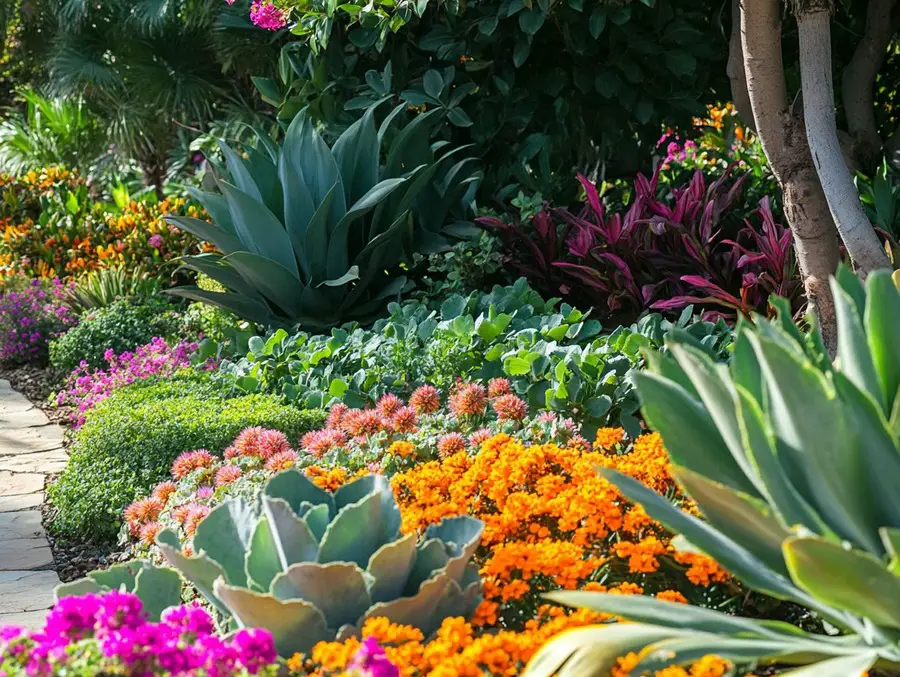
Maintaining a xeriscaped yard that includes microclimates takes a bit of thought and planning when it comes to garden maintenance. You’ll want to use efficient watering techniques and appropriate irrigation methods that align with xeriscape principles.
By getting to know the specific needs of your plants and their unique microclimates, you can create an ecological balance that promotes a thriving garden ecosystem while conserving resources.
Watering and Irrigation Techniques
Effective watering and irrigation techniques are key to making your xeriscaped yard a success, especially when you’re working with drought-resistant plants that thrive on minimal water.
By implementing water-efficient landscaping practices like drip irrigation and rainwater harvesting, you can really boost moisture retention and cut down on water waste.
When you adopt these methods, you ensure that your plants get just the right amount of water they need while saving those precious resources. Drip irrigation systems are fantastic because they deliver water directly to the plant roots, which minimizes evaporation and runoff—especially useful in hot climates.
Consider incorporating rain barrels into your garden design to capture and store rainwater for future use. This way, you’ll rely less on municipal water supplies.
Here are some practical tips to keep in mind:
- Position your drip lines strategically.
- Adjust your watering schedules based on seasonal changes.
- Regularly check for leaks.
These techniques not only nourish your landscape but also promote environmental sustainability and save you some cash.
Pruning and Pest Control
Pruning and pest control are key players in keeping your xeriscaped yard in top shape. They help promote healthy growth and keep pesky infestations at bay that could disrupt your plant communities.
If you embrace organic gardening techniques, you can take your pest management to the next level, creating a more balanced ecosystem in your garden.
Regular pruning isn’t just about aesthetics; it encourages strong plant structures and opens up the canopy, improving air circulation and sunlight penetration. These factors are crucial for photosynthesis and overall plant health.
Regarding pest control, focusing on organic strategies like companion planting and using natural predators can really cut down on the need for harsh chemicals.
By cultivating diverse plant communities, you’re essentially creating an ecosystem that supports beneficial insects, helping to keep those pests in check. This symbiotic relationship allows your garden to thrive with less intervention, which is exactly what xeriscaping is all about—sustainable gardening at its best.
Frequently Asked Questions
What is xeriscaping with microclimates?
Xeriscaping with microclimates is a landscaping technique that utilizes plants and design strategies to create gardens that are adapted to the specific microclimate of a location.
How does xeriscaping with microclimates benefit the environment?
This method of landscaping not only conserves water, but also reduces erosion and improves the health of local ecosystems by using native plants that are well-suited to the area’s natural conditions.
What are the key elements to consider when designing a xeriscape with microclimates?
The key elements include understanding the unique microclimate of the location, selecting appropriate plants that can thrive in that specific microclimate, and implementing design strategies such as proper irrigation and mulching.
Can xeriscaping with microclimates be adapted to any location?
Yes, this method of landscaping can be adapted to almost any location as long as the microclimate is taken into consideration and appropriate plants are chosen.
What are some common types of microclimates and how can they impact xeriscaping?
Some common types of microclimates include sunny, shady, windy, and hilly areas. These can impact xeriscaping by affecting factors like water availability, soil conditions, and plant selection.
Are there any maintenance requirements for xeriscapes with microclimates?
While xeriscaping with microclimates is generally low maintenance, regular upkeep such as pruning, weeding, and monitoring irrigation may be necessary to ensure the success of the plants and the overall health of the landscape.
Xeriscaping Design Principles: Beautiful Yards, Less Water
What is xeriscaping? A beginner’s guide to drought-tolerant landscaping