
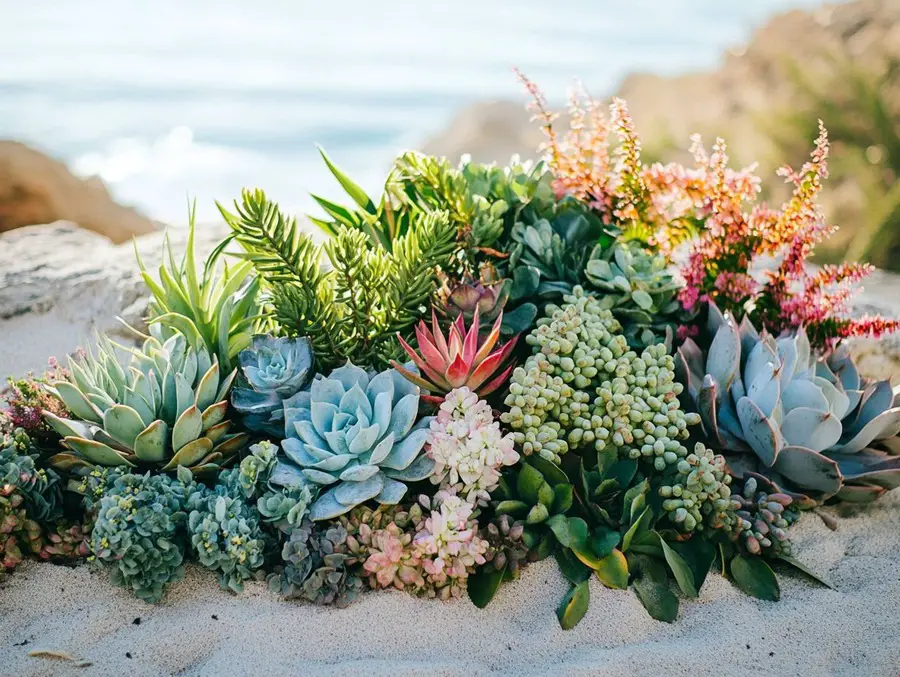
Coastal plants for xeriscaping help solve one of the toughest growing challenges: salt spray, wind, sandy soil, and limited fresh water. Not every drought-tolerant plant can handle those conditions.
The best coastal xeriscape plants are built for both dry conditions and harsh coastal exposure, making them strong choices for low-maintenance landscapes near the ocean.
This guide covers the best coastal plants for xeriscaping, how to choose them, and how to build a water-wise coastal garden that lasts.
What You’ll Learn
- What makes a plant good for coastal xeriscaping
- Which plants handle salt, wind, and drought best
- How to improve sandy coastal soil
- How to design a low-water coastal landscape
- How to maintain coastal xeriscape plants long term
Quick Answer
Coastal plants for xeriscaping include sea lavender, beach rosemary, yarrow, ice plant, dune grass, and California lilac. These plants handle salt spray, wind, sandy soil, and low water conditions well.
What Makes a Good Coastal Xeriscape Plant?
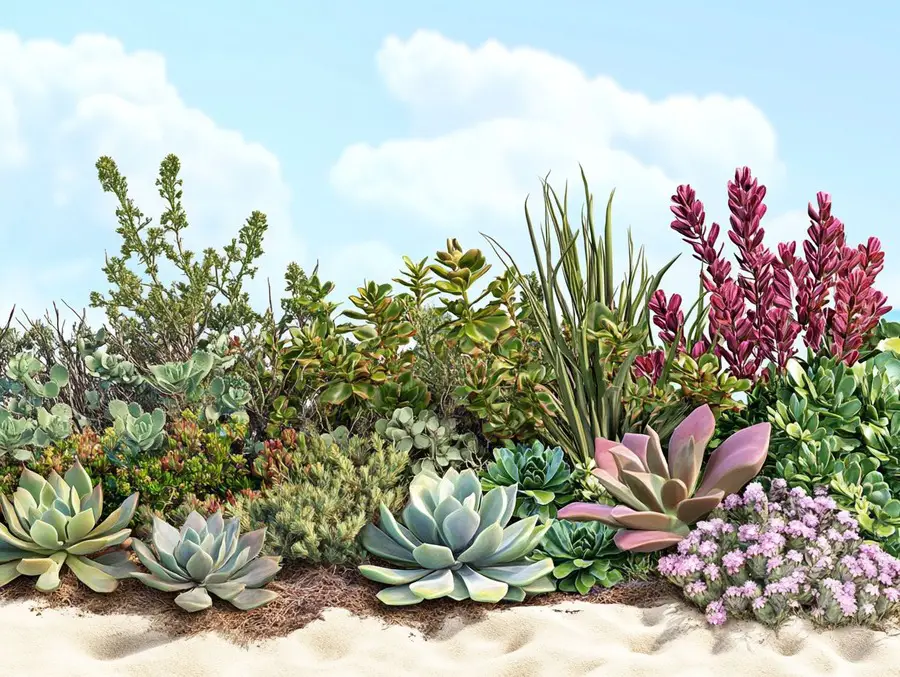
Coastal xeriscape plants need to handle more than drought. They also need to tolerate salt spray, sandy or rocky soil, strong winds, and shifting temperatures.
Plants with waxy leaves, deep roots, and strong natural resilience usually perform best in coastal xeriscaping.
Benefits of Coastal Plants for Xeriscaping
Coastal plants bring several advantages to xeriscaping because they are naturally adapted to harsh environments. Many can handle salt spray, sandy soil, strong winds, and dry conditions while still providing color, texture, and structure in the landscape.
Using coastal plants can also improve erosion control, reduce water use, and support local biodiversity, making them a strong fit for sustainable coastal gardening.
Adaptability to Coastal Conditions
One of the biggest strengths of coastal plants is their ability to survive where many traditional landscape plants struggle. They are built to handle salty air, shifting temperatures, poor soil, and heavy winds without needing constant care.
Many coastal plants have thick leaves, waxy coatings, deep roots, or flexible stems that help them conserve water and stay stable in exposed environments. These traits make them reliable choices for low-water coastal xeriscaping.
Low-Water Benefits
Most coastal xeriscape plants use less water once established, making them ideal for drought-prone or water-restricted areas. Their natural ability to handle dry periods helps reduce irrigation needs while keeping the landscape healthy and attractive.
This makes it easier to build a water-wise coastal garden that stays resilient, supports wildlife, and holds up against difficult growing conditions year after year.
Choosing the Right Coastal Plants
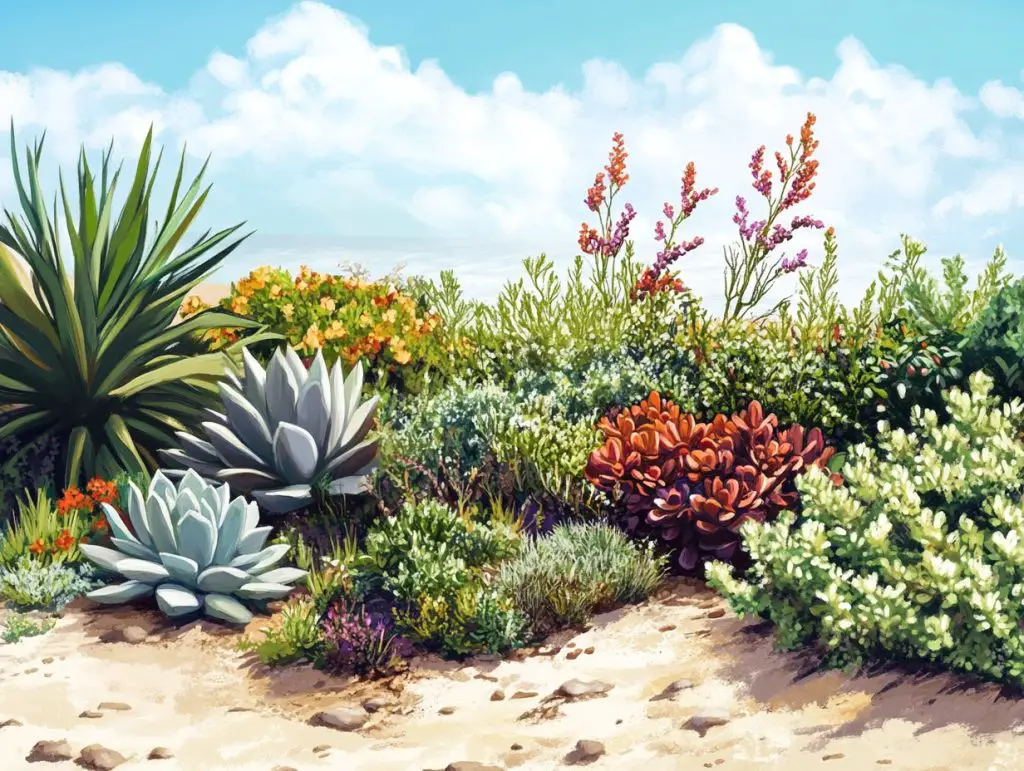
Choosing the right coastal plants starts with understanding your soil, salt exposure, sunlight, and drainage. Coastal environments can vary a lot, so matching plants to your exact conditions improves survival and lowers maintenance.
It’s all about understanding your specific soil types, drainage conditions, and the unique traits of the local native species.
When you’re picking out plants, keep in mind things like heat tolerance, drought resistance, and how well they adapt to your local environment.
This way, your garden won’t just look stunning; it will also play a part in conserving native species and boosting coastal biodiversity.
A carefully selected mix of plants can really amp up your landscape’s visual appeal and ecological health.
Factors to Consider
When you’re picking coastal plants for your xeriscape garden, there are some important factors to keep in mind to make sure your landscape thrives and aligns with sustainable practices.
Think about things like soil health, drainage systems, and how much coastal exposure your plants will get.
These elements are key in figuring out what plants will do well, since different species have their own quirks when it comes to growth conditions, moisture needs, and handling coastal challenges like salt spray and wind.
Understanding the specific soil types in your area is essential for nailing down successful gardening techniques.
Coastal environments often have sandy or rocky soils with different pH levels, and this can really impact your plant choices and where you decide to put them.
You also need to assess the drainage capabilities; some plants love well-draining soil to avoid root rot, while others are perfectly happy in a slightly wetter environment.
And don’t forget about sunlight exposure! Coastal zones can be tricky, with some spots getting intense sunlight while others are shaded by buildings, so picking the right plants for those conditions is super important.
By weaving these elements into your planting strategy, you enhance soil health and boost the long-term success of your xeriscape garden.
Designing a Xeriscape Garden with Coastal Plants
Designing a coastal xeriscape means balancing salt tolerance, drought resistance, and wind exposure while creating a landscape that still looks natural and attractive. Grouping plants by water needs can make maintenance easier and improve watering efficiency.
By carefully selecting a mix of coastal ornamentals, hardy perennials, and vibrant succulents, you can create an eye-catching outdoor space that thrives even in dry conditions.
Don’t forget to use the right landscaping materials—mulch for moisture retention and decorative rocks for that extra visual flair.
This boosts your garden’s appeal and also supports eco-friendly practices.
Tips for a Successful Design
Creating a successful xeriscape garden design requires some careful planning and effective gardening techniques that maximize both beauty and ecological function, all while ensuring your garden looks vibrant year-round.
When you’re laying out your garden, think about group planting with native and drought-tolerant species.
This gives you a cohesive look and helps you use water more efficiently.
To keep things interesting through the seasons, choose plants that have different bloom times, foliage colors, and heights.
This way, you’ll catch the eye but also invite some exploration in your garden.
Don’t forget about regular maintenance—pruning and mulching will keep your garden healthy and thriving while making upkeep a breeze.
By thoughtfully arranging your plants and adding natural elements like rocks or gravel pathways, you can create an inviting space that connects you with nature.
Xeriscape gardening can truly be a rewarding experience!
Maintaining Coastal Xeriscape Gardens
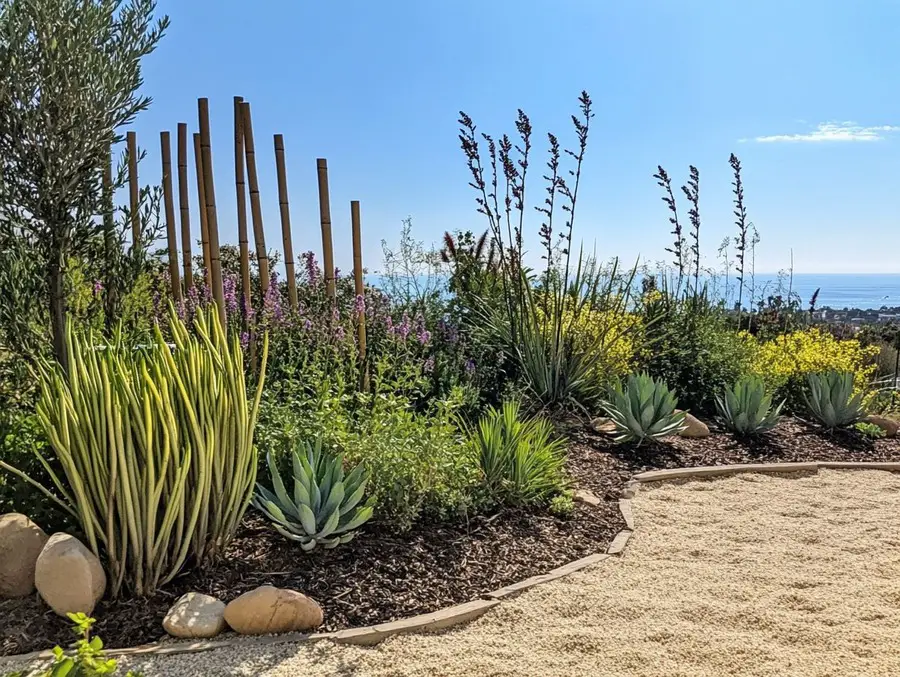
Coastal xeriscape gardens are usually low-maintenance once established, but they still need occasional care to stay healthy and looking their best. Salt spray, wind, shifting sand, and dry conditions can all affect plant growth over time.
Regularly checking soil moisture, pruning damaged growth, and watching for drainage problems can help prevent bigger issues later. A little upkeep goes a long way in keeping coastal plants strong and resilient.
Practical Strategies for Long-Term Success
One of the best ways to keep a coastal xeriscape thriving is by using mulch to hold moisture, protect roots, and reduce weed growth. Organic mulch can also improve sandy soil as it breaks down over time.
Water deeply but less often to encourage stronger root systems, especially during dry spells. Seasonal pruning can help remove damaged growth caused by wind or salt exposure while keeping plants healthier and more manageable.
Using a mix of drought-tolerant shrubs, grasses, and flowering plants can improve biodiversity, attract pollinators, and make the landscape more resilient against changing coastal conditions.
Frequently Asked Questions
What plants grow best in coastal xeriscaping?
Sea lavender, beach rosemary, yarrow, dune grass, and ice plant are strong coastal xeriscape choices.
Can coastal plants handle drought?
Many coastal plants are adapted to dry, sandy soil and can handle low-water conditions once established.
Do coastal xeriscape plants need special soil?
Good drainage is important. Sandy soils usually work well, but adding compost can improve moisture retention.
Can coastal xeriscape plants help with erosion?
Yes. Many coastal grasses and shrubs help stabilize sandy soil and reduce erosion from wind and water.
Final Thoughts
Coastal plants for xeriscaping make it possible to build beautiful low-water landscapes even in some of the harshest growing conditions. Salt, wind, and sandy soil do not have to limit your options.
With the right plant choices and good soil preparation, you can create a coastal xeriscape that stays attractive, resilient, and easier to maintain year after year.
Explore More Xeriscape Plant Guides
What is xeriscaping? A beginner’s guide to drought-tolerant landscaping – Colorado State University