
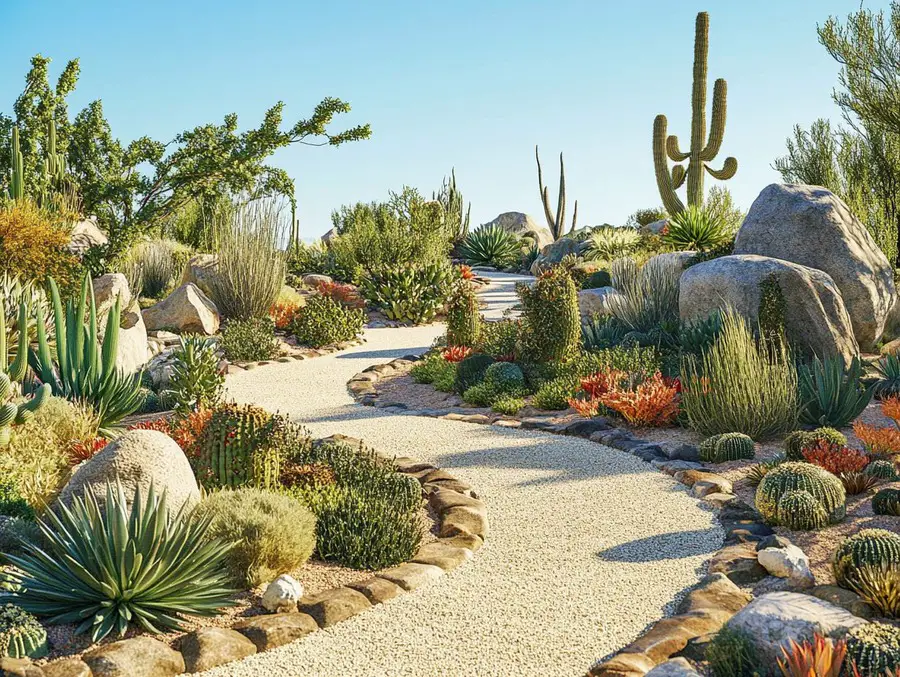
Designing a simple xeriscape is one of the easiest ways to create a low-water yard that still looks good year-round. You do not need a huge budget or complicated design to build a landscape that works with your climate instead of against it.
The goal is simple: use less water, choose the right plants, and make your yard easier to maintain. With a few smart decisions, you can build a practical, attractive space that saves time and money.
This guide walks through the basics of planning, plant selection, irrigation, and common mistakes so you can start building your xeriscape the right way.
What You’ll Learn
- How to plan a simple xeriscape layout
- How to choose drought-tolerant plants
- How to build an efficient irrigation system
- How to improve soil and moisture retention
- What mistakes to avoid when starting
Quick Answer
A simple xeriscape uses drought-tolerant plants, mulch, efficient watering, and smart plant placement to reduce water use and maintenance while keeping the landscape attractive.
What Is Xeriscaping?
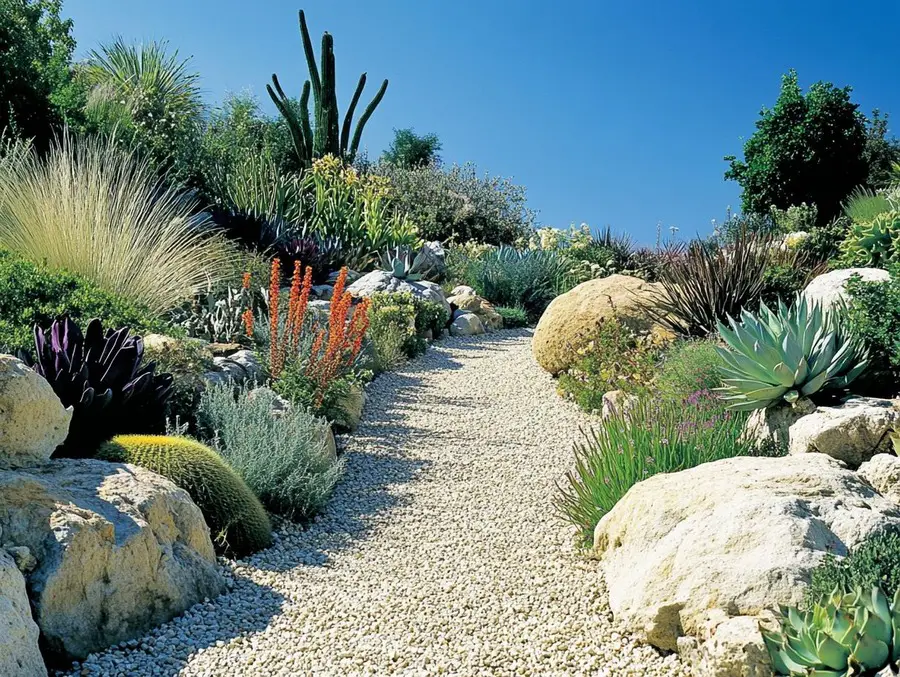
Xeriscaping is a landscaping method designed to reduce water use by choosing drought-tolerant plants, improving soil, and using efficient irrigation. It focuses on working with your climate instead of forcing high-water landscapes to survive in dry conditions.
A simple xeriscape combines smart plant placement, mulch, hardscape features, and practical watering methods to create a yard that needs less maintenance and less water over time.
Benefits of Xeriscaping
Xeriscaping does more than save water. It can lower maintenance, reduce costs, and make your yard easier to manage long-term.
- Uses Less Water: Reduces irrigation and lowers water bills.
- Needs Less Maintenance: Less mowing, less fertilizing, and less replanting.
- Improves Plant Survival: Plants matched to your climate usually perform better.
- Supports Pollinators: Native plants help bees, butterflies, and birds.
- Adds Long-Term Value: A well-planned xeriscape can stay attractive with less effort year after year.
Environmental and Financial Benefits
One of the biggest reasons homeowners choose xeriscaping is the long-term savings. By reducing lawn space, improving irrigation efficiency, and choosing drought-tolerant plants, you can cut water use significantly and lower monthly utility bills.
Xeriscaping also reduces maintenance costs. Less mowing, less fertilizing, fewer plant replacements, and less pest control all add up over time. Many drought-tolerant plants are naturally adapted to local conditions, which means they often need less attention once established.
Beyond saving money, xeriscaping also benefits the environment. Using native plants supports pollinators like bees and butterflies, improves biodiversity, and reduces the need for chemical fertilizers and pesticides. Healthier plant communities often create stronger, more balanced ecosystems.
While the initial setup may take some planning, the long-term payoff is a landscape that uses fewer resources, costs less to maintain, and works better with your local climate.
Planning Your Xeriscape Design
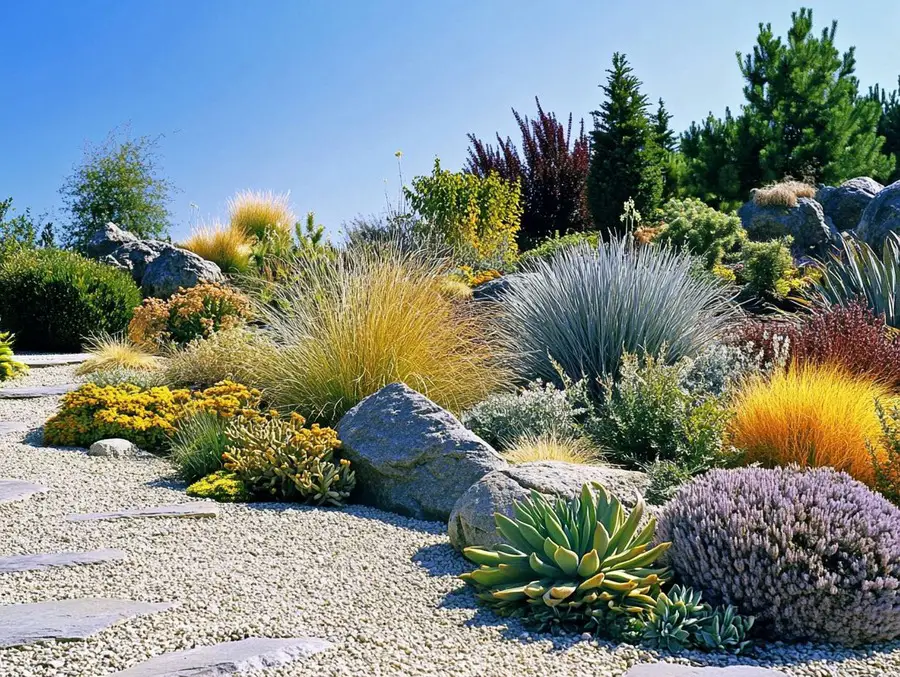
When you’re planning your xeriscape design, it’s all about giving some thought to your landscape’s unique features and your gardening needs.
By using principles of ecological landscaping, you can create a layout that not only boosts your garden’s functionality but also adds visual flair.
Start by checking out your outdoor space. Take note of sun exposure, soil type, and any existing plants to help you choose the right ones.
Think about how elements like hardscaping, rock gardens, and native shrubs can come together to create a cohesive design that supports biodiversity and invites those helpful pollinators in.
Assessing Your Landscape and Needs
Assessing your landscape and needs is a key step in the xeriscaping process.
By understanding the unique characteristics of your outdoor space, you’ll be able to make smarter choices about plant selection and design.
Start by evaluating your garden zones and pinpointing any microclimates that might affect plant growth—like areas that are particularly shady or sunny.
Soil preparation is also super important; you want to ensure you have proper drainage and healthy topsoil to support your drought-tolerant plants and native ecosystems.
To do this assessment effectively, think about testing your soil for pH and nutrient levels since these factors can really influence your plant choices.
Monitor how water drains in different sections of your landscape because poor drainage can stifle the growth of certain species.
Also, take note of wind patterns and nearby structures; this will help you spot sheltered areas and spots that might need some protective landscaping features.
By understanding these elements, you can create a thriving, efficient landscape that not only conserves water but also boosts the beauty of your outdoor space.
Choosing Drought-Tolerant Plants
Choosing the right drought-tolerant plants is key to making your xeriscape flourish while using minimal water.
When you go for native plants and other climate-friendly options, you’re boosting plant resilience and adding a touch of biodiversity to your garden.
By taking the time to select a mix of ornamental grasses, ground covers, and native shrubs, you can create a beautiful landscape that not only looks great but also requires less maintenance and supports local wildlife.
Best Plant Options for Xeriscaping
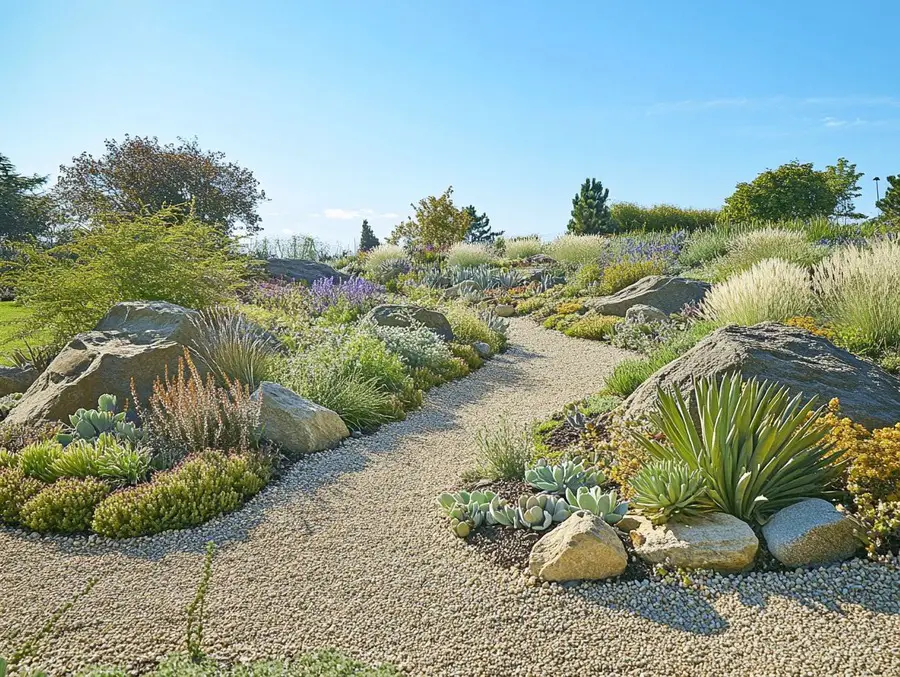
When you’re picking the best plants for xeriscaping, think about incorporating a diverse range of drought-tolerant species.
Ornamental grasses and native shrubs that thrive in your local environment are great options.
These plants not only give your garden some lovely texture and seasonal interest but also support local pollinators, boosting the ecological value of your space.
By mixing different plant types in your xeric garden, you can promote biodiversity while creating a sustainable landscape that needs minimal irrigation.
Choosing perennials that require less water means you’ll spend less time on maintenance and more time enjoying a vibrant garden throughout the seasons.
For instance, succulents and native wildflowers can add unique colors and shapes to your landscape while easily adapting to various garden zones.
Selecting plants like lavender and agave not only enhances the visual appeal but also attracts beneficial insects, which helps create a healthy ecosystem.
By embracing xeriscaping principles, you can strike a perfect balance between beauty and sustainability, leading to a thriving, resilient garden environment.
Creating a Water-Efficient Irrigation System
Creating a water-efficient irrigation system is key to xeriscaping, helping your garden stay healthy while conserving precious water resources.
By designing your irrigation systems with sustainable gardening practices in mind, you can optimize water usage and boost soil health.
Techniques like drip irrigation, rainwater harvesting, and smart timing in your watering schedules can really amp up your plants’ performance while minimizing waste.
Types of Irrigation Systems
There are plenty of irrigation systems out there that can help you save water and make your xeriscape more efficient.
Drip irrigation is one of your best bets; it delivers water straight to the plant roots, which means less evaporation and more hydration where it counts.
You might also want to consider rainwater harvesting systems, which capture and store rainwater for later use.
Definitely a sustainable way to keep your garden thriving.
Of course, you can still make traditional methods like soaker hoses and sprinklers work for you by optimizing them for reduced water use.
Alongside these popular choices, sub-surface irrigation is gaining traction.
This method uses buried tubing to deliver water just below the soil surface, cutting down on evaporation and encouraging those roots to dig deeper.
If you really want to take it up a notch, smart irrigation systems with moisture sensors can adjust your watering schedule automatically based on real-time conditions.
Talk about efficiency!
By implementing these techniques, you conserve water, and you also support the long-term health of your xeriscaped landscape.
This way, your plants can flourish in arid conditions without wasting valuable resources.
Understanding how each system works and what benefits it offers will help you make the right choice for your specific plant needs.
Maintaining Your Xeriscape
Maintaining your xeriscape is vital for long-term success, helping you enjoy a flourishing garden that saves water and promotes sustainable gardening practices.
Engaging in regular maintenance activities, like applying organic mulch, checking your soil health, and fine-tuning your irrigation system, can really boost your plants’ resilience and overall garden performance.
By staying in the loop about best practices and diving into garden education, you can keep your xeriscape vibrant and ecologically balanced, making your outdoor space a true oasis.
Tips for Long-Term Success
To achieve long-term success with your xeriscape, it’s crucial to incorporate effective maintenance strategies and thoughtful garden planning right from the start.
By doing this, you’ll create an environment where native plants can thrive, which means you won’t have to rely on excessive watering or chemical fertilizers.
Think about creating microclimates in your garden; positioning taller plants to provide shade for smaller ones can really boost their growth and help retain moisture.
Don’t forget about mulching around your plants. It’s a great way to suppress weeds and cut down on evaporation, making your watering efforts way more efficient.
Encouraging biodiversity by adding a variety of plant species can also improve your garden’s resilience against pests and diseases, leading to a healthier and more sustainable landscape overall.
Regular upkeep, like pruning and keeping an eye on soil health, will keep your garden vibrant and functional year after year.
Common Mistakes to Avoid
Avoiding common mistakes in xeriscaping can really boost your garden’s success and help you create a thriving, sustainable landscape.
One common error you might run into is picking the wrong plants, choosing species that just aren’t suited to your local climate or soil conditions.
Plus, if you mess up your irrigation, like over-watering or using ineffective systems, it can really hurt your plants’ resilience and sabotage your water conservation goals.
So, staying on top of these things can make all the difference in your xeriscaping journey!
Key Design and Maintenance Mistakes
Key design and maintenance mistakes can really put a damper on your xeriscaping success.
From poor layout choices to skimping on care routines, every little detail counts.
For example, if you don’t group plants with similar water needs, you could end up with inefficient irrigation that wastes water and makes your plants less resilient.
And if you neglect regular maintenance tasks like mulching and soil amendments, you might compromise the health of your drought-tolerant plants, which really undermines your sustainable gardening goals.
Improperly placing trees and shrubs can also create unnecessary shade for your sun-loving plants, stunting their growth and vitality.
You also need to choose your materials wisely. Using landscape fabrics that trap moisture instead of allowing for proper drainage could lead to root rot and other nasty issues.
Regularly keeping an eye on your landscape for pests and diseases is key to maintaining plant health.
And don’t forget to utilize local resources when selecting plants to ensure they’re well-suited for your region, promoting long-term success.
By establishing a thoughtful design and sticking to solid maintenance practices, you’ll create a thriving xeriscape that truly reflects the principles of water-efficient gardening.
Frequently Asked Questions
What is the easiest way to start xeriscaping?
Start small by converting one area of your yard with drought-tolerant plants, mulch, and better watering practices.
Do I need drip irrigation for xeriscaping?
Not always, but drip irrigation is one of the most efficient ways to water xeriscape plants with minimal waste.
Can xeriscaping work in any climate?
Yes. Xeriscaping is about matching plants to your local climate and reducing unnecessary water use.
Is xeriscaping expensive to start?
It can have upfront costs, but it often lowers water bills and maintenance costs over time.
Final Thoughts
Designing a simple xeriscape does not have to be complicated. By starting with a plan, choosing the right plants, and improving how you manage water, you can build a yard that looks good and works better in dry conditions.
Start small, learn what works in your space, and build from there. Even simple changes can make a big difference in water use and long-term maintenance.