
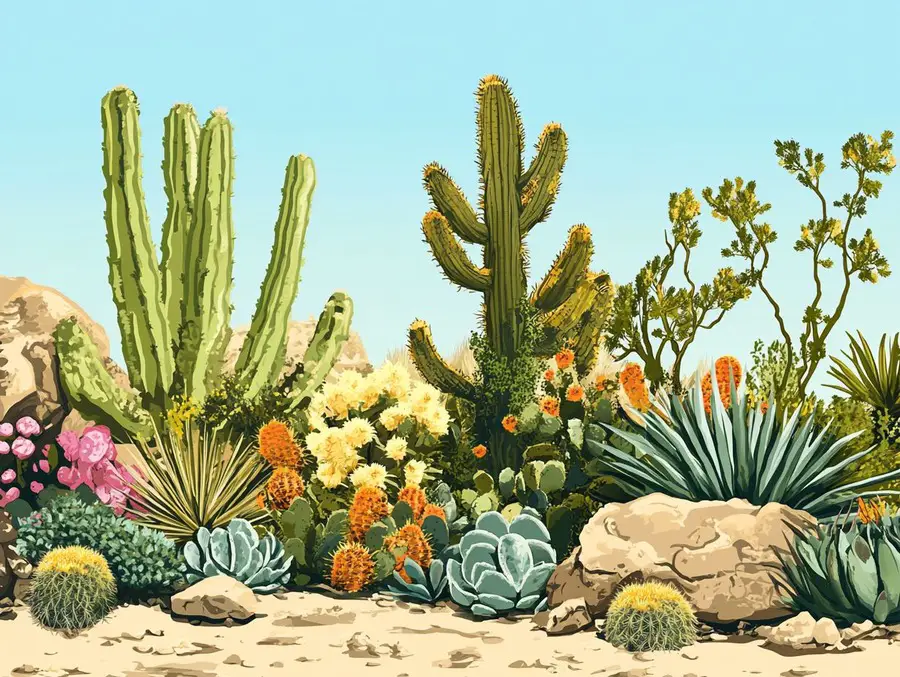
Desert plants for xeriscaping are some of the best choices for hot, dry climates because they naturally handle heat, drought, and poor soil with very little maintenance.
From cacti and succulents to flowering wildflowers, these low-water plants can add texture, color, and structure while helping reduce irrigation needs.
In this guide, you’ll learn which desert plants work best, how to match them to your climate, and how to design a stronger low-water landscape.
What You’ll Learn
- Which desert plants work best for xeriscaping
- How cacti, succulents, and wildflowers differ
- How to match desert plants to your climate
- How to design a balanced low-water garden
- How to reduce maintenance while improving drought tolerance
Quick Answer
The best desert plants for xeriscaping include cacti, agaves, succulents, yuccas, and drought-tolerant wildflowers because they handle heat, poor soil, and low rainfall with minimal care.
Desert Plants for Xeriscaping: Transform Your Yard Today
If you’re on a mission to create a stunning garden that can thrive in arid conditions, xeriscaping might just be your new best friend.
This sustainable landscaping approach is all about using drought-resistant desert plants, and it comes with a whole bunch of perks, like saving water and keeping maintenance to a minimum.
Imagine vibrant cacti, lush succulents, and delicate wildflowers—picking the right plants can really transform your outdoor space.
Dive into the benefits of xeriscaping, check out the types of desert plants you might want to consider, and grab some tips for designing a beautiful and functional xeriscape garden that’s perfectly suited to your climate.
Why Desert Plants Work Well in Xeriscaping
Desert plants work especially well in xeriscaping because they are naturally adapted to survive with less water, intense sun, and poor soil conditions. That makes them some of the easiest plants to use in low-water landscapes.
Many desert plants, including cacti, succulents, agaves, and yuccas, store water in their leaves or stems, which helps them handle long dry periods without frequent watering.
Their deep roots, drought tolerance, and low nutrient needs also make them easier to maintain compared to many traditional landscape plants.
When combined with good drainage, mulch, and efficient irrigation like drip systems, desert plants can create a strong, resilient xeriscape that uses less water while staying healthy and attractive year-round.
They also support biodiversity by providing shelter and food for pollinators and other beneficial wildlife, making them a practical choice for sustainable landscaping.
Benefits of Using Desert Plants for Xeriscaping
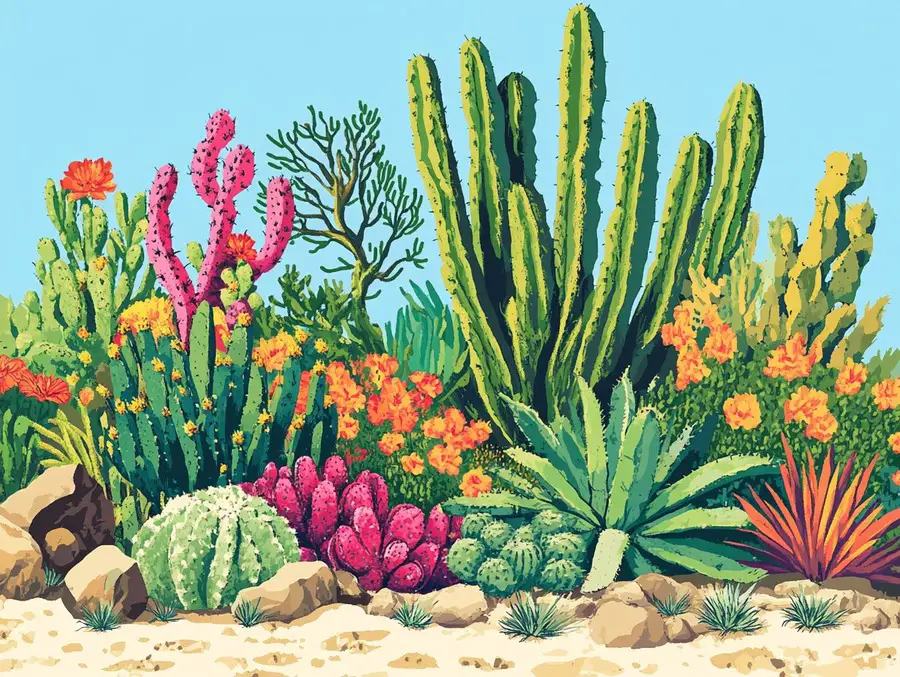
Using desert plants in your xeriscaping project offers a ton of benefits that go beyond just looking good.
It’s a practical way to conserve water and promote sustainability.
By choosing drought-resistant species like succulents, cacti, and native plants, you can design a landscape that thrives on minimal irrigation.
This means less water usage and less maintenance for you.
This approach creates a more eco-friendly environment, and it also boosts soil health by improving drainage and erosion control.
Your garden will become more resilient to seasonal droughts while also providing support for local wildlife and pollinators.
Water Conservation
Water conservation is at the heart of xeriscaping, and it’s all about creating landscapes that need minimal irrigation while making the most of natural resources.
By choosing drought-resistant plants with deep root systems and using strategies like rainwater harvesting and drip irrigation, you can really cut down on your garden’s water usage.
This helps conserve those precious water resources and creates a healthier desert ecosystem where native plants flourish and support local wildlife.
On top of that, enhancing your soil with organic amendments is key to keeping moisture in your garden bed.
Adding materials like compost can improve soil structure and boost its ability to retain water, meaning you won’t have to water as often.
And don’t forget about mulching! It helps keep the soil moist, fights off weeds, and provides vital nutrients as it breaks down.
Using smart irrigation systems can also make a big difference by delivering water precisely where it’s needed, ensuring your plants get just the right amount.
By adopting these eco-friendly practices, you’re helping to conserve water and making a solid contribution to sustainability, and tackling the challenges that come with seasonal droughts.
Low Maintenance
One of the best things about xeriscaping is how low maintenance it is, making it an ideal choice for busy gardeners and eco-conscious homeowners like you.
By using drought-resistant plants and native species that need minimal care, you can create a beautiful landscape that thrives without a lot of effort.
This saves you time and energy and also supports a sustainable gardening approach that aligns with your environmental goals.
To really make your outdoor space shine, choosing the right plants is key.
Going for varieties that naturally thrive in your local climate can drastically cut down on water needs.
Focusing on soil health with organic amendments will ramp up nutrient availability and keep your plants happy and healthy.
Don’t forget about practices like companion planting, which helps control pests and encourages a diverse ecosystem.
Organic mulching is another great trick that aids moisture retention and keeps those pesky weeds at bay.
By weaving these strategies together, you can create a xeriscape garden that’s not just sustainable but also stunning, giving you a serene space to unwind and enjoy.
Types of Desert Plants for Xeriscaping
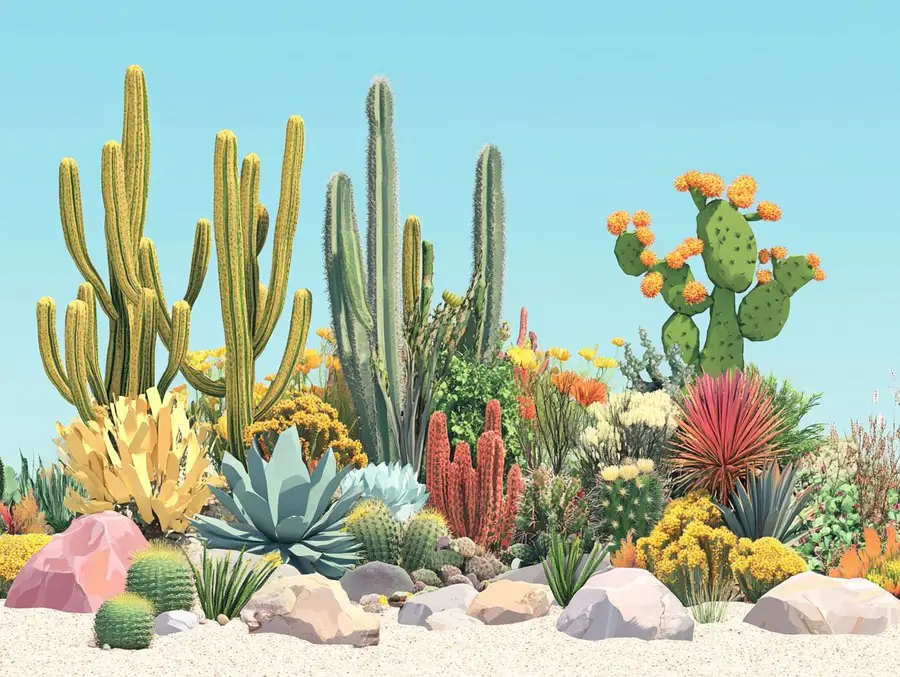 When you’re planning your xeriscaping project, it’s crucial to understand which types of desert plants are best suited for your climate.
Choosing the right xeriscape plants, think cacti, succulents, and native wildflowers makes your garden look great and helps it stand strong against those tough conditions.
By zeroing in on these drought-resistant species, you can create a lush, low-water garden that thrives while saving on resources.
Cacti
Cacti are like the rockstars of desert plants, known for their eye-catching looks and impressive ability to survive with very little water.
These fascinating plants store water in their thick, fleshy stems, which helps them thrive in scorching heat and dry conditions.
If you’re into xeriscaping, cacti can be a fantastic choice for adding some visual flair while keeping water usage low, making them a go-to for sustainable landscaping.
You’ll find cacti in all sorts of shapes, sizes, and colors, each one perfectly adapted to its native environment.
Take the saguaro, for example. This tall giant of the Sonoran Desert stands out with its impressive silhouette.
Then there’s the smaller barrel cactus, which brings vibrant pops of color to your garden.
What’s great is that many cacti require minimal maintenance; all they need is the occasional watering and some well-draining soil to thrive.
Their unique features, like spines that provide shade and help retain moisture, play a big role in cutting down water consumption.
Beyond just looking good, these tough plants help with soil stability and boost biodiversity, all while contributing to the ecological balance in xeriscape gardens.
Succulents
Succulents are a fantastic choice for xeriscaping, and it’s easy to see why.
They’re known for their diverse shapes and colors, and they don’t need much water.
These little wonders store moisture in their leaves, which allows them to thrive even in dry conditions, making them perfect for sustainable gardening.
By adding a variety of succulents to your landscape design, you can create a vibrant and resilient garden that requires hardly any maintenance.
You’ll find a wide range to choose from, like the bold, architectural forms of agaves or the delicate rosettes of echeverias, so there’s definitely a succulent that fits your style.
They also thrive in different microclimates, whether you have sunny, arid spots or shady corners, which means you can easily incorporate them into your landscape.
For the best results, think about grouping succulents with similar water needs and planting them in well-draining soil to avoid rot.
Using colorful stones or mulch can really amp up their visual appeal while also cutting down on water evaporation.
It’s a smart and stylish way to create an eye-catching xeriscape!
Wildflowers
Incorporating wildflowers into your xeriscape garden makes it visually appealing and supports local biodiversity and pollinator populations.
These native plants are perfectly suited for dry climates and require minimal care, which is a win-win for anyone looking to xeriscape.
By choosing a mix of wildflowers that bloom in different seasons, you can create a lively landscape that changes throughout the year, attracting all sorts of beneficial insects and wildlife.
Wildflowers are crucial for sustaining the ecosystem because they provide essential habitats and food sources for pollinators like bees and butterflies, which are key players in plant reproduction.
To get the most out of these ecological benefits, think about selecting native species that thrive in your area, making sure they’re suited to your specific soil and light conditions.
Designing your garden with wide patches of these colorful blooms creates a stunning visual effect and encourages a thriving community of beneficial insects.
Incorporating plants that flower at different times ensures there’s always a food source available for pollinators, boosting the overall productivity and resilience of your xeriscape garden.
Choosing the Right Plants for Your Climate
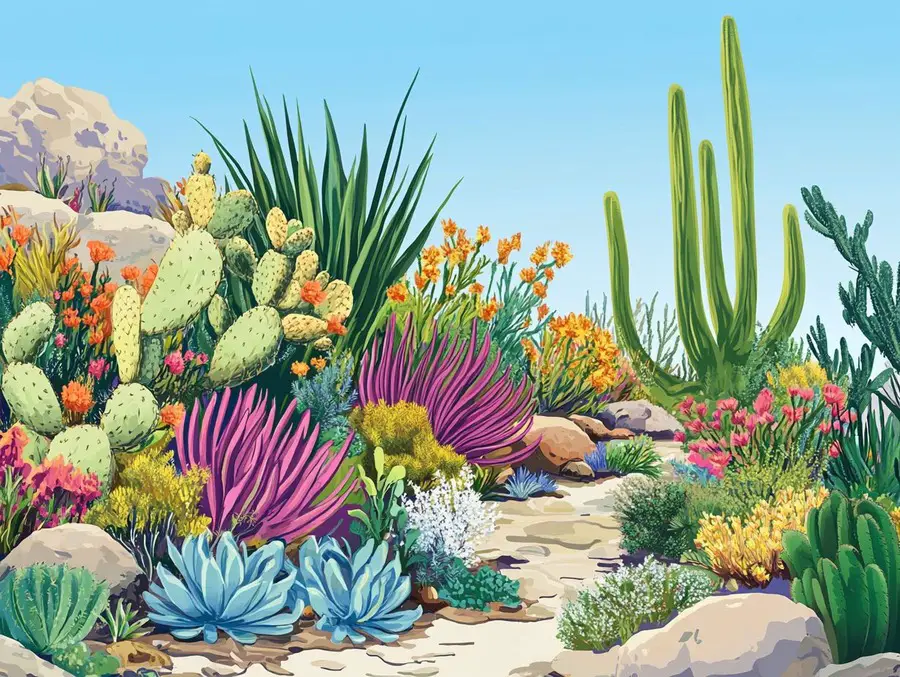
Choosing the right plants for your xeriscaping project is key to making sure your garden thrives and stays sustainable.
It’s especially important to think about your regional climate and any specific microclimates you have.
By picking native plants and drought-resistant species that do well in your area, you can create a resilient landscape that conserves water and looks beautiful and serves a purpose.
Understanding your local ecosystems and the seasonal variations will help you make smart plant choices that will flourish in your xeric gardens.
Factors to Consider
When you’re picking plants for your xeriscape garden, there are a few key factors you’ll want to consider to help them succeed and stick around for the long haul.
Think about things like soil drainage, heat tolerance, and how well they can handle your local environmental conditions.
Getting a grip on these aspects will guide you to choose plants that will thrive in your specific climate, all while keeping your landscaping sustainable.
Don’t forget to consider shade tolerance and wind resistance, too; these will make your garden more resilient and adaptable to whatever Mother Nature throws your way.
It’s really important to check out the type of soil in your area.
Some plants love sandy or rocky soils, while others prefer a nice loamy texture.
Also, keep an eye on water availability and seasonal changes, as these can greatly influence which plants will not just survive, but actually thrive.
By getting familiar with the local climate like temperature extremes and rainfall patterns you’ll be better equipped to make choices that keep your garden vibrant with minimal fuss.
Understanding plant hardiness zones is a game changer.
It gives you the knowledge to select species that are naturally tough and can handle harsher conditions, ensuring your landscape is thriving and eco-friendly.
Designing a Xeriscape Garden
Designing a xeriscape garden is a fantastic opportunity for you to create a visually striking and sustainable landscape that thrives in dry conditions.
By carefully considering the arrangement of your plants, soil types, and landscape features, you can craft a nurturing environment that maximizes water conservation while enhancing the natural beauty of your outdoor space.
Adding elements like ornamental grasses and flowering cacti will help you create diverse textures and colors, making sure your garden stays vibrant throughout the year.
Tips for a Beautiful and Functional Garden
Creating a beautiful and functional xeriscape garden takes some careful planning and thoughtful execution.
You want your landscape to be visually appealing while also being sustainable.
By using effective landscape architecture principles, you can design an outdoor space that minimizes water usage and shows off the unique beauty of desert plants.
Adding elements like mulch helps retain soil moisture, and selecting a variety of plants that bloom in different seasons can really enhance the attractiveness and ecological benefits of your garden.
To keep your landscape thriving, think about adopting specific watering techniques, like deep watering methods.
These promote strong root development while conserving your precious water resources.
Don’t forget to prioritize soil health by testing nutrient levels and adding organic materials like compost or aged manure.
This way, your plants will have the nutrients they need to flourish.
Seasonal care is also crucial, so be proactive about pruning and deadheading to keep your plants healthy and encourage new growth.
Choosing drought-tolerant varieties makes maintenance easier and boosts biodiversity, turning your xeriscape into a beautiful and sustainable haven for both your plants and local wildlife.
Desert Plants for Xeriscaping FAQs
What are the best desert plants for xeriscaping?
Cacti, agaves, yuccas, sedums, aloes, and drought-tolerant wildflowers are some of the best options for hot, dry landscapes.
Do desert plants need watering?
Yes, especially while they establish. Once rooted, most desert plants need much less supplemental watering than traditional landscape plants.
Can I use desert plants outside desert climates?
Some can adapt well, but drainage and winter protection may be important in colder or wetter regions.
Are succulents good for xeriscaping?
Yes. Succulents store water in their leaves and often perform very well in low-water landscapes.
Do desert plants attract pollinators?
Many flowering desert plants attract bees, butterflies, and hummingbirds while supporting local biodiversity.
Final Thoughts
Desert plants can make xeriscaping easier by giving you reliable, low-water options that handle heat and drought naturally.
By choosing plants that match your climate and soil, you can build a stronger landscape that saves water while staying attractive year-round.
The right desert plants can turn even the hottest areas into practical, low-maintenance garden spaces.
Explore More Xeriscape Plant Guides
What is xeriscaping? A beginner’s guide to drought-tolerant landscaping – Colorado State University